
.jpeg)
Sparsentan (sparsentan) onset of action time and treatment course evaluation recommendations
Sparsentan (Sparsentan) is an innovative dual receptor antagonist that combines **endothelin receptorA(ETA< span>) and angiotensin II receptor 1 type (AT1) antagonism, mainly used to treat IgA nephropathy (IgA nephropathy) and focal segmental glomerulosclerosis (FSGS)** and other proteinuria-related kidney diseases. Its principle of action is to reduce intraglomerular pressure and inflammatory response by blocking the endothelin and angiotensin signaling pathways, thereby reducing proteinuria and delaying the deterioration of renal function. Compared with traditional RAAS inhibitors, Sparsentan has the synergistic advantage of dual targets, thus showing stronger proteinuria-lowering effect and renal protection in clinical practice.
According to clinical research data, Sparsentan has a relatively quick onset of action, and most patients can observe a significant decrease in urinary protein levels within 2 to 4 weeks after taking the drug. In large randomized controlled trials (such as the PROTECT study), patients' proteinuria has been reduced by 30%-40% in the 4th week of treatment. Some patients even improved earlier. Although the early response is obvious, the full efficacy of the drug still needs to accumulate over time, and its true renal function protection effect is usually fully realized after 3 to 6 months of continuous treatment. Therefore, early detection indicators are mainly used to observe the initial response, while long-term follow-up is used to evaluate the lasting effect of the drug.
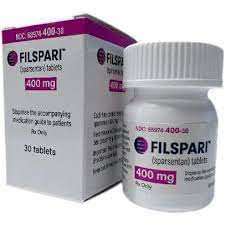
In actual treatment, Sparsentan is usually a long-term maintenance medication, and the specific course of treatment needs to be individually adjusted based on the patient's condition, changes in proteinuria, and recovery of renal function. Doctors generally recommend monitoring urine protein and blood pressure every 4 to 8 weeks to evaluate the stability of the drug effect. If the patient is in 3Within a month, proteinuria is significantly reduced and renal function remains stable, so treatment at the original dose can be continued. If the response is suboptimal, it may be necessary to evaluate whether there are differences in drug metabolism, effects of concomitant medications, or disease progression. After reaching the treatment goal, maintenance treatment is still recommended to prevent proteinuria rebound or disease recurrence.
While takingSparsentan, blood pressure, electrolytes, liver and kidney function, and body fluid status need to be monitored regularly to prevent adverse reactions such as hypotension, hyperkalemia, or fluctuations in renal function. Patients should avoid taking other RAAS inhibitors or NSAIDs at the same time to avoid increasing the burden on the kidneys. Efficacy evaluation should not only focus on the reduction in proteinuria, but also make comprehensive judgments based on indicators such as serum creatinine and eGFR. Overall, Sparsentan usually takes effect in 1 months, is stable in 3 months, and maintains long-term efficacy. It is an innovative drug with good safety and significant renal protection effect, but it needs to be used standardizedly and dynamically monitored under the guidance of a nephrologist.
Reference materials:https://www.drugs.com/
[ 免责声明 ] 本页面内容来自公开渠道(如FDA官网、Drugs官网、原研药厂官网等),仅供持有医疗专业资质的人员用于医学药学研究参考,不构成任何治疗建议或药品推荐。所涉药品可能未在中国大陆获批上市,不适用于中国境内销售和使用。如需治疗,请咨询正规医疗机构。本站不提供药品销售或代购服务。


