
.jpeg)
Explanation of medication monitoring indicators and safety assessment methods for DaliRasheng (Keweike)
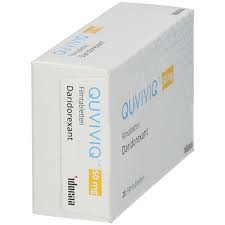
Daridorexant is a new dual-receptor antagonist that acts on the orexinorexin in the hypnotic-arousal regulation system. span>Receptors (Orexin-1 and Orexin-2), mainly used to treat insomnia in adults. Its mechanism of action helps patients fall asleep faster and improve sleep maintenance problems at night by blocking arousal signals. Although its safety profile is relatively good, comprehensive drug monitoring and safety assessment are still required in clinical use to ensure efficacy and reduce the risk of adverse events. The following is a detailed analysis of monitoring indicators, assessment methods, follow-up frequency, and patient self-management.
First of all, blood pressure and heart rate are one of the core monitoring indicators during the use of DaliRasen. Studies have shown that long-term sleep deprivation in insomnia patients may be accompanied by an increase in blood pressure. While DaliRasheng improves sleep, it generally does not significantly affect blood pressure and heart rate, but individual differences exist. Especially for patients with cardiovascular disease, a basic cardiovascular assessment should be performed before taking the drug, and blood pressure and heart rate changes should be monitored regularly during the initial use and during the course of treatment. If significant increase in blood pressure, palpitations or arrhythmia occurs, the dose should be adjusted promptly or the medication should be suspended, and a cardiologist should be consulted for further evaluation.
Secondly, sleep quality and daytime alertness are important indicators for evaluating the efficacy and safety of DaliRazo. Patients can regularly record data such as the time it takes to fall asleep, the number of nighttime awakenings, total sleep time, and sleep efficiency through tools such as sleep diaries, Insomnia Severity Index, ISI, and polysomnography. At the same time, assessing daytime sleepiness, decreased attention, and slow reaction times can help determine whether the drug dose is appropriate. Research shows that daliresen takes effect quickly, but patients still need to ensure continuous sleep for more than 7 hours to avoid risks such as excessive daytime sleepiness or falls.
Monitoring of liver and kidney function and drug metabolism is also a link that cannot be ignored. Dalilaysan is mainly metabolized by the liverCYP3A and a small amount is excreted by the kidneys. Before long-term medication, liver and kidney function should be assessed, such as serum liver enzymes, creatinine and serum urea levels, to determine whether the patient is suitable for standard dose administration. When there are inhibitors or inducers of CYP3A in hepatic insufficiency or concomitant medication, the dose should be adjusted carefully and monitoring strengthened to avoid adverse reactions caused by abnormal blood concentration.
In addition, drug interaction monitoring is also an important part of the safety assessment of DaliRazo. Due to its metabolic dependence on the CYP3A enzyme system, the concurrent use of antifungals, certain antiepileptic drugs and antibiotics may affect blood drug concentrations and increase the risk of adverse events. Therefore, the patient's previous medication history and concomitant medication should be comprehensively assessed before medication, and blood drug concentrations or clinical responses should be regularly reviewed during treatment.
Clinically, the frequency of follow-up is recommended to be assessed every 1-2 weeks during the initial period of medication, including blood pressure, heart rate, sleep quality, daytime alertness and other indicators; during maintenance treatment, follow-up can be conducted once a month, and the dose or course of treatment can be adjusted according to the patient's efficacy and side effects. In special groups such as elderly patients, those with impaired liver and kidney function, or those with multiple chronic diseases, the frequency of follow-up should be increased to ensure safety.
Patient self-management is also an important part of ensuring medication safety. The doctor's dosage time should be strictly followed. It is recommended to take it 30 minutes before going to bed, and ensure more than 7 hours of continuous sleep. Patients should avoid the combined use of alcohol and sedative drugs, and pay attention to the safety of the night environment to prevent falls or accidents. Patients are encouraged to keep sleep diaries and adverse reactions, and communicate with their doctors during follow-up visits so that the plan can be adjusted in a timely manner.
Taken together, the medication monitoring indicators of DaliRasen include cardiovascular indicators, sleep quality, daytime alertness, liver and kidney function, and drug interaction assessment. Through regular clinical monitoring, scientific follow-up and patient self-management, potential risks can be discovered in a timely manner, the efficacy can be optimized, and safe and effective insomnia treatment can be achieved. At the same time, with the accumulation of clinical experience and the enrichment of real-world data, monitoring methods and evaluation indicators are expected to be further standardized to provide patients with more accurate personalized medication guidance.
Reference materials:https://www.drugs.com/
[ 免责声明 ] 本页面内容来自公开渠道(如FDA官网、Drugs官网、原研药厂官网等),仅供持有医疗专业资质的人员用于医学药学研究参考,不构成任何治疗建议或药品推荐。所涉药品可能未在中国大陆获批上市,不适用于中国境内销售和使用。如需治疗,请咨询正规医疗机构。本站不提供药品销售或代购服务。


