
.jpeg)
Precautions and patient safety tips for the use of rubitin/rubicatin (Zanbiga)
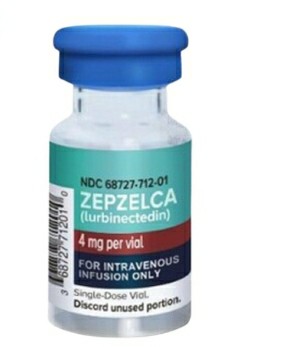
Lurbinectedin (trade name: Zepzelca) is a new anti-tumor drug mainly used to treat adult patients with metastatic small cell lung cancer (SCLC) whose disease has progressed during or after platinum-based chemotherapy. As an alkylating drug, rubitidine binds to guanine residues in the minor groove of DNA to form an adduct, causing the DNA helix to bend toward the major groove, thereby interfering with the activity of transcription factors and DNA repair pathways and inducing tumor cell apoptosis. However, during treatment with rubitidine, patients need to pay special attention to the following matters to ensure the safety and effectiveness of the treatment.
1. Assessment and preparation before medication
Before initiating rubitidine, a thorough evaluation must be performed. First, confirm that the patient's absolute neutrophil count (ANC) ≥1,500 cells/mm³, platelet count ≥100,000 pieces/mm³. If the blood count does not reach the target, treatment should be delayed until it returns to a safe level. In addition, the patient's liver function, especially transaminase levels, is evaluated to rule out abnormal liver function. Rubitidine may cause hepatotoxicity and increase transaminases, so liver function needs to be monitored regularly during treatment. If severe liver function abnormalities occur, dose adjustment or treatment suspension should be considered.
2. Dosage and administration regimen
The recommended dose of rubitin is 3.2 mg per square meter of body surface area, administered intravenously once every 21 days, and the infusion time should exceed 60 minutes until disease progression or unacceptable toxicity occurs. Medications should be prepared and diluted prior to intravenous infusion. Add 8 mLsterile water for injection into each bottle (4 mglyophilized powder) of rubitidine, shake the bottle until completely dissolved, and obtain a solution with a concentration of 0.5 mg/mL. Required solution volume=Body surface area (m²) × dose (mg/m²) /0.5 mg/mL. The solution should be clear, colorless or slightly yellow, with no visible particulate matter. When using a central venous catheter, add the solution to an infusion bag containing at least 100 mL of normal saline or 5% glucose solution; when using a peripheral venous catheter, add the solution to an infusion bag containing at least 250 mL of normal saline or 5%Glucose solution in the infusion bag.
3. Adverse reactions and monitoring
In clinical studies, rubitidine may cause a variety of adverse reactions, common ones including:
1.Myelosuppression: such as neutropenia, anemia, thrombocytopenia, etc. Among 554 patients with advanced solid tumors, 41% had grade 3 or 4 neutropenia, and 17% patients developed grade grade 3 or grade grade 4, and 10% of patients developed grade grade or grade grade 4 thrombocytopenia. Therefore, blood routine monitoring needs to be regularly monitored during treatment, and any abnormality must be dealt with in a timely manner.
2.Abnormal liver function: such as elevated transaminases. In clinical studies, 6% of patients developed grade ALTElevated, 3% of patients experienced 3 gradeAST elevation. Therefore, liver function needs to be monitored regularly before and during treatment, and treatment plans should be adjusted in a timely manner if abnormalities are found.
3.Other adverse reactions: such as nausea, vomiting, loss of appetite, fatigue, dyspnea, cough, etc. These adverse reactions are usually mild to moderate and can be alleviated by symptomatic treatment.
For patients who experience serious adverse reactions, treatment suspension, dose adjustment, or permanent discontinuation should be considered. The specific treatment plan needs to be determined by the doctor based on the specific situation of the patient.
4. Special groups and precautions
During treatment with rubitidine, the following special groups need special attention:
1.Pregnant and lactating women: Rubitidine may cause harm to the fetus, so it is contraindicated during pregnancy. The use of effective contraception is recommended during treatment and for 6 months after the last dose. Nursing women should avoid breastfeeding during treatment and for at least 2 weeks after the last dose.
2.Children and Adolescents: The safety and effectiveness of rubitidine have not been established in pediatric patients and its use in children and adolescents is not recommended.
3.Patients with hepatic insufficiency: Rubitidine may cause hepatotoxicity, so caution should be used when using it in patients with abnormal liver function. Liver function needs to be monitored regularly before and during treatment, and treatment plans should be adjusted in a timely manner if abnormalities are found.
In addition, patients should avoid driving or operating heavy machinery during treatment to prevent accidents caused by fatigue or other adverse reactions. During the treatment period, patients should undergo regular medical evaluation, such as imaging examinations every 3 months, and the treatment plan should be adjusted in a timely manner to ensure a balance between efficacy and safety.
In conclusion, rubitidine, as a new anti-tumor drug, shows important value in the treatment of metastatic small cell lung cancer. However, during use, patients must strictly follow medical instructions, conduct regular examinations, and pay close attention to adverse reactions to ensure the safety and effectiveness of treatment.
Reference materials:https://www.drugs.com/
[ 免责声明 ] 本页面内容来自公开渠道(如FDA官网、Drugs官网、原研药厂官网等),仅供持有医疗专业资质的人员用于医学药学研究参考,不构成任何治疗建议或药品推荐。所涉药品可能未在中国大陆获批上市,不适用于中国境内销售和使用。如需治疗,请咨询正规医疗机构。本站不提供药品销售或代购服务。


