
.jpeg)
Summary of clinical efficacy and patient feedback of ensifentrine-Ohtuvayre in the treatment of chronic obstructive pulmonary disease
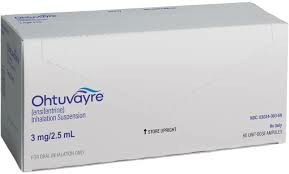
Ensefentine (ensifentrine, trade nameOhtuvayre) is a new dual-mechanism bronchodilator that also has a phosphodiesterase3 (PDE3) inhibition and phosphodiesterase 4 (PDE4) inhibition. PDE3Inhibition can directly relax airway smooth muscles, achieve rapid bronchodilation, and improve dyspnea symptoms; PDE4 inhibition has an anti-inflammatory effect and can reduce airway inflammation and chronic inflammatory damage. This dual mechanism allows exefantine to both relieve acute symptoms and potentially have long-term inflammation control effects in the treatment of chronic obstructive pulmonary disease (COPD).
clinical trial efficacy data
In multiple international multi-center clinical trials, exefantine has shown good clinical efficacy. Taking the ENSURE study as an example, the subjects were patients with moderate to severe COPD. After receiving aerosol inhaled ensefantine, their peak expiratory flow (PEF) was significantly improved in the first week, with an average increase of about 30~40 L/min, which was statistically significant compared with the placebo group. In addition, the lung function indicators of patients in the trial, such as forced expiratory volume (FEV1), showed stable improvement in multiple measurements, indicating that the drug can continuously improve airway patency.
Symptom improvement and quality of life feedback
Patient feedback shows that after using ensefentin, symptoms such as nighttime coughing, wheezing and shortness of breath are significantly relieved, and sleep quality and ability to perform daily activities are improved. Some patients report reduced dyspnea during exercise or climbing stairs and increased autonomy in daily life. At the same time, due to the anti-inflammatory effect of the drug, long-term use can also help reduce the occurrence of acute exacerbations, reduce the rate of emergency department visits and the risk of hospitalization, and improve the overall quality of life.
Tolerability and safety evaluation
Clinical studies have shown that ensefentin is generally well tolerated and has a low incidence of adverse reactions. Common side effects include mild dry mouth, headache, cough, or throat irritation, which are mostly transient and resolve on their own. There were few serious adverse events and no significant cardiovascular risk or exacerbation of systemic inflammation. Patients are advised to regularly monitor changes in heart rate and lung function during use, and pay attention to interactions with other bronchodilators or anti-inflammatory drugs to ensure medication safety.
Comparison with existing treatment options
Compared with traditional long-actingβ2 receptor agonists (LABA), long-acting anticholinergics (LAMA) or inhaled corticosteroids (ICS) alone, exefentine has potential advantages in improving respiratory function and anti-inflammation due to its dual mechanism of action. Some studies have shown that exefentine can be used in combination with existing inhaled preparations to further improve lung function and perform well in preventing acute exacerbations. It is especially suitable for patients with moderate to severe COPD or people at high risk for acute exacerbations.
Precautions for use and clinical recommendations
During the period of using exefantine, patients should strictly follow the doctor's instructions for aerosol inhalation and avoid adjusting the dosage or stopping the drug on their own. Mild irritation may occur during the initial treatment phase, but is mostly tolerable. Long-term follow-up studies suggest that regular monitoring of lung function, symptom scores, and acute exacerbation events can help evaluate efficacy and adjust medication regimens. In addition, combined with comprehensive interventions such as smoking cessation, exercise rehabilitation and health education, the effect of COPD management can be further optimized.
Based on existing data and patient feedback, exefentine has reliable efficacy and good tolerability in the treatment of COPD. Its dual mechanism gives it advantages in relieving symptoms, improving lung function, reducing the frequency of acute exacerbations and improving quality of life. In the future, with the accumulation of more long-term follow-up and real-world research data, exefantine is expected to become an important part of the standard treatment plan for COPD, providing more comprehensive management options for moderate to severe and high-risk patients.
Reference materials:https://www.drugs.com/
[ 免责声明 ] 本页面内容来自公开渠道(如FDA官网、Drugs官网、原研药厂官网等),仅供持有医疗专业资质的人员用于医学药学研究参考,不构成任何治疗建议或药品推荐。所涉药品可能未在中国大陆获批上市,不适用于中国境内销售和使用。如需治疗,请咨询正规医疗机构。本站不提供药品销售或代购服务。


