
.jpeg)
Real-world study confirms efficacy of baricitinib/alemin in alopecia areata
A recent study showed the efficacy of baricitinib in the treatment of alopecia areata, alopecia totalis, alopecia universalis, and eyebrow and eyelash hair loss. Baricitinib demonstrated higher response rates and superior regenerative effects in the treatment of alopecia areata compared with clinical trials.
Clinical trials have shown that Janus kinase (JAK) inhibitors are effective in treating alopecia areata. On June 13, 2022, the U.S. Food and Drug Administration ( FDA) approved oral baricitinib (Olumiant), a JAK½ inhibitor, for the treatment of severe alopecia areata in adults. A year later, China's National Medical Products Administration approved baricitinib for use in adults, although real-world use in this population has been limited.
The researchers sought to evaluate the efficacy and safety of baricitinib in a real-world setting in 47 Chinese patients who were treated. The primary endpoint of this retrospective study was change in Severity of Alopecia Tool (SALT) score during treatment. Patients were eligible if they had been receiving baricitinib for ≥6 months between March 2023 and December 2024. The mean age of the sample was 25.81 years (72% adults; 28% adolescents), 51% were female, and the mean disease duration was 3.79 years. Generalized alopecia accounted for 51%, alopecia areata accounted for 25.5%, and alopecia totalis accounted for 23.4%; 57.5% and 44.7% of participants had eyebrow and eyelash alopecia respectively.
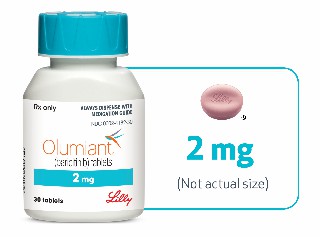
Clinician determines initial baricitinib dose (daily2 mg or 4 mg) based on disease severity, comorbidities, and body weight. Patients with extensive or rapidly progressive disease start at 4 mg, and patients with risk factors or a lower body weight start at 2 mg. All patients <12 years of age are started with 2 mg, but can be increased to 4 mg if they are unresponsive and weigh ≥40 kg.
At weeks 47% and 53% of participants achieved SALT 20 at weeks 12 and 24, respectively. At the end of treatment, between 24 and 104 months, 78.7% of participants achieved SALT 20. On average, the SALT score improved from 70.21 at baseline to 48.51 (±30.36) after treatment, and the hair regrowth rate was 68.10% ± 35.45%. Patients with alopecia areata ≤4 years had significantly greater improvement in SALT scores and shorter hair regrowth time. At week 24, 85.2% of patients with eyebrow alopecia and 90.4% of patients with eyelash alopecia achieved a ClinRO score of 0/1. Studies have shown that baricitinib was well tolerated with no serious adverse events. Researchers observed no adverse effects specific to children.
The research team observed a negative correlation between disease duration and hair regrowth rate, and a positive correlation between treatment duration and hair regrowth rate. Of the sample, 11 people relapsed after stopping treatment and faced patchy or complete hair loss. Five of the patients continued taking the dose that resulted in hair regrowth, and three patients switched to a lower dose. This observation underscores the need for long-term maintenance of baricitinib therapy and highlights that prolonged treatment is associated with improved enhanced response. Sudden cessation of treatment may result in loss of therapeutic effect.
This study is limited by its retrospective design and relatively small size, highlighting the need for further research with larger cohorts. They also highlighted the need for trials with longer follow-up periods. The expanded clinical experience provided by this study will help guide future trials that are critical to further elucidating the efficacy and safety of JAK inhibitors in the treatment of alopecia areata.
Reference materials:https://www.hcplive.com/view/real-world-study-affirms-baricitinib-s-efficacy-for-alopecia-areata
[ 免责声明 ] 本页面内容来自公开渠道(如FDA官网、Drugs官网、原研药厂官网等),仅供持有医疗专业资质的人员用于医学药学研究参考,不构成任何治疗建议或药品推荐。所涉药品可能未在中国大陆获批上市,不适用于中国境内销售和使用。如需治疗,请咨询正规医疗机构。本站不提供药品销售或代购服务。


