
.jpeg)
The latest Chinese version of Axitinib (Inlida) instructions, ingredients, usage and applicable groups
1. Drug ingredients and basic properties
Axitinib (Axitinib) is a small molecule oral targeted drug with the chemical name N-(3-Fluorophenyl)-N-(4- Fluorophenyl)-2-Amino-6-(4-Fluorophenyl)-5-pyridinecarboxamide. Its mechanism of action mainly targets the vascular endothelial growth factor receptor (VEGFR) 1, 2, 3, by inhibiting tumor angiogenesis and blocking the tumor's nutrient supply, thereby inhibiting tumor cell proliferation. The drug has high oral bioavailability, is rapidly absorbed, and is widely distributed in the body. Common strengths of axitinib tablets are 1mg, 2mg and 5mg, with each bottle containing 60 tablets. Based on the patient's specific condition and treatment plan, the doctor will choose the appropriate dosage specification.
2. Indications and clinical applications
Axitinib is mainly suitable for the treatment of advanced renal cell carcinoma (RCC), especially for patients whose disease has progressed after previously receiving immunotherapy or other targeted drugs. Clinical data show that axitinib can significantly delay disease progression in both second-line and third-line treatment, and improve patients' progression-free survival (PFS) and overall survival (OS) of some patients. In addition to advanced renal cell carcinoma, some studies are also exploring the potential efficacy of axitinib in other solid tumors, such as thyroid cancer, hepatocellular carcinoma, etc., but these applications are still in the clinical trial stage.
Axitinib is particularly suitable for patients who cannot tolerate or are resistant to other targeted drugs. Because of its relatively selective target and good oral tolerance, patients can take the drug for a long time while maintaining a good quality of life.
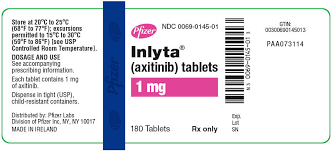
3. Usage, dosage and individual adjustment
The standard adult starting dose of axitinib is 2 mg per day taken orally twice in the morning and evening. According to the patient's tolerance and efficacy of the drug, the dose can be gradually adjusted, generally ranging from 1mg to 5mg/Second-rate. If increased blood pressure, proteinuria, thyroid dysfunction, or other serious adverse reactions occur, the doctor may temporarily stop the drug, reduce the dose, or extend the dosing interval.
The drug can be taken before or after meals, but it should be avoided to be taken at the same time as high-fat meals, because high-fat meals may affect drug absorption and increase fluctuations in blood drug concentrations. Tablets should be swallowed whole and should not be crushed or chewed to ensure the stability and efficacy of the drug. During the medication period, patients need to strictly follow the doctor's instructions for dosage adjustment and course management to maximize the efficacy and reduce side effects.
4. Precautions, taboos and monitoring
During the use of axitinib, patients should regularly monitor blood pressure, liver and kidney function, thyroid function, and blood routine. Common adverse reactions include hypertension, proteinuria, fatigue, thyroid dysfunction, diarrhea, hand-foot skin reaction, etc. If serious adverse events occur, they should be reported to the doctor immediately to determine whether the dose needs to be adjusted or the drug discontinued.
Axitinib has potential risks to pregnant and lactating women. They should take effective contraceptive measures and avoid breastfeeding during use. It is contraindicated in patients allergic to axitinib or its excipients. In addition, patients with severely impaired liver function or cardiovascular disease need to weigh the pros and cons before use and conduct close monitoring under the guidance of a doctor.
5. Clinical significance and prospects
Axitinib provides an effective targeted therapy for patients with advanced renal cell carcinoma by highly selectively inhibiting the VEGFR signaling pathway. Compared with traditional treatment, its oral administration method is convenient and its side effects are controllable, allowing patients to take medicine for a long time while ensuring their quality of life. In the future, with the accumulation of more clinical trial data, the application of axitinib in other solid tumors may be further expanded to provide more patients with precise treatment options.
In summary, axitinib is a highly selective oral VEGFR inhibitor suitable for patients with advanced renal cell carcinoma. Patients must strictly follow medical instructions when using it and monitor relevant indicators regularly to ensure safe and effective treatment.
Reference materials:https://www.drugs.com/
[ 免责声明 ] 本页面内容来自公开渠道(如FDA官网、Drugs官网、原研药厂官网等),仅供持有医疗专业资质的人员用于医学药学研究参考,不构成任何治疗建议或药品推荐。所涉药品可能未在中国大陆获批上市,不适用于中国境内销售和使用。如需治疗,请咨询正规医疗机构。本站不提供药品销售或代购服务。


