
.jpeg)
Can the combination of dabrafenib (Tefilla) and trametinib effectively enter the brain to treat brain metastases?
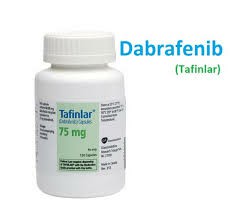
Dabrafenib (Dabrafenib) combined with trametinib (Trametinib) has shown significant efficacy in patients with BRAF V600 mutated melanoma brain metastases, becoming a new treatment option for such patients. However, its efficacy and application in other types of brain metastases still require further study.
1. Clinical research results on melanoma brain metastasis
In the COMBI-MB clinical trial, researchers evaluated the efficacy of dabrafenib in combination with trametinib in patients with BRAF V600 mutated melanoma brain metastases. The results showed that the combination therapy had good efficacy and tolerability in patients with brain metastases. Specifically, the objective response rate was 58%, the median duration of response was 6.5 months, the disease control rate was 64%, and the median progression-free survival was 6.9 months. These results indicate that dabrafenib combined with trametinib has significant efficacy in patients with melanoma brain metastases.
lancet
2. Research progress on brain metastasis of non-small cell lung cancer
For patients with brain metastases from BRAF V600E mutated non-small cell lung cancer (NSCLC), the combination treatment of dabrafenib and trametinib also shows certain efficacy. In a Phase II clinical trial, the intracranial objective response rate in the combination group was 53%, and the median response duration was pan>5.5 months, the disease control rate was 68%, and the median progression-free survival was 6.2 months. These results indicate that the combination treatment of dabrafenib and trametinib has certain efficacy in patients with BRAF V600Emutated NSCLC brain metastases.
JTO
3. Advantages and limitations of combined treatment
The advantage of combined treatment with dabrafenib and trametinib is that it can simultaneously inhibitBRAF and MEK pathways, thereby effectively blocking the proliferation signals of tumor cells and delaying the occurrence of drug resistance. In addition, the combination therapy showed good efficacy and tolerability in patients with brain metastases. However, it should be noted that combination therapy may cause some adverse reactions, such as rash, fever, joint pain, etc., and drug resistance may occur in some patients. Therefore, in clinical application, it is necessary to comprehensively consider the specific conditions of patients and formulate individualized treatment plans.
4. Future research directions
Although the combination therapy of dabrafenib and trametinib has shown good efficacy in patients with BRAF V600 mutated brain metastases, its efficacy and safety in other types of brain metastases still require further study. Future research should focus on the evaluation of the efficacy of combination therapy in patients with different types of brain metastases, the exploration of resistance mechanisms, and comparison with other treatment options, in order to provide more effective treatment options for patients with brain metastases.
In short, the combination therapy of dabrafenib and trametinib has shown significant efficacy in patients with BRAF V600 mutated brain metastases, becoming a new treatment option for such patients. However, its efficacy and application in other types of brain metastases still require further study.
Reference materials:https://www.drugs.com/
[ 免责声明 ] 本页面内容来自公开渠道(如FDA官网、Drugs官网、原研药厂官网等),仅供持有医疗专业资质的人员用于医学药学研究参考,不构成任何治疗建议或药品推荐。所涉药品可能未在中国大陆获批上市,不适用于中国境内销售和使用。如需治疗,请咨询正规医疗机构。本站不提供药品销售或代购服务。


