.jpeg)
Cabozantinib: Pivotal Advancements and Global Implications in Multi-Cancer Treatment with Multi-Kinase Inhibition
Evolving Beyond Traditional TKI Paradigms,Cabozantinib(Cabozantinib)has emerged as a cornerstone in multi-cancer treatment,transitioning from late-line options to frontline and maintenance strategies.Its pan-cancer potential is validated across Renal Cell Carcinoma(RCC),Radioiodine-Refractory Differentiated Thyroid Cancer(RAI-R DTC),Hepatocellular Carcinoma(HCC),and Neuroendocrine Tumors(NETs),driven by ongoing global research in 2025-2026.
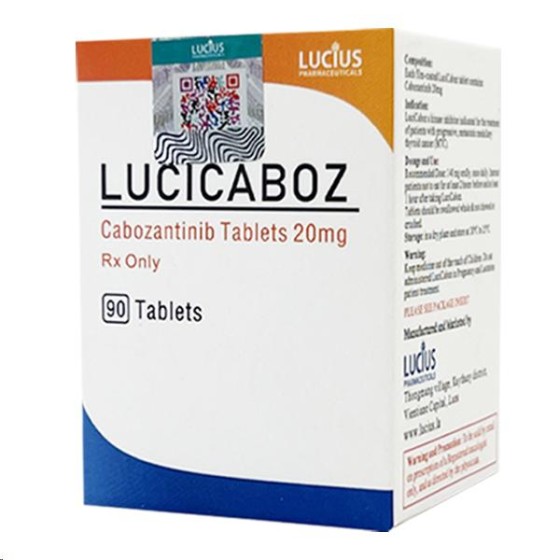
Developed by Exelixis,Cabozantinib is available as COMETRIQ capsules and CABOMETYX tablets.While pending approval in mainland China,it has become a mainstay therapy in Hong Kong,Japan,Europe,and other regions,alongside emerging biosimilars expanding patient access.
The Science of Indication Expansion:
Distinguishing itself from single-target agents,Cabozantinib’s trifecta of MET,VEGFR,and AXL inhibition aligns with the“Immuno-Angiogenesis-Microenvironment”trifecta therapy paradigm.Its ability to tackle resistance mechanisms—tumor microenvironment remodeling,angiogenesis,and MET activation—enables sequential and combination efficacy.This multi-modal profile positions it as a platform drug rather than a standalone TKI.
RCC:Leading in Combination and Personalization:
In RCC,Cabozantinib+Nivolumab is a defining frontline regimen,validated by CheckMate 9ER’s long-term data.The 2026 RCC landscape is evolving toward precision stratification:AI pathology,radiomics,and genomic modeling are identifying high-risk,VEGF-high,immune-refractory,and bone-metastatic patients most likely to benefit.While facing competition from novel combinations,Cabozantinib’s advantages consolidate in:
1.High-tumor burden cases
2.VEGF-addicted tumors
3.Post-immunotherapy resistance
4.Osteolytic bone metastases
Thyroid Cancer:A Lifeline in RAI-R DTC:
For RAI-R DTC patients facing limited options,Cabozantinib offers non-mutation-dependent control.Its value lies in:
•Slowing progression kinetics
•Mitigating lung/bone metastases
•Reducing local invasion risks
•Extending disease-stable survival
This aligns with modern thyroid oncology’s shift from“watchful waiting”to proactive multi-targeted interventions,particularly post-VEGFR TKI failure.
NETs:A Game-Changer in Limited Landscape:
The 2025 FDA approval for pNET/epNET based on CABINET data marks a pivotal moment.NETs,despite often-indolent nature,pose challenges with chronic progression,liver metastases,and hormonal syndromes.Cabozantinib’s broad-spectrum activity across primary sites填补了therapeutic gaps,offering hope where options were scarce.Its approval reflects a growing recognition of NET heterogeneity.
HCC:Vital Post-Sorafenib Control:
In HCC,Cabozantinib addresses unmet needs post-sorafenib/immunotherapy failure.Its role centers on:
•Maintaining disease stabilization
•Suppressing angiogenesis-driven metastasis
•Exploring combinations with immunotherapy,loco-regional therapies,or microenvironment modulators
Given HCC patients’often-compromised liver function,meticulous dose titration,toxicity monitoring,and supportive care are paramount to balance efficacy and tolerability.
Beyond Efficacy:Mastering Toxicity Management:
While managing side effects like hand-foot syndrome,hypertension,diarrhea,and mucositis,modern practice prioritizes continuity:
•Dynamic dose adjustments(e.g.,step-down protocols)
•Intermittent dosing schedules
•Symptom prophylaxis/early intervention
•Personalized regimen adaptations
This shift from“stop-and-go”to“manage-and-continue”preserves long-term benefits.
Global Access and Biosimilar Landscape:
Original formulations are priced in the tens of thousands of HK dollars in Hong Kong,with Japan,Europe,and Turkey versions offering alternatives.Biosimilars from Laos,Bangladesh,India have gained traction in Asia-Pacific due to cost-effectiveness.Key considerations when sourcing internationally include:
•Manufacturer regulatory approvals
•Bioequivalence data
•Storage/transport conditions
•Dosage form equivalency(never substitute capsules and tablets arbitrarily)
[ 免责声明 ] 本页面内容来自公开渠道(如FDA官网、Drugs官网、原研药厂官网等),仅供持有医疗专业资质的人员用于医学药学研究参考,不构成任何治疗建议或药品推荐。所涉药品可能未在中国大陆获批上市,不适用于中国境内销售和使用。如需治疗,请咨询正规医疗机构。本站不提供药品销售或代购服务。