.jpeg)
Selpercatinib Complete Medication Guide: Indications, Dosage and Safety Information for RET Inhibitor
Drug Overview
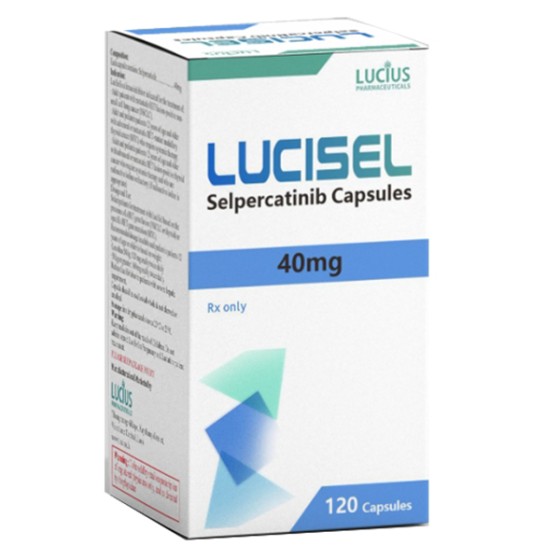
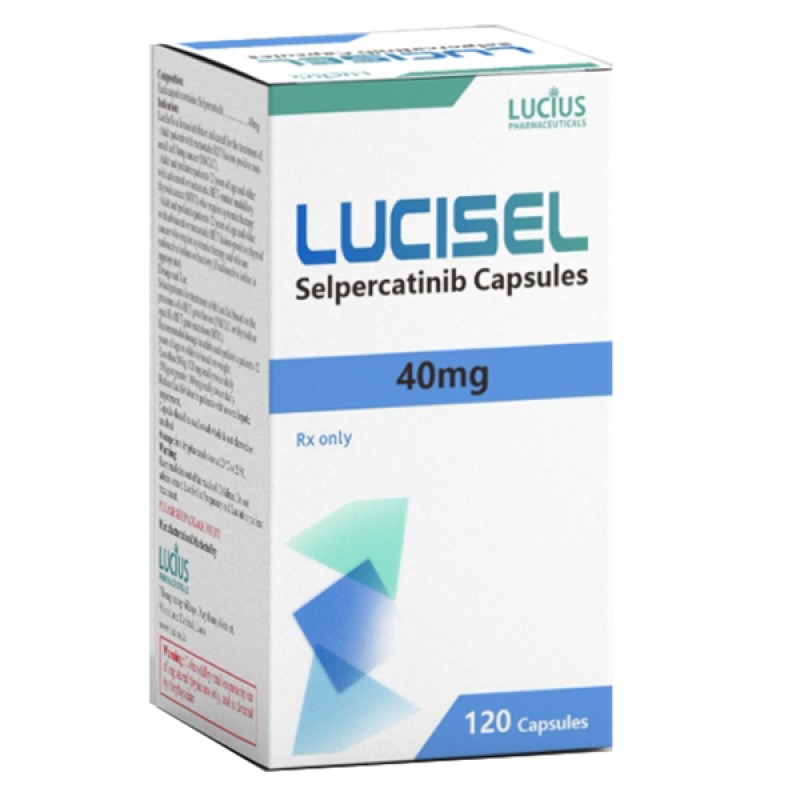
Selpercatinib is an oral,highly selective RET(rearranged during transfection)tyrosine kinase inhibitor that specifically blocks abnormal activation of RET kinase,thereby inhibiting tumor cell proliferation and survival.This drug has been approved in multiple countries and regions worldwide for the treatment of advanced solid tumors associated with RET gene alterations.
Indications
Selpercatinib as monotherapy is indicated for the treatment of the following RET gene alteration-related tumors:
Adult patients:
Advanced RET fusion-positive non-small cell lung cancer(NSCLC)in patients who have not received prior RET inhibitor therapy
Advanced RET fusion-positive solid tumors when non-RET targeted therapies have provided limited clinical benefit or have been exhausted
Adolescent patients aged 12 years and older and adults:
Advanced RET fusion-positive thyroid cancer that is radioactive iodine-refractory(if radioactive iodine is appropriate)
Advanced RET-mutant medullary thyroid cancer(MTC)
Dosage and Administration
Pre-treatment Requirements
Treatment with selpercatinib should be initiated and supervised by a physician experienced in the use of anticancer medicinal products.All patients must have confirmation of a RET gene alteration using a validated method prior to starting treatment:RET mutation for medullary thyroid cancer and RET fusion for other tumors.
Recommended Dosage
The starting dose is based on patient body weight:
Patients weighing less than 50 kg:120 mg orally twice daily
Patients weighing 50 kg or more:160 mg orally twice daily
If a dose is missed or vomiting occurs after dosing,no additional dose should be taken.The next dose should be taken at the regularly scheduled time.Treatment should continue until disease progression or unacceptable toxicity.
Dosage Adjustments for Concomitant Medications
If concomitant use of a strong CYP3A inhibitor is necessary,the current selpercatinib dose should be reduced by 50%.After discontinuing the strong CYP3A inhibitor,the selpercatinib dose should be returned to the dose used prior to initiation of the CYP3A inhibitor after 3-5 half-lives of the inhibitor have elapsed.
Method of Administration
Selpercatinib is for oral use.The capsules/tablets should be swallowed whole with water and must not be opened,chewed,crushed,or split.If a patient is unable to swallow a large strength tablet,smaller strength tablets may be combined to achieve the required dose.
Doses should be taken approximately 12 hours apart,at the same time each day.Selpercatinib can be taken with or without food.If concomitant use of a proton pump inhibitor is necessary,selpercatinib should be taken with food.If concomitant use of an H2-receptor antagonist is necessary,the H2-receptor antagonist should be administered at least 2 hours before or 10 hours after selpercatinib.
Special Populations
Elderly Patients
No dosage adjustment is recommended based on age.There is no overall difference in the incidence of adverse events or treatment effectiveness between patients aged 65 years and older and younger patients,but limited data are available for patients aged 75 years and older.
Renal Impairment
No dosage adjustment is recommended for patients with mild,moderate,or severe renal impairment.No data are available for patients with end-stage renal disease or patients on dialysis.
Hepatic Impairment
Mild(Child-Pugh Class A)or moderate(Child-Pugh Class B)impairment:No dosage adjustment is recommended,but patients should be closely monitored for safety
Severe(Child-Pugh Class C)impairment:The recommended dose is 80 mg orally twice daily
Pediatric Population
Selpercatinib is contraindicated in children under 12 years of age.
Children aged 12 years and older may be treated for RET-mutant medullary thyroid cancer and RET fusion-positive thyroid cancer,with dosing based on body weight.Epiphyseal growth plates should be monitored during treatment,especially in adolescents with open epiphyses.If growth plate abnormalities occur,the decision to interrupt or discontinue treatment should be based on a risk-benefit assessment.
Fertility and Contraception
Women of childbearing potential must use highly effective contraception during treatment and for at least 1 week after the last dose of selpercatinib.Men with female partners of childbearing potential must use effective contraception during treatment and for at least 1 week after the last dose.
Based on animal studies,selpercatinib may impair male and female fertility.Patients with reproductive potential are advised to consult about fertility preservation options prior to treatment.
Pregnancy and Lactation
Selpercatinib is contraindicated during pregnancy.Animal studies have shown reproductive toxicity,and there are no adequate data from the use of selpercatinib in pregnant women.Selpercatinib should only be used during pregnancy if the potential benefit justifies the potential risk to the fetus.
Selpercatinib is contraindicated during breastfeeding.Breastfeeding should be discontinued during treatment and for at least 1 week after the last dose.It is unknown whether selpercatinib is excreted in human milk,but there is a potential risk to breastfed infants.
Effects on Ability to Drive and Use Machines
Selpercatinib may cause fatigue or dizziness,which can have a minor influence on the ability to drive and use machines.Patients should be cautioned about driving or operating machinery while taking this medication.
Warnings and Precautions
Interstitial Lung Disease(ILD)/Pneumonitis
Severe,life-threatening,or fatal interstitial lung disease/pneumonitis can occur with selpercatinib.Patients should be monitored for pulmonary symptoms such as dyspnea,cough,and fever.Selpercatinib should be immediately withheld in patients with suspected ILD/pneumonitis and evaluated promptly.Depending on the severity,treatment interruption,dose reduction,or permanent discontinuation may be required.
Hepatic Transaminase Elevations
In clinical trials,ALT elevations occurred in 59.4%of patients and AST elevations in 61%of patients,with 14.1%and 9.5%being Grade 3/4,respectively.Baseline liver function tests should be obtained prior to treatment,monitored every 2 weeks for the first 3 months,then monthly for the next 3 months,and as clinically indicated thereafter.Dosage adjustments should be made according to the severity of transaminase elevations.
Hypertension
Treatment-related hypertension occurred in 44.8%of patients with a history of hypertension and 41.7%of patients without a history of hypertension,with 19.8%of the overall population experiencing Grade 3 hypertension.Blood pressure should be well-controlled prior to initiating treatment and monitored regularly during treatment.Antihypertensive therapy should be initiated as appropriate.Selpercatinib should be permanently discontinued if hypertension cannot be controlled with optimal medical management.
QT Interval Prolongation
Selpercatinib can prolong the QT interval.Selpercatinib should be used with caution in patients with congenital long QT syndrome,acquired long QT syndrome,or who are at high risk for arrhythmias.Prior to treatment,patients should have a QTcF≤470 ms and normal electrolytes.ECG and electrolytes should be monitored 1 week after initiation,monthly for the first 6 months,and as clinically indicated thereafter.Monitoring frequency should be increased in patients with diarrhea or vomiting.Hypokalemia,hypomagnesemia,and hypocalcemia should be corrected prior to treatment and during therapy.Increased monitoring is recommended when selpercatinib is used concomitantly with drugs that prolong the QT interval.
Hypothyroidism
Hypothyroidism is a common adverse reaction to selpercatinib.Baseline thyroid function should be obtained prior to treatment and monitored regularly during therapy.Hypothyroidism should be treated with standard replacement therapy.Note that selpercatinib may inhibit the conversion of thyroxine(T4)to triiodothyronine(T3),and liothyronine supplementation may be considered when levothyroxine replacement therapy is not effective.
Hypersensitivity Reactions
Hypersensitivity reactions occurred predominantly in NSCLC patients who had received prior anti-PD-1/PD-L1 immunotherapy,presenting with fever,rash,arthralgia/myalgia with thrombocytopenia or transaminase elevations.Selpercatinib should be withheld and corticosteroids initiated upon development of hypersensitivity reactions.Dosage adjustments should be made according to severity.
Hemorrhagic Events
Serious,including fatal,hemorrhagic events can occur with selpercatinib,such as cerebral hemorrhage and hemoptysis.Selpercatinib should be permanently discontinued in patients with life-threatening or recurrent severe hemorrhage.
Tumor Lysis Syndrome(TLS)
Patients at high risk for TLS(high tumor burden,chronic renal insufficiency,oliguria,dehydration,hypotension,acidic urine)should be closely monitored and appropriate prophylaxis,including hydration,should be administered as necessary.
Femoral Epiphysiolysis in Pediatric Patients
Femoral epiphysiolysis may occur in patients under 18 years of age.Patients should be monitored for hip/knee pain or unexplained limp,and prompt intervention should be initiated if symptoms occur.
Severe Cutaneous Adverse Reactions(SCARs)
Severe cutaneous adverse reactions,including Stevens-Johnson syndrome(SJS),which can be fatal,have been reported with selpercatinib.If patients develop rash,mucosal ulceration,or skin exfoliation,selpercatinib should be immediately discontinued and the patient should be evaluated medically.Selpercatinib is contraindicated in patients who have developed SJS while taking this medication.
Strong CYP3A Inducers
Concomitant use of selpercatinib with strong CYP3A inducers(e.g.,carbamazepine,rifampicin,St.John's wort)is contraindicated,as this may significantly decrease selpercatinib plasma concentrations and reduce efficacy.
Drug Interactions
Effects of Other Drugs on Selpercatinib
Selpercatinib is primarily metabolized by CYP3A4 and is a substrate of P-gp and BCRP.
Increased selpercatinib concentrations:When used concomitantly with strong CYP3A and/or P-gp inhibitors(e.g.,itraconazole,ketoconazole,ritonavir),the dose of selpercatinib should be reduced as recommended
Decreased selpercatinib concentrations:Concomitant use with strong CYP3A4 inducers(e.g.,rifampicin,carbamazepine,St.John's wort)is contraindicated,as this may reduce selpercatinib exposure by 70%-87%
Effects of Selpercatinib on Other Drugs
Increased concentrations of other drugs
Sensitive CYP2C8 substrates(e.g.,repaglinide,paclitaxel):Concomitant use should be avoided.Selpercatinib increased repaglinide AUC by 188%
Sensitive CYP3A4 substrates(e.g.,midazolam,simvastatin):Concomitant use should be avoided.Selpercatinib increased midazolam AUC by 54%
P-gp substrates(e.g.,digoxin,dabigatran):Caution is advised,particularly with narrow therapeutic index drugs.Selpercatinib increased dabigatran AUC by 38%
Decreased efficacy of other drugs
Selpercatinib may inhibit type 2 iodothyronine deiodinase,reducing the conversion of levothyroxine to active T3,which may result in inadequate levothyroxine replacement therapy.Liothyronine supplementation may be considered if necessary.
Drugs that affect gastric pH
Concomitant use with proton pump inhibitors:Fasting administration reduces selpercatinib exposure,therefore selpercatinib should be taken with food
Concomitant use with H2-receptor antagonists:Administration should be separated by at least 2 hours
Adverse Reactions
Overall Safety Profile
Based on integrated data from three studies(LIBRETTO-001[Phase I/II],LIBRETTO-431[Phase III],and LIBRETTO-531[Phase III]),the most common serious adverse reactions(incidence≥1%)were pneumonia(5.3%),hemorrhage(2.4%),abdominal pain(2.1%),hyponatremia(2.0%),diarrhea(1.5%),hypersensitivity(1.4%),vomiting(1.3%),increased creatinine(1.3%),pyrexia(1.3%),urinary tract infection(1.3%),increased ALT(1.0%),and increased AST(1.0%).
Permanent discontinuation due to adverse reactions occurred in 8.8%of patients,with the most common reasons being increased ALT(0.7%),fatigue(0.5%),and increased AST(0.4%).
Adverse Reactions by System Organ Class
Infections and infestations:Urinary tract infection(very common),pneumonia(very common)
Immune system disorders:Hypersensitivity(common)
Endocrine disorders:Hypothyroidism(very common)
Metabolism and nutrition disorders:Decreased appetite(very common)
Nervous system disorders:Headache(very common),dizziness(very common)
Cardiac disorders:QT interval prolongation(very common)
Vascular disorders:Hypertension(very common),hemorrhage(very common)
Respiratory,thoracic and mediastinal disorders:Interstitial lung disease/pneumonitis(common),chylothorax(common)
Gastrointestinal disorders:Diarrhea(very common),dry mouth(very common),abdominal pain(very common),constipation(very common),nausea(very common),vomiting(very common),stomatitis(very common),chylous ascites(common)
Skin and subcutaneous tissue disorders:Rash(very common),Stevens-Johnson syndrome(not known)
Musculoskeletal and connective tissue disorders:Femoral epiphysiolysis(common)
Reproductive system and breast disorders:Erectile dysfunction(very common)
General disorders and administration site conditions:Edema(very common),fatigue(very common),pyrexia(very common)
Investigations:Increased AST(very common),increased ALT(very common),hypocalcemia(very common),lymphopenia(very common),leukopenia(very common),hypoalbuminemia(very common),increased creatinine(very common),hyponatremia(very common),increased alkaline phosphatase(very common),thrombocytopenia(very common),increased total bilirubin(very common),neutropenia(very common),anemia(very common),hypomagnesemia(very common),hypokalemia(very common)
Details of Specific Adverse Reactions
Hepatic transaminase elevations:Median time to onset was 4.4-6.1 weeks after starting treatment.Dosage adjustments should be made according to severity
QT interval prolongation:QTcF>500 ms occurred in 8.1%(LIBRETTO-001),5.1%(LIBRETTO-431),and 3.7%(LIBRETTO-531)of patients.No cases of torsades de pointes were reported.0.2%of patients permanently discontinued treatment due to QT prolongation
Hypertension:Median increase in baseline systolic blood pressure was 32 mmHg.Treatment-related hypertension occurred in 44.8%of patients with a history of hypertension and 41.7%of patients without a history of hypertension,with 19.8%experiencing Grade 3 hypertension.0.2%of patients permanently discontinued treatment due to hypertension
Hypersensitivity reactions:Overall incidence was 5.7%,with a higher incidence in patients who had received prior anti-PD-1/PD-L1 therapy(16.6%).Median time to onset was 1.7-4.4 weeks
Hemorrhagic events:Grade≥3 hemorrhage occurred in 2.5%of patients,with 0.5%being fatal(e.g.,cerebral hemorrhage,hemoptysis).Median time to onset was 10.7-34.1 weeks
Adverse Reactions in Special Populations
Pediatric patients:The incidence of femoral epiphysiolysis was 6.4%in patients under 18 years of age.No other unique safety signals were identified
Elderly patients:The incidence of serious adverse events was higher in patients aged 65 years and older compared to younger patients.The discontinuation rate was higher in patients aged 85 years and older
Contraindications
Hypersensitivity to the active substance or to any of the excipients.
[ 免责声明 ] 本页面内容来自公开渠道(如FDA官网、Drugs官网、原研药厂官网等),仅供持有医疗专业资质的人员用于医学药学研究参考,不构成任何治疗建议或药品推荐。所涉药品可能未在中国大陆获批上市,不适用于中国境内销售和使用。如需治疗,请咨询正规医疗机构。本站不提供药品销售或代购服务。