.jpeg)
Dabrafenib Clinical Guide: Indications, Combination Strategies, and BRAF Inhibitor Comparisons
1.Drug Overview and Core Indications
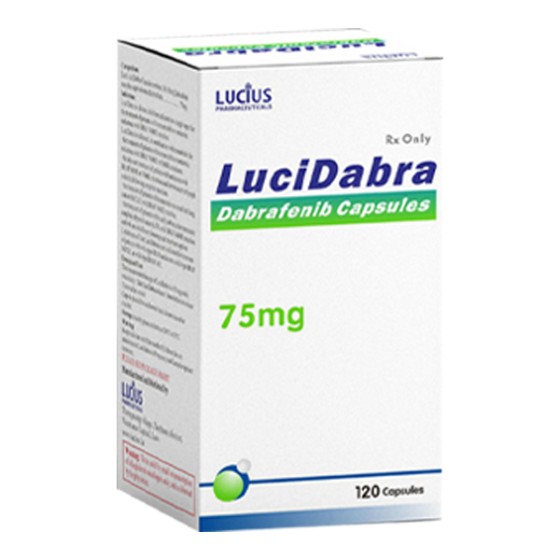
Dabrafenib(brand name Tafinlar)is a highly selective BRAF kinase inhibitor designed to target tumor cells harboring BRAF V600 mutations.It plays a pivotal role in the molecular targeted therapy of multiple solid tumors.
Monotherapy Indication:Approved for patients with unresectable or metastatic melanoma carrying a BRAF V600E mutation,as confirmed by a validated testing method.
Combination with Trametinib—Expanded Indications:
BRAF V600E or V600K-mutant unresectable or metastatic melanoma
Adjuvant treatment of the above melanoma with lymph node involvement post-surgery
BRAF V600E-mutant metastatic non-small cell lung cancer(NSCLC)
BRAF V600E-mutant locally advanced or metastatic anaplastic thyroid cancer
BRAF V600E-mutant unresectable or metastatic solid tumors(patients aged 6 years and older)
BRAF V600E-mutant low-grade glioma(patients aged 1 year and older)
Dosage and Administration:The standard dose is 150 mg(two 75 mg capsules)taken orally twice daily.The dose remains unchanged when combined with trametinib.BRAF V600E or V600K mutation status must be confirmed through a validated molecular test prior to initiation.
Common Adverse Reactions:Fever,rash,hyperkeratosis,arthralgia,fatigue,and photosensitivity.Combination therapy increases the incidence of pyrexia and gastrointestinal symptoms.
2.Comparative Analysis of Three Major BRAF Inhibitors
Three selective BRAF V600 inhibitors are widely used in clinical practice:dabrafenib,vemurafenib,and encorafenib.While all target the same mutation,they differ in pharmacokinetics,safety profiles,and combination partners.
Pharmacokinetic Differences:Dabrafenib has a short half-life(~8 hours),requiring twice-daily dosing.Vemurafenib has a longer half-life(~30 hours),also dosed twice daily but requiring whole-tablet swallowing.Encorafenib has the longest half-life,allowing once-daily dosing with greater convenience.
Efficacy Comparison:As monotherapy,all three agents achieve objective response rates(ORR)of 50%–70%in BRAF V600-mutant melanoma,with no significant differences.In combination with MEK inhibitors,dabrafenib plus trametinib has accumulated the most robust evidence from multiple Phase III trials,demonstrating consistent progression-free survival(PFS)and overall survival(OS)benefits.Encorafenib plus binimetinib also shows strong antitumor activity.
Safety Profiles:Dabrafenib-based combinations carry a lower risk of cutaneous squamous cell carcinoma compared to vemurafenib.Encorafenib combinations are associated with relatively higher gastrointestinal toxicity.
Overall Assessment:The three agents are broadly comparable in efficacy.Dabrafenib's key advantage lies in its extensive clinical evidence base with trametinib,the most comprehensive long-term follow-up data,and a more favorable skin toxicity profile,making it widely recommended across multiple tumor types in international guidelines.
3.Monotherapy:Positioning and Limitations
Dabrafenib monotherapy is currently approved only for BRAF V600E-mutant unresectable or metastatic melanoma.However,clinical practice has revealed two major limitations:rapid development of resistance(median PFS approximately 5–6 months)and a high incidence of secondary cutaneous malignancies,particularly squamous cell carcinoma(approximately 15%–20%).
Given these limitations,monotherapy is now reserved for specific clinical scenarios:
Patients with documented intolerance or contraindication to MEK inhibitors
Temporary discontinuation of the MEK inhibitor due to severe toxicity while maintaining BRAF inhibitor therapy
Patients with poor performance status unable to tolerate combination-related additive toxicity
The monotherapy dose is 150 mg twice daily,administered on an empty stomach(at least 1 hour before or 2 hours after meals).
4.Dabrafenib Plus Trametinib—The Dual-Target Standard
The combination of dabrafenib and trametinib is the recognized standard of care for BRAF V600-mutant solid tumors.By simultaneously blocking BRAF and MEK,the dual-target approach achieves deep suppression of the MAPK signaling pathway,delaying acquired resistance and enhancing response depth.
First-Line Melanoma:ORR reaches 60%–70%,with median PFS of approximately 11–14 months,significantly superior to BRAF inhibitor monotherapy.Long-term follow-up demonstrates durable responses in a subset of patients.
Adjuvant Therapy:For high-risk melanoma patients with lymph node involvement,adjuvant combination therapy reduces recurrence risk by approximately 50%.
Non-Small Cell Lung Cancer(NSCLC):The combination achieves an ORR of approximately 60%and median PFS of approximately 14 months,establishing it as the preferred first-line treatment for BRAF V600E-mutant NSCLC.
Other Tumor Types:Encouraging efficacy data have been observed in anaplastic thyroid cancer,low-grade glioma,and other BRAF V600E-mutant solid tumors.
Dosing Regimen:Dabrafenib 150 mg twice daily plus trametinib 2 mg once daily,initiated concurrently.Pyrexia(occurring in over 60%of patients)and gastrointestinal symptoms are more frequent with combination therapy but are generally manageable through prophylactic antipyretics,dose modifications,and supportive care.
5.Combination Strategies and Future Directions
Trametinib remains the most effective and well-validated combination partner for dabrafenib.Preclinical and clinical evidence confirms that simultaneous BRAF and MEK inhibition produces synergistic effects:enhanced tumor cell killing,delayed emergence of resistant clones,and reduced risk of secondary skin malignancies caused by paradoxical MAPK pathway activation.
Targeted Therapy Plus Immunotherapy:Triple combinations of dabrafenib,trametinib,and immune checkpoint inhibitors(e.g.,anti-PD-1/PD-L1 antibodies)have been explored in melanoma.While preliminary data suggest improved response rates,hepatotoxicity and immune-related adverse events are significantly increased.Such approaches remain investigational and are not yet standard of care.
Post-Progression Strategies:Following progression on dabrafenib plus trametinib,current strategies include switching to immunotherapy(if not previously used),enrollment in clinical trials,or other salvage regimens.There is insufficient evidence to support adding chemotherapy or immunotherapy on top of dual-targeted therapy as a routine approach.
Conclusion:Within the current evidence framework,the dabrafenib-trametinib dual-target combination represents the most mature,efficacious,and guideline-endorsed therapeutic strategy for BRAF V600-mutant tumors.
[ 免责声明 ] 本页面内容来自公开渠道(如FDA官网、Drugs官网、原研药厂官网等),仅供持有医疗专业资质的人员用于医学药学研究参考,不构成任何治疗建议或药品推荐。所涉药品可能未在中国大陆获批上市,不适用于中国境内销售和使用。如需治疗,请咨询正规医疗机构。本站不提供药品销售或代购服务。