
.jpeg)
Enfortumab Vedotin (Padcev): Nectin-4-Targeted ADC for Advanced Urothelial Carcinoma
Drug Overview
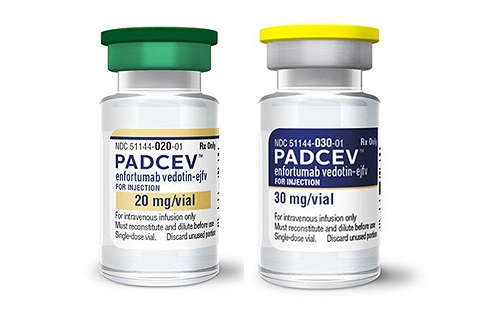
Enfortumab vedotin-ejfv(brand name:Padcev)is an antibody-drug conjugate(ADC)targeting Nectin-4,approved by the U.S.FDA in 2019.The drug consists of a monoclonal antibody directed against Nectin-4 conjugated to the microtubule inhibitor monomethyl auristatin E(MMAE).It specifically binds to Nectin-4,which is highly expressed on the surface of tumor cells,and precisely delivers the cytotoxic agent inside tumor cells,effectively inhibiting tumor cell division and inducing apoptosis.
Indications
Combination Therapy(with Pembrolizumab)
Enfortumab vedotin in combination with pembrolizumab is indicated for the treatment of adult patients with locally advanced or metastatic urothelial carcinoma,regardless of cisplatin eligibility.
Monotherapy
Indicated for adult patients with locally advanced or metastatic urothelial carcinoma who:
Have previously received a PD-1/PD-L1 inhibitor and platinum-containing chemotherapy
Are ineligible for cisplatin-containing chemotherapy and have received one or more prior lines of systemic therapy
Dosage and Administration
Recommended Dosage
In combination with pembrolizumab:1.25 mg/kg(maximum 125 mg per dose)administered as an intravenous infusion on Days 1 and 8 of each 21-day cycle until disease progression or unacceptable toxicity.
As monotherapy:1.25 mg/kg(maximum 125 mg per dose)administered as an intravenous infusion on Days 1,8,and 15 of each 28-day cycle until disease progression or unacceptable toxicity.
Administration
This product is for intravenous infusion only,with an infusion time of 30 minutes.Do not administer as an intravenous push or bolus injection.
Adverse Reactions
Common Adverse Reactions with Combination Therapy(Pembrolizumab)
Laboratory abnormalities include:increased aspartate aminotransferase,increased creatinine,increased glucose,increased lipase,lymphopenia,increased alanine aminotransferase,decreased hemoglobin,decreased sodium,decreased phosphorus,decreased albumin,increased uric acid,neutropenia,decreased potassium,and thrombocytopenia.
Clinical symptoms include:rash,fatigue,peripheral neuropathy,pruritus,diarrhea,alopecia,weight loss,decreased appetite,dry eye,nausea,constipation,dysgeusia,and urinary tract infection.
Common Adverse Reactions with Monotherapy
Laboratory abnormalities include:increased glucose,increased aspartate aminotransferase,lymphopenia,increased creatinine,decreased albumin,decreased hemoglobin,decreased sodium,increased alanine aminotransferase,decreased phosphorus,neutropenia,increased uric acid,increased lipase,and thrombocytopenia.
Clinical symptoms include:rash,fatigue,peripheral neuropathy,alopecia,decreased appetite,diarrhea,nausea,pruritus,dry eye,dysgeusia,constipation,weight loss,abdominal pain,and dry skin.
Serious Adverse Reactions
Cutaneous reactions:including Stevens-Johnson syndrome(SJS)and toxic epidermal necrolysis(TEN),which can be fatal and most often occur during the first treatment cycle.
Hyperglycemia and diabetic ketoacidosis:can occur in patients with or without a history of diabetes and may be fatal.
Pneumonitis and interstitial lung disease(ILD):severe cases can be fatal.
Peripheral neuropathy:occurs in up to 67%of patients receiving combination therapy,and some cases are irreversible.
Ocular disorders:primarily manifest as dry eye and blurred vision.
Precautions
Severe Cutaneous Reactions
This product can cause severe and potentially fatal cutaneous adverse reactions.If SJS/TEN is suspected or a severe cutaneous reaction occurs,discontinue treatment immediately and refer the patient to a dermatologist.Permanently discontinue Padcev in patients with confirmed SJS/TEN,Grade 4 cutaneous reactions,or recurrent Grade 3 cutaneous reactions.
Hyperglycemia
Closely monitor blood glucose levels in all patients during treatment.Interrupt treatment when blood glucose exceeds 250 mg/dL and resume only after glucose is controlled.
Pneumonitis and Interstitial Lung Disease
Monitor patients for signs and symptoms of pneumonitis or ILD,including cough,dyspnea,and hypoxia.Interrupt treatment for Grade 2 pneumonitis/ILD and consider dose reduction upon resolution.Permanently discontinue Padcev in patients with Grade 3 or 4 pneumonitis/ILD.
Peripheral Neuropathy
Closely monitor patients for new or worsening neurological symptoms such as numbness,tingling,burning sensation,and muscle weakness.Permanently discontinue Padcev in patients with Grade 3 or higher peripheral neuropathy.
Ocular Disorders
Advise all patients to use artificial tears routinely during treatment to prevent dry eye.Perform ophthalmologic evaluation if ocular symptoms develop,and topical corticosteroids may be considered if necessary.
Infusion Site Extravasation
Ensure proper venous access before infusion and closely monitor the infusion site for signs of extravasation such as redness and pain during administration.If extravasation is suspected,stop the infusion immediately and institute appropriate management.
Embryo-Fetal Toxicity
This product can cause fetal harm.Advise females of reproductive potential to use effective contraception during treatment and for 2 months after the last dose.Advise males with female partners of reproductive potential to use effective contraception during treatment and for 4 months after the last dose.
Hepatic Impairment
Avoid use of Padcev in patients with moderate or severe hepatic impairment,defined as total bilirubin>1.5 times the upper limit of normal with any aspartate aminotransferase level.
Contraindications
Absolute contraindications for enfortumab vedotin are currently not established.
[ 免责声明 ] 本页面内容来自公开渠道(如FDA官网、Drugs官网、原研药厂官网等),仅供持有医疗专业资质的人员用于医学药学研究参考,不构成任何治疗建议或药品推荐。所涉药品可能未在中国大陆获批上市,不适用于中国境内销售和使用。如需治疗,请咨询正规医疗机构。本站不提供药品销售或代购服务。


