.jpeg)
Belzutifan Clinical Application Guide: Precision Treatment for VHL Syndrome and Advanced RCC
Belzutifan is the world's first approved hypoxia inducible factor-2 alpha(HIF-2 alpha)inhibitor,primarily used for the treatment of tumors associated with Hipper Lindau syndrome(VHL)and advanced renal cell carcinoma(RCC)that has previously failed immunotherapy and anti angiogenic therapy.Its core value lies in inhibiting tumor angiogenesis by blocking the"pseudo hypoxia"signaling pathway,thereby avoiding patients from repeatedly undergoing surgical interventions.This guide aims to provide detailed medication references for clinical physicians,covering indications,dose management,risk monitoring,and medication precautions for special populations.
1、Indications and mechanisms of action
Beizu Tifan selectively inhibits HIF-2αand blocks its heterodimerization with HIF-1β,thereby shutting down downstream signaling pathways caused by VHL gene inactivation and significantly downregulating the expression of oncogenes such as VEGF and PDGF.
The applicable population includes:
VHL syndrome related tumors:Suitable for adult patients who require treatment but are not suitable for immediate surgery,including VHL related renal cell carcinoma(RCC),central nervous system(CNS)hemangioblastoma,or pancreatic neuroendocrine tumor(pNET).
Advanced renal cell carcinoma(RCC):suitable for adult patients who have experienced disease progression after previous treatment with PD-1/PD-L1 inhibitors and VEGF targeted tyrosine kinase inhibitors(TKIs).
2、Usage,dosage and administration management
Recommended dosage:
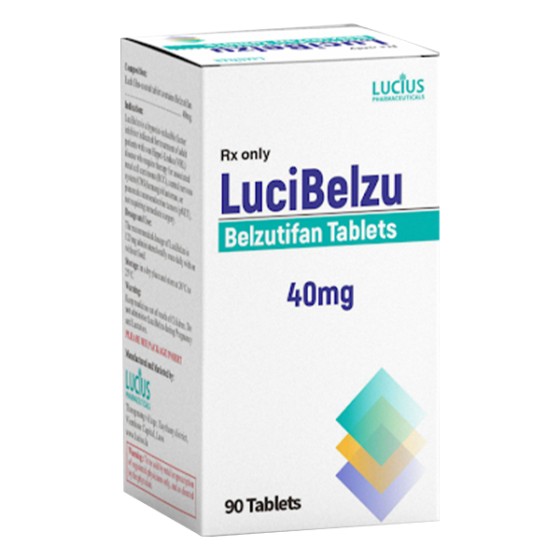
The standard recommended dose for adult patients is 120mg orally once daily(i.e.3 40mg tablets).It is recommended to take it daily at a fixed time and continue treatment until the disease progresses or intolerable toxic reactions occur.
Administration method:
Whole tablet ingestion:It is strictly prohibited to break,crush or chew the tablet to avoid damaging the drug structure and affecting absorption.
Dietary advice:Can be taken with food or on an empty stomach.Although a high-fat diet may slightly delay drug peak time,it does not affect overall exposure.
Omission and vomiting management:
Omission:If a missed dose occurs,it should be replenished as soon as possible on the same day;The next day,the regular dosage will be restored.Do not double the medication to make up for missed doses.
Vomiting:If vomiting occurs after taking the medication,there is no need to take it again on the same day.Continue taking the regular dose the next day.
3、Safety monitoring and adverse reaction management
Based on clinical trial data,the safety management of bevacizumab focuses on monitoring anemia and hypoxia.
Anemia:
About 84.2%of patients in clinical trials developed anemia,of which 28.8%were severe anemia of grade 3-4.
Management measures:Regular monitoring of hemoglobin levels is required before medication and during treatment.For grade 3 anemia,medication should be suspended and treated according to standard protocols(such as using erythropoietin or blood transfusion);If there is recurrent grade 3 or 4 anemia,the medication should be permanently discontinued.
Hypoxia:
About 16.3%of patients experience hypoxia,of which 12.2%are grade 3-4.
Management measures:Blood oxygen saturation should be regularly monitored before and during treatment.For level 3 asymptomatic hypoxia,it may be considered to suspend medication and administer oxygen,and reduce dosage after recovery;For level 3 symptoms or level 4 hypoxia,medication should be temporarily or permanently discontinued.
Other common adverse reactions:
Reactions with an incidence rate of≥10%include fatigue(42.7%),nausea(24.1%),dyspnea(21.4%),and dizziness(17.9%).
VHL patient special warning:
Patients with VHL syndrome related central nervous system hemangioblastoma may experience fatal intracranial hemorrhage.Patients need to be closely monitored for symptoms such as headaches,visual impairments,or limb weakness.
4、Drug interactions
The effects of bevacizumab on other drugs:
As a weak inducer of CYP3A4,bevacizumab may reduce the blood concentration of CYP3A4 substrates(such as certain hormonal contraceptives and sensitive therapeutic drugs),leading to contraceptive failure or reduced efficacy.Should avoid co use with sensitive CYP3A4 substrates;If unavoidable,increase the substrate dosage according to the instructions.
The effects of other drugs on bevacizumab:
UGT2B17 or CYP2C19 inhibitors may increase the exposure of bevacizumab and increase the risk of adverse reactions.It is necessary to closely monitor anemia and hypoxia and consider reducing the dosage.
5、Medication and contraindications for special populations
Pregnancy and lactation period:
Pregnancy:It has embryo fetal toxicity and may cause fetal malformation or death.VHL patients are strictly prohibited during pregnancy;RCC patients should avoid using it unless clinically necessary.Women of childbearing age should confirm that they are not pregnant before taking medication,and take effective contraceptive measures during treatment and at least one week after the last dose.
Breastfeeding period:Stop breastfeeding during the treatment period and at least one week after the last dose.
Liver and kidney dysfunction:
Renal function:Patients with mild to end-stage renal disease do not require dose adjustment.
Liver function:Mild to moderate(Child Pugh A/B)does not require dose adjustment;Severe(Child Pugh C)is not recommended due to lack of research data.
contraindication:
Those who are allergic to Beizu Tifan or any excipients are prohibited from using it;VHL patients are prohibited during pregnancy.
6、Storage and disposal
This product does not require special storage conditions,but should be kept out of reach and contact of children.Unused drugs or waste should be disposed of according to local regulations,and it is strictly prohibited to flush them into the sewer or mix them with household waste.
[ 免责声明 ] 本页面内容来自公开渠道(如FDA官网、Drugs官网、原研药厂官网等),仅供持有医疗专业资质的人员用于医学药学研究参考,不构成任何治疗建议或药品推荐。所涉药品可能未在中国大陆获批上市,不适用于中国境内销售和使用。如需治疗,请咨询正规医疗机构。本站不提供药品销售或代购服务。