.jpeg)
Fezolinetant Side Effects Complete Guide: Safety and Management for Menopausal Hot Flashes
1.Drug Overview and Safety Profile
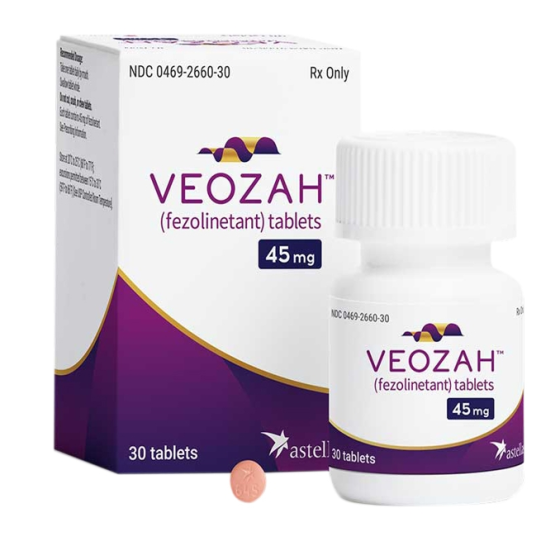
Fezolinetant is a neurokinin 3 receptor(NK3R)antagonist specifically developed for the treatment of moderate to severe vasomotor symptoms associated with menopause—commonly known as hot flashes and night sweats.It works by blocking NK3 receptors on KNDy neurons in the hypothalamus,precisely regulating the thermoregulatory center to effectively relieve hot flash symptoms.
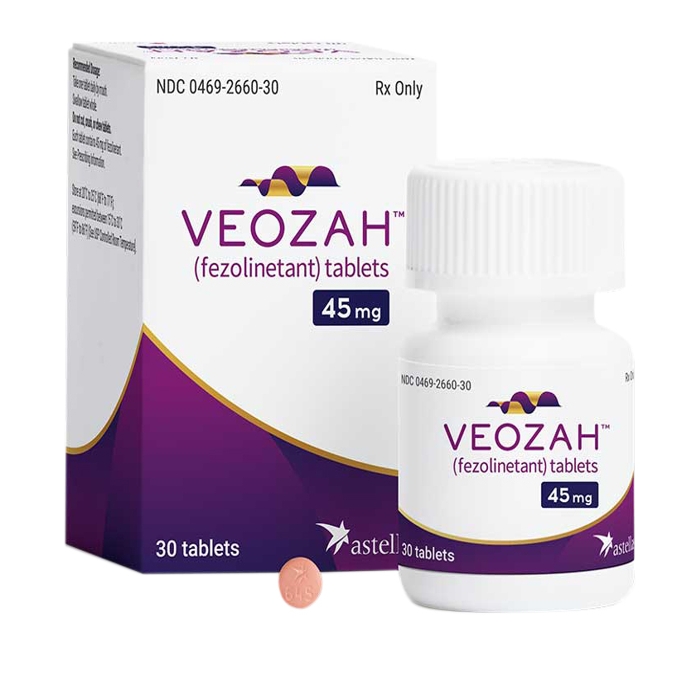
Overall,fezolinetant has a favorable safety profile,and most patients tolerate it well.According to data from the Phase III SKYLIGHT clinical trial program,side effects are generally mild to moderate and typically appear early in treatment,gradually diminishing or resolving with continued use.
2.Common Side Effects and Incidence
Based on Phase III clinical trial data,the common side effects of fezolinetant(incidence≥2%and higher than placebo)primarily include:
Headache:approximately 12%incidence,the most common adverse reaction
Nausea:approximately 8%incidence
Diarrhea:approximately 6%incidence
Fatigue:approximately 5%incidence
Insomnia:approximately 4%incidence
Serious adverse events are relatively rare in clinical trials,occurring in less than 1%of patients.Overall,fezolinetant has a relatively mild side effect profile that most patients can tolerate.
3.Headache:Onset and Management
Headache is the most common side effect of fezolinetant,occurring in approximately 12%of patients.Most are mild to moderate tension-type headaches that typically appear within 1 to 2 weeks of starting treatment,lasting from several hours to one day.
Management Recommendations:
Symptomatic medication:Acetaminophen 650 mg or ibuprofen 400 mg can effectively relieve headache symptoms
Daily care:Stay well-hydrated and avoid excessive caffeine intake
When to seek medical attention:If headaches persist or worsen progressively,seek medical evaluation to rule out other causes such as hypertension or migraine
Most patients'headache symptoms gradually improve or resolve spontaneously with continued treatment,and no special intervention is typically required.
4.Gastrointestinal Reactions and Management
Gastrointestinal reactions are another common category of side effects,with nausea occurring in approximately 8%,diarrhea in approximately 6%,and abdominal pain in approximately 3%of patients.These reactions are generally mild to moderate and occur primarily during the early stages of treatment.
Relief Measures:
Timing of administration:Taking the medication with or after meals can significantly reduce nausea
Dietary adjustments:Choose a light diet and avoid greasy,spicy,or irritating foods
Adjunctive medications:Domperidone 10 mg before meals for significant nausea;oral rehydration salts and montmorillonite powder for diarrhea
When to seek medical attention:If symptoms persist for more than one week or significantly affect eating,contact your doctor to evaluate whether dose reduction or treatment change is needed
5.Fatigue and Weakness Management
Fatigue occurs in approximately 5%of patients,primarily manifesting as daytime drowsiness and reduced energy levels.Most patients experience mild fatigue that generally does not interfere with daily activities or work.
Coping Strategies:
Regular sleep schedule:Maintain consistent sleep patterns and ensure adequate nighttime rest
Short naps:Brief naps of 20 to 30 minutes can help restore energy
Moderate exercise:Light to moderate physical activity such as walking or yoga can improve fatigue
Rule out other causes:Be mindful of secondary causes such as anemia or hypothyroidism
If fatigue significantly impacts quality of life,consider adjusting the dosing time to bedtime,which may help reduce daytime sleepiness.
6.Insomnia:Improvement Strategies
Insomnia occurs in approximately 4%of patients,primarily presenting as difficulty falling asleep or sleep maintenance issues.The mechanism may be related to NK3 receptor antagonism affecting the sleep-wake rhythm.
Improvement Recommendations:
Sleep hygiene:Maintain a consistent sleep schedule and avoid electronic devices for one hour before bed
Nutritional supplements:Melatonin 3 to 5 mg,taken 30 minutes before bedtime
Lifestyle habits:Avoid caffeine intake in the evening
Pharmacological intervention:Severe insomnia may be treated with short-term zolpidem or zopiclone under medical supervision
Typically,insomnia symptoms resolve spontaneously after 2 to 4 weeks of treatment,and there is no need for excessive concern.
7.Rare Serious Side Effects and Monitoring
In clinical trials,fezolinetant has not been associated with significant hepatotoxicity,cardiovascular events,or increased risk of malignancy.However,the following rare serious adverse reactions should be monitored after marketing:
Hypersensitivity reactions:Including rash and urticaria,occurring in less than 0.1%of patients
Elevated liver enzymes:ALT exceeding 3 times the upper limit of normal occurs in approximately 0.5%of patients
Monitoring Recommendations:
Liver function testing is recommended before treatment and at 3 months after initiation
If symptoms such as jaundice,dark urine,or severe fatigue occur,discontinue the medication immediately and seek medical attention
8.Safety Comparison with Placebo
Notably,the incidence of side effects with fezolinetant is not substantially different from placebo.For example,headache incidence:fezolinetant 12%vs.placebo 10%;nausea incidence:fezolinetant 8%vs.placebo 5%;diarrhea incidence:fezolinetant 6%vs.placebo 4%.
This data suggests that most adverse reactions may be relatively mild and not strongly directly related to the medication.Nevertheless,patients should be fully informed about potential discomfort and be mentally prepared.
9.Special Population Considerations
Tolerance to fezolinetant varies among different populations,and special attention is required during use:
Elderly patients(≥65 years):Side effect profile is similar to younger patients;no special dose adjustment is needed.
Hepatic impairment patients:No dose adjustment is needed for mild hepatic impairment(Child-Pugh Class A);starting dose should be halved for moderate hepatic impairment(Class B);the drug is contraindicated in severe hepatic impairment(Class C).Patients with hepatic impairment are more susceptible to side effects related to drug accumulation.
Renal impairment patients:No dose adjustment is needed for mild to moderate renal impairment;caution is advised in severe renal impairment(eGFR<30).
Drug interactions:Fezolinetant is primarily metabolized by CYP1A2.Concomitant use with strong CYP1A2 inhibitors such as fluvoxamine may increase blood levels and raise the risk of side effects,requiring caution.
10.Side Effect Management Summary and Patient Education
Overall,fezolinetant has a good safety profile,with most side effects being mild and self-limiting.Patients should understand the following key points during treatment:
Headache and nausea may occur early in treatment;these are normal reactions and not a cause for alarm
Most side effects can be alleviated by adjusting dosing time,improving dietary habits,and using symptomatic medications
Although serious side effects are rare,patients should be aware of warning signs such as severe abdominal pain,jaundice,and difficulty breathing,and seek medical attention promptly if they occur
Regular follow-up and liver function monitoring ensure medication safety
11.Global Availability
Fezolinetant has been approved for the treatment of menopausal vasomotor symptoms in multiple countries and regions.Prices vary by region,and patients can discuss appropriate treatment options with their gynecologist or endocrinologist based on individual circumstances.Generic versions are available in some areas.
12.Conclusion
Fezolinetant's side effects primarily consist of headache,nausea,and fatigue,which are generally mild and can be effectively managed with simple measures.Serious adverse events are rare,and the overall safety profile is favorable.For patients suffering from menopausal hot flashes,its efficacy is significant,and the overall benefits outweigh the risks,making it a treatment option worth considering.
[ 免责声明 ] 本页面内容来自公开渠道(如FDA官网、Drugs官网、原研药厂官网等),仅供持有医疗专业资质的人员用于医学药学研究参考,不构成任何治疗建议或药品推荐。所涉药品可能未在中国大陆获批上市,不适用于中国境内销售和使用。如需治疗,请咨询正规医疗机构。本站不提供药品销售或代购服务。