
.jpeg)
Talazoparib/Tazena combination significantly improves overall survival rate in patients with metastatic CRPC
Based on publishedTALAPRO-2 Results from a phase 3 trial (NCT03395197) comparing enzalutamide/enzalutamide plus placebo in patients with metastatic castration-resistant prostate treated with continuous androgen deprivation therapy In patients with cancer (CRPC), adding talazoparib to enzalutamide can improve overall survival (OS).
Efficacy data showed that after a median follow-up of 52.5 months (IQR, 48.6-56.0), the median OS of the talazoparib group (n=402) was 45.8 months (95 % CI, 39.4-50.8), compared with a median OS of 37.0 months (95% CI, 34.1-40.4) in the placebo group (n=403), with respective 4-year survival rates of 48% vs. 38% (HR, 0.80; 95% CI, 0.66-0.96; P=0.016). Additionally, the blinded independent review committee (BICR)-assessed median radiographic progression-free survival (PFS) was 33.1 months (95% CI, 27.4-39.0) versus 19.5 months (95% CI, 16.6-24.7), consistent with the preliminary analysis (HR, 0.67; 95% CI, 0.55-0.81; P<0.0001).
In a prespecified exploratory subgroup analysis based onHRR gene alteration status, OS was favored in the HRR-deficient subgroup of patients (n=169) with talazoparib, with a HR of 0.55 (95% CI, 0.36-0.83; P=0.0035). Additionally, among patients who had previously received an androgen receptor pathway inhibitor (ARPI; n=50) and those who had previously received docetaxel (n=180), the respective heart rates were 0.79 (95% CI, 0.40-1.55; P=0.49) and 0.63 (95% CI, 0.42-0.94; P=0.024), respectively.
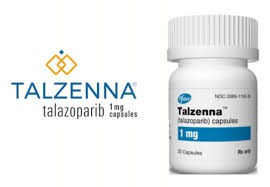
In summary, in the unselected TALAPRO-2 cohort, combination treatment with talazoparib and enzalutamide resulted in a statistically significant and clinically meaningful improvement in OS compared with standard treatment enzalutamide. After long-term follow-up, there were no new safety signals. These results support the rationale for the combination and further support the combination of talazoparib and enzalutamide as a standard treatment option for men with metastatic chronic renal failure. Adult men aged 18 years and older with metastatic CRPC were randomized 1:1 to receive talazoparib plus enzalutamide or enzalutamide plus placebo. Talazoparib is taken orally once daily as two 0.25 mg capsules for a total of 0.5 mg, or 0.35 mg as 0.25 mg and 0.1 mg capsules for patients with moderate renal impairment. Enzalutamide is taken at a dose of 160 mg as four 40 mg capsules daily, concurrently with talazoparib or matching placebo.
Treatment continued until radiographic progression, discontinuation related to adverse effects (AE), patient decision, or death. Those who experience progression can continue treatment until there is no clinical benefit. The median age of patients in the study or control groups was 71 years (IQR, 66-76) versus 71 years (IQ, 65-76), 60% versus 63% were white, 86% versus 86% had mild or no renal impairment, and 70% versus 70% had a Gleason score of 8 or higher. Baseline serum prostate-specific antigen (PSA) in each group was 18.2 µg/L (IQR, 6.9-59.4) and 16.2 µg/L, respectively.
The most common sites of disease in the talazopariband placebo groups included bone (87% vs. 85%) and lymph nodes (37% vs. 41%). Most patients had an ECOG performance score of 0 (64% vs. 67%) and most had no HRR deficit (51% vs. 54%). The primary endpoint of this study is radioactive PFS by BICR according to RECIST v 1.1. Critical alpha protected secondary endpoints include OS. Other secondary endpoints include objective response rate, duration of soft tissue response, PSA response, time to PSA progression and safety.
Treatment-related adverse events (TRAEs) occurred in 90% of the study and control groups, with 61% of patients experiencing grade 3 or higher TRAEs. Serious adverse event rates were 46% and 31%, respectively, of which 42% and 28% were grade 3 or higher. Grade 5 adverse events were reported in 4% and 5%, respectively.
The most common adverse events of any grade in the talazoparib and placebo groups were anemia (68% vs. 20%), neutropenia (38% vs. 7%), and fatigue (35% vs. 30%). The most common grade 3 to 4 adverse events included anemia (49% vs. 4%) and neutropenia (19% vs. 1%). Twenty-two percent of patients discontinued treatment due to adverse events, and 9% discontinued due to anemia.
Reference materials:https://www.talzenna.com/
[ 免责声明 ] 本页面内容来自公开渠道(如FDA官网、Drugs官网、原研药厂官网等),仅供持有医疗专业资质的人员用于医学药学研究参考,不构成任何治疗建议或药品推荐。所涉药品可能未在中国大陆获批上市,不适用于中国境内销售和使用。如需治疗,请咨询正规医疗机构。本站不提供药品销售或代购服务。


