
.jpeg)
Can dabrafenib/dabrafenib be used in the treatment of lung cancer?
Dabrafenib is an oral BRAF kinase inhibitor, and its application in the treatment of lung cancer has gradually attracted attention, especially in BRAF V600E mutation-positive non-small cell lung cancer (NSCLC). As the most common type of lung cancer, NSCLC's molecular classification is becoming increasingly complex. Although traditional chemotherapy and immunotherapy are effective in most patients, for special subgroups with BRAF mutations, they rely more on precise targeted drugs. Dabrafenib is one of the drugs designed specifically for BRAF mutations. It can precisely block abnormal signaling of the MAPK pathway in cancer cells, thereby inhibiting tumor growth.
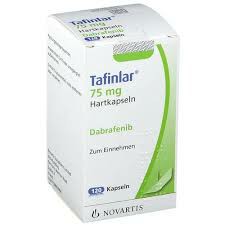
What is more noteworthy is that the combination treatment regimen of dabrafenib and trametinib (Trametinib) has been recognized by international clinical guidelines for the treatment of BRAF V600E mutant metastatic NSCLC. The synergistic mechanism between the two is that BRAF and MEK are key nodes in the upstream and downstream relationships in the MAPK signaling pathway. Joint inhibition can effectively delay the process of drug resistance and may lead to more durable disease control. During the treatment process, patients may experience some adverse reactions related to targeted therapy, such as fever, rash, fatigue, etc., but the overall safety has been confirmed by a large number of clinical practices.
Currently, in China, this combination regimen has been approved by the Food and Drug Administration, becoming one of the standard treatments for patients with this gene mutation, and has been included in the corresponding lung cancer treatment guidelines. For patients who meet the BRAF V600E mutation criteria, genetic testing can be used to confirm the indications and then be included in the targeted treatment pathway. At a time when medical insurance support and targeted therapy policies are increasingly improving, the application of dabrafenib in lung cancer has gradually moved from theoretical research to widespread clinical practice. It needs to be emphasized that this type of targeted therapy should be strictly evaluated under the guidance of doctors to maximize efficacy, avoid risks, and achieve the goal of personalized and precise treatment.
Reference materials:https://go.drugbank.com/drugs/DB08912
[ 免责声明 ] 本页面内容来自公开渠道(如FDA官网、Drugs官网、原研药厂官网等),仅供持有医疗专业资质的人员用于医学药学研究参考,不构成任何治疗建议或药品推荐。所涉药品可能未在中国大陆获批上市,不适用于中国境内销售和使用。如需治疗,请咨询正规医疗机构。本站不提供药品销售或代购服务。


