
.jpeg)
What is the therapeutic effect of Capisete Tablets/Caposetinib?
The therapeutic effect of Capivasertib has attracted widespread attention in cancer research in recent years. The drug shows promise, especially in the treatment of certain types of breast cancer. The active ingredient of capivasertib tablets is capivasertib, an oral small molecule inhibitor that can effectively block the activity of serine/threonine kinases (AKT) 1, 2 and 3. These enzymes play an important role in cell signaling and especially have a significant impact on the growth and survival of tumor cells.
In many cancer types, especially those associated with PIK3CA, AKT1 or PTEN gene mutations, the AKT pathway is often abnormally activated, which leads to enhanced proliferation and survival of cancer cells. Therefore, by blocking the AKT pathway, Capisete tablets can effectively slow down the growth of cancer cells, thus providing a new treatment option.
In a pivotal clinical study, capicistat was used in combination with the hormone therapy fulvestrant in patients with locally advanced or metastatic ER-positive and HER2-negative breast cancer. The study enrolled 708 adults whose cancer came back or worsened after receiving aromatase inhibitor treatment. In the study, patients were randomly assigned to receive either capicistat plus fulvestrant or placebo plus fulvestrant.
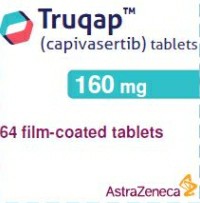
The study's primary efficacy endpoint was an assessment of how long patients survived without disease progression. The results showed that the therapeutic effect was particularly obvious among patients treated with capisete tablets, especially those with PIK3CA, AKT1 or PTEN mutations. Specifically, patients who received capicistat plus fulvestrant lived an average of 7.3 months, compared with an average of 3.1 months for those who received placebo plus fulvestrant.
This result not only confirms the therapeutic effect of Capisete Tablets on breast cancer patients with certain gene mutations, but also provides clinicians with new treatment options. By marking gene mutations, doctors can more accurately develop personalized treatment plans for patients, greatly improving the effectiveness of treatment and patient survival rates.
In clinical practice, the use of carpiseti tablets is not limited to breast cancer. With the pairWith the in-depth understanding of the AKT pathway, the drug is also being studied for other types of cancer, such as ovarian cancer, prostate cancer, etc. Preliminary results from these studies suggest that capisete may have the potential to be an effective treatment for a variety of cancers, especially those with specific genetic mutations.
However, despite the promising efficacy of capisete tablets, clinicians still need to carefully assess the patient's overall health status and possible side effects. Like all drugs, Capisete tablets may be associated with some adverse reactions, so patients need to be closely monitored during use to ensure the safety and effectiveness of the treatment.
Overall, carpisete tablets, as a new type of anti-cancer drug, show promising prospects in the treatment of breast cancer and other types of cancer. The research results indicate that targeted therapy targeting specific gene mutations will become one of the important directions in future cancer treatment.
Reference materials:https://www.drugs.com/mtm/capivasertib.html
[ 免责声明 ] 本页面内容来自公开渠道(如FDA官网、Drugs官网、原研药厂官网等),仅供持有医疗专业资质的人员用于医学药学研究参考,不构成任何治疗建议或药品推荐。所涉药品可能未在中国大陆获批上市,不适用于中国境内销售和使用。如需治疗,请咨询正规医疗机构。本站不提供药品销售或代购服务。


