
.jpeg)
Analysis of the mechanism of action and target principles of nirogacestat
Nirogacestat is a gamma-secretase inhibitor with a unique mechanism of action. Its main targeting mechanism involves blocking the Notch signaling pathway, which is a signaling pathway that plays a key role in various developmental processes and disease states. The drug is particularly suitable for the treatment of patients with progressive desmoid tumors. Although this type of tumor does not metastasize to distant sites, it grows rapidly and is highly invasive in local tissues, often leading to severe dysfunction and repeated recurrences.
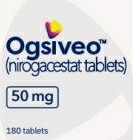
γ-secretase is a transmembrane protein complex that participates in the cleavage activation process of multiple membrane proteins, especially the cleavage activation of the Notch receptor protein. The Notch signaling pathway is one of the important mechanisms that regulates cell proliferation, differentiation, and apoptosis, and it remains highly active during the development of various tissues. In certain pathological conditions such as desmoid tumors, abnormal activation of the Notch pathway drives continued proliferation of tumor cells. Nilogastat inhibits tumor growth precisely by inhibiting γ-secretase activity and blocking Notch receptor activation and its downstream transcription activities.
It is worth emphasizing that nirogalastat can not only limit the proliferation of tumor cells, but also induce their differentiation and even apoptosis to a certain extent. In the current research data, after patients were treated with nirogalastat, their lesion size could be significantly reduced and their symptoms were significantly relieved. Compared with traditional treatment strategies such as non-steroidal anti-inflammatory drugs, tamoxifen, and tyrosine kinase inhibitors, nilagastat not only has fewer side effects through molecular target intervention, but is also more selective and controllable.
In addition,Notch pathway also plays an important role in the skeletal system, immune cells and vascular endothelial cells. Therefore, you should also pay attention to possible side effects during the use of nirogalastat. For example, some patients may experience reactions such as diarrhea, fatigue, rash, or osteoporosis due to inhibition of the pathway's basic physiological functions in multiple tissues.
Reference materials:https://www.drugs.com/mtm/nirogacestat.html
[ 免责声明 ] 本页面内容来自公开渠道(如FDA官网、Drugs官网、原研药厂官网等),仅供持有医疗专业资质的人员用于医学药学研究参考,不构成任何治疗建议或药品推荐。所涉药品可能未在中国大陆获批上市,不适用于中国境内销售和使用。如需治疗,请咨询正规医疗机构。本站不提供药品销售或代购服务。


