
.jpeg)
Duration of venetoclax has no significant effect on OS in AML or MDS
In a real-world cohort of patients with acute myeloid leukemia (AML) or myelodysplastic syndrome (MDS) treated in community hospitals, shorter duration of use of venetoclax did not significantly affect overall survival (OS). The findings, presented at the 2025 ASCO Annual Meeting, suggest that shorter-duration versions of Venetexa may be just as effective as longer-duration versions.
Previous research suggests that shorter doses of venetoclax may be as effective as longer doses of venetoclax in newly diagnosed acute myeloid leukemia (AML). In one study, 14-day versus 21- or 28-day dosing of venetoclax had comparable efficacy in terms of complete remission (CR) and incomplete recovery from CR (CRi) without affecting survival. An ongoing randomized phase 2 study (NCT03013998) is comparing a 28-day versus 14-day regimen of venetoclax plus azacitidine in newly diagnosed AML.
Hypomethylating drugs (HMAs) and venetoclax are commonly used for acute myeloid leukemia (AML) and myelodysplastic syndrome (MDS). Data on the duration of different STDs are limited and do not show significant differences in outcomes. In the new study, they examined real-world prescribing patterns and early outcomes of STDs in patients with AML and MDS.
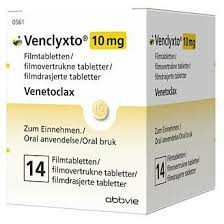
The study included53 patients who received first-line HMA and venetoclax between January 2020 and December 2023. Patients were grouped according to duration of venetoclax treatment lasting 7, 14, 21, or 28 days. The majority of patients (81%) received decitabine, had adverse European Leukemia Network (ELN) risk factors (83%), and had de novo acute myeloid leukemia (66%). Nineteen patients received allogeneic stem cell transplantation.
Response to first post-treatment biopsy, OS, 1-year survival, grade 3 or higher neutropenia/thrombocytopenia, time to count recovery, and incidence of tumor lysis syndrome (TLS) and bacteremia were examined. Overall, the median follow-up was 10.7 months (range 3.3-43), but among surviving patients, the median follow-up was 21.6 months. The authors noted that there was only one patient in the venetoclax 21 group, so this group was excluded from further analysis of the results.
With Vinekela Compared with group 7 (33.3%; P=0.014), the one-year OS of venetoclax group 28 (66.4%) was significantly improved. However, the venetoclax cohort showed no significant differences in complete response (CR) or CRi. The incidence of minimal residual disease (MRD) was also similar across cohorts, with 48% of patients achieving MRD negativity. Regarding OS, according to univariate analysis, there was no significant effect of venous pine duration. The same is true for ELN risk status and age.
Nearly all patients developed grade 3 or higher neutropenia (96.4%) and thrombocytopenia (82.8%), with no statistically significant differences between groups. Recovery time was similar between the two groups. The incidence of TLS and bacteremia was low (9.6% and 3.8%, respectively).
In this hospital cohort,7 patients had significantly worse 1-year OS than 28 patients; there was no difference in OS. Our findings are consistent with other retrospective studies suggesting that shorter intravenous infusion times may be equally effective with minimal difference in hematological toxicity. Selection bias in prescribing patterns is likely present in their study and other retrospective studies, and more data are needed to confirm whether shorter durations of venetoclax provide equivalent benefit.
Reference materials:https://www.venclexta.com/
[ 免责声明 ] 本页面内容来自公开渠道(如FDA官网、Drugs官网、原研药厂官网等),仅供持有医疗专业资质的人员用于医学药学研究参考,不构成任何治疗建议或药品推荐。所涉药品可能未在中国大陆获批上市,不适用于中国境内销售和使用。如需治疗,请咨询正规医疗机构。本站不提供药品销售或代购服务。


