
.jpeg)
Can ritexitinib cure alopecia areata? Probability of relapse after drug discontinuation
As a new JAK3 inhibitor, Ritlecitinib has shown good efficacy in the treatment of alopecia areata, but whether it can cure alopecia areata is still the focus of clinical attention. Alopecia areata is an autoimmune hair loss disease whose etiology involves complex interactions of multiple immune cells and cytokines. Ritexitinib effectively inhibits the attack of immune cells on hair follicles by inhibiting the JAK3-mediated inflammatory signaling pathway, thereby promoting hair regeneration.
In multiple clinical trials, ritexitinib has been shown to significantly improve hair regeneration in patients with alopecia areata, especially in patients with mild to moderate alopecia areata. However, alopecia areata is a chronic and easily relapsing disease, and there is currently no clear treatment for its complete cure. Although ritexitinib can control the disease during treatment, most patients still have varying degrees of risk of recurrence after discontinuation of treatment.
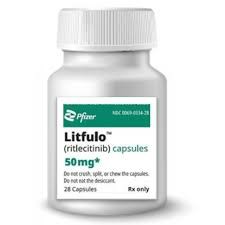
The recurrence rate is closely related to the severity of alopecia areata, the duration of the disease, and the individual's immune status. Some patients may experience recurrence of hair loss within a few months after discontinuing the medication and need to receive treatment again to control the condition. In clinical practice, in order to prolong the remission period, doctors usually recommend gradually reducing the dose after the condition stabilizes rather than stopping the drug suddenly to reduce the risk of recurrence.
In addition, long-term use of rituxitinib requires attention to potential side effects and the risk of infection in immunosuppressed states, and to balance efficacy and safety. As treatment options continue to be optimized in the future, combination therapy may become an effective strategy to prolong efficacy and reduce recurrence.
In summary, ritexitinib cannot currently be regarded as a radical drug for alopecia areata, but as a targeted immunomodulator, it has significant efficacy in the treatment of alopecia areata. The probability of recurrence after drug withdrawal exists, and patients and doctors need to jointly formulate a long-term management plan to achieve maximum disease control and improvement in quality of life.
Reference materials:https://www.litfulo.com/
[ 免责声明 ] 本页面内容来自公开渠道(如FDA官网、Drugs官网、原研药厂官网等),仅供持有医疗专业资质的人员用于医学药学研究参考,不构成任何治疗建议或药品推荐。所涉药品可能未在中国大陆获批上市,不适用于中国境内销售和使用。如需治疗,请咨询正规医疗机构。本站不提供药品销售或代购服务。


