
.jpeg)
Analysis of the clinical efficacy of adagrasib in the treatment of colorectal cancer
As a KRAS G12C mutation-targeting drug, Adagrasib's main indication was initially focused on non-small cell lung cancer (NSCLC). However, with in-depth research, its efficacy in colorectal cancer (CRC) has gradually been clinically confirmed. KRAS G12C mutations account for about 3%-4% of the total number of colorectal cancer mutations. Although the proportion is not high, due to the poor response of such mutations to conventional chemotherapy and immunotherapy, the emergence of adagrasib has brought new treatment hope to this niche patient group.
The use of adagrasib in colorectal cancer is usually based on molecular testing to confirm the diagnosis of KRAS G12C mutation and is started after previous standard therapies (such as fluorouracil, irinotecan, oxaliplatin, anti-VEGF/EGFR monoclonal antibodies) have failed. Studies have found that although adagrasib alone is not as effective as lung cancer in terms of tumor shrinkage, when combined with EGFR pathway inhibitors such as cetuximab, the response rate is significantly improved. Because the EGFR signaling pathway is also active in KRAS G12C mutated colorectal cancer, combined blockade can more effectively curb cancer cell proliferation.
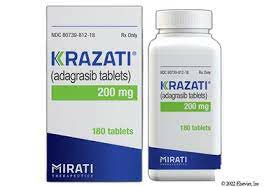
In some overseas trials, the adagrasiib combined with cetuximab regimen has shown a good disease control rate in colorectal cancer patients who have failed previous standard treatments. Some patients have experienced tumor shrinkage or symptom relief within 2-3 months of treatment, such as reduced bowel movements, reduced abdominal pain, and stable weight. This means that adagrasib brings a new option for precise molecular targeted treatment for patients with colorectal cancer KRAS G12C mutation.
However, patients need to closely monitor side effects during treatment, including gastrointestinal discomfort, fatigue, abnormal liver function, etc., especially when combined with EGFR monoclonal antibodiesSkin rash and electrolyte imbalance require more attention. Overall, adagrasib shows therapeutic potential in colorectal cancer, especially in patients with clear targets. It has clinical value. With the expansion of indications and the accumulation of more research, its efficacy is expected to be more widely used in clinical practice.
Reference materials:https://www.krazati.com/
[ 免责声明 ] 本页面内容来自公开渠道(如FDA官网、Drugs官网、原研药厂官网等),仅供持有医疗专业资质的人员用于医学药学研究参考,不构成任何治疗建议或药品推荐。所涉药品可能未在中国大陆获批上市,不适用于中国境内销售和使用。如需治疗,请咨询正规医疗机构。本站不提供药品销售或代购服务。


