
.jpeg)
Donanemab (Donanemab) patients’ real medication feedback and effect comparison
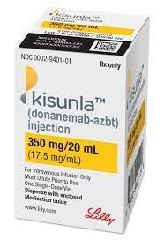
Donanemab (Donanemab) is a new anti-β-amyloid (Aβ) monoclonal antibody, used to treat early Alzheimer's disease (AD). The drug was developed by Eli Lilly. Its therapeutic mechanism is to target amyloid plaques that have formed in the brain and promote their removal, thereby slowing down the progression of the disease. Since its entry into clinical trials and limited overseas marketing, more and more patients have begun to be exposed to this drug, and there have been many real feedbacks about the effects of the drug. This article will conduct a comprehensive analysis from the aspects of clinical effects, actual patient experience, side effects, and social evaluation.
1. Clinical study results show that donenemab has the potential to slow cognitive decline
According to Eli Lilly's Phase 3 clinical study TRAILBLAZER-ALZ 2 trial, donenezumab showed statistically significant effects in delaying cognitive and functional deterioration in mild cognitive impairment (MCI) and mild Alzheimer's disease. Compared with the placebo group, the donenezumab group slowed down the average decline in cognitive function scores (iADRS) by approximately 35% after 18 months of treatment, and slowed down the decline in daily functions by approximately 40%. More importantly, about 47%of patients maintained relatively stable cognitive function after 18 months of treatment, indicating that the drug has certain potential in preventing disease progression.
But it must also be made clear that donenezumab is not a "cure drug". It cannot reverse the damage to brain function or repair neurons. It can only "delay" the decline of cognitive ability to a certain extent. Therefore, its effect is more ideal for patients who are in the early stages of the disease and have obvious amyloid deposition but not yet severe neurodegeneration.
2. Real feedback from patients: There is delay but no significant reversal
Judging from the patient feedback that has been published so far, most people do feel that the progression of their disease has slowed down after using donenezumab. For example, an American woman who participated in a clinical trial said that one year after she started taking the drug, her ability to take care of herself has not declined significantly, and she can continue to complete daily activities such as shopping, cooking, and communicating with family members. This is a positive sign for patients with Alzheimer's disease.
However, many family members of patients pointed out that the effect of the drug was "not obvious", and sometimes it was difficult to judge whether it was the effect of the drug or the fluctuation of the disease itself. Some patients also experience slight memory improvements after a few months of use, such as being better able to remember family members' names or daily schedules, but these improvements are relatively limited.
In general, patient experience generally focuses on"The condition remains as it is" rather than "significantly improved". This also reflects the characteristic of "stability equals progress" in the treatment of Alzheimer's disease.
3. Feedback on side effects is concentrated on ARIA, and some patients need to interrupt treatment
Donelumab is the same as other Aβ antibody drugs. The more common adverse reactions are ARIA (brain swelling and microbleeding). Clinical data show that ARIA is detected in brain MRI in approximately 25%-30% of treated patients, most of whom are asymptomatic and only visible on imaging. However, some patients also experience symptoms such as headache, confusion, nausea, and epilepsy. In severe cases, treatment needs to be stopped.
In actual medication, some patients have interrupted treatment due to cerebral edema or microbleeding, especially APOE4 gene carriers, whose incidence rate is higher. Therefore, regular MRI monitoring is required before and during medication, which is a mandatory safety measure in the use of this drug.
In addition, other common side effects include discomfort at the injection site, mild allergic reactions, fatigue, headaches, etc., but they are generally controllable.
4. Price and accessibility issues have become major challenges, and social evaluation has become divided.
Currently, donenemab has not yet been officially launched in mainland China, and has received limited approval in some European and American countries. Because it is a biological agent and an antibody-based drug, it is very expensive. In the United States, the annual treatment cost is as high as approximately 2.6 US dollars (equivalent to approximately 18 yuan). This is a heavy burden for ordinary families, especially when long-term use is required. Economic accessibility has become a major obstacle for patients to obtain drugs.
From the public opinion point of view, donenemab is regarded as a "breakthrough" in the treatment of Alzheimer's disease, but there are also many doubts. Some medical experts believe that its efficacy is "statistically significant but of limited clinical significance", which means that further evidence is needed for substantial changes in patients' quality of life. Coupled with its risk of side effects and high price, some families choose to continue waiting for safer and more affordable alternatives.
As a new treatment drug for Alzheimer's disease, Donelimab provides a new means of delaying the deterioration of cognitive function for early-stage patients. Judging from the current clinical trial data and patient feedback, it can stabilize the patient's condition to a certain extent and delay the loss of cognitive and living abilities, but it does not have the function of "recovery" or "reversal". At the same time, ARIAThe risk of side effects requires great attention, and strict imaging monitoring must be carried out during the treatment process. Faced with high prices and limited accessibility, patients should fully communicate with their doctors before considering use, evaluate the risks and benefits, and choose the treatment plan that best suits their situation. In the future, with the release of more data and competition from similar drugs, donenemab may be further optimized in terms of price, safety and efficacy, bringing more hope to the treatment of Alzheimer's disease.
Reference materials:https://www.drugs.com/
[ 免责声明 ] 本页面内容来自公开渠道(如FDA官网、Drugs官网、原研药厂官网等),仅供持有医疗专业资质的人员用于医学药学研究参考,不构成任何治疗建议或药品推荐。所涉药品可能未在中国大陆获批上市,不适用于中国境内销售和使用。如需治疗,请咨询正规医疗机构。本站不提供药品销售或代购服务。


