
.jpeg)
Which one is more effective, Vorasidenib or Ensidipine?
Vorasidenib and ensidipine (Enasidenib) both target isocitrate dehydrogenase (IDH ) mutation-targeted therapeutic drugs are mainly used to treat tumors carrying IDH mutations, especially in the fields of acute myeloid leukemia (AML) and glioma. Although both are IDH inhibitors, they target different mutation types: Vorsidenib simultaneously inhibits IDH1 and an>IDH2 mutation, and ensidipine mainly inhibits IDH2 mutation. Therefore, the comparison of indications and efficacy needs to be analyzed based on the patient's specific mutation type.
From the efficacy data, ensidipine has been approved by the FDA for the treatment of relapsed or refractory AML with IDH2 mutations. Clinically, its objective response rate (ORR) has reached 30% or more in many studies, and some patients even achieved complete remission (CR). As a new generation of pan-IDH inhibitor, vorsidenib is currently in the clinical trial stage and has shown significant efficacy in low-grade IDH mutant glioma (LGG). In a phase III clinical study (INDIGO trial), vorsidenib significantly delayed progression-free survival (PFS). n>), the median PFS reached 27.7 months, while the placebo group was only 11.1 months, showing a clear advantage.
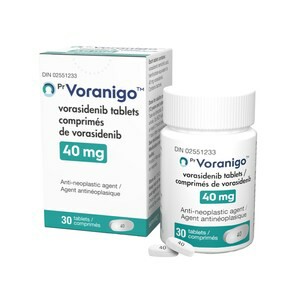
In contrast, in the field of AML treatment, ensidipine has accumulated relatively mature experience in use and has been approved for marketing in many countries, with clear efficacy data and application guidance. Vorsidenib has not yet been widely used in hematological tumors. It is mainly focused on the research of solid tumors such as brain tumors. It is especially suitable for treatment scenarios that require high brain tissue penetration capabilities. Therefore, if a patient has IDH2mutatedAML, ensidipine remains the more appropriate standard treatment option.
In summary, voroxiranib and ensidipine each have their own advantages. The key lies in the different disease types and mutation targets. If it is IDH2 mutated acute myeloid leukemia, ensidipine is more mature and effective; for low-grade IDH1/2 mutated glioma, vorsidenib may become a better choice due to its excellent brain tissue penetration and broad-spectrum IDH inhibitory properties. Clinically, the most appropriate treatment plan should be selected based on the patient's specific condition, mutation type, and drug availability.
Reference materials:https://www.drugs.com
[ 免责声明 ] 本页面内容来自公开渠道(如FDA官网、Drugs官网、原研药厂官网等),仅供持有医疗专业资质的人员用于医学药学研究参考,不构成任何治疗建议或药品推荐。所涉药品可能未在中国大陆获批上市,不适用于中国境内销售和使用。如需治疗,请咨询正规医疗机构。本站不提供药品销售或代购服务。


