
.jpeg)
Is Donanemab a targeted drug or an antibody drug?
Donanemab (Donanemab) is a new biological agent used to treat Alzheimer's disease (AD). It is a monoclonal antibody drug and is also a highly targeted therapeutic drug. Therefore, it has both the properties of antibody drugs and the mechanism of action of targeted therapy. It was developed by Eli Lilly (Eli Lilly) and has been undergoing Phase III clinical trials in many countries around the world in recent years, becoming one of the important breakthroughs in the treatment of Alzheimer's disease.
From a drug structure point of view, donenemab is a humanizedIgG1 monoclonal antibody that specifically targets the abnormal amyloid protein accumulated in the brains of patients with Alzheimer's disease (amyloid-beta) plaques, especially the "highly aggregated" toxic plaque subtype pE3-Aβ. This target selection enables it to have high selectivity and affinity, so it can accurately locate the lesion area and remove plaques in the brain, thereby slowing down the progression of cognitive function deterioration. This mechanism also allows donenemab to be classified as a targeted therapy.
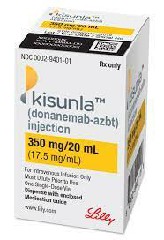
As an antibody drug, donenemab needs to be administered through intravenous injection. After entering the body, it activates phagocytes (such as microglia) in the body's immune system to recognize and remove amyloid deposits. Unlike traditional small molecule drugs, it cannot directly cross the blood-brain barrier and enter the central nervous system in large quantities. However, due to the high affinity of the antibody design, its targeting ability can still play a role in Alzheimer's disease brain tissue. This mode of action also represents the current transformation direction of Alzheimer's treatment from"broad-spectrum remission" to "elimination of the cause."
To sum up, donenemab is a targeted antibody drug that combines the precision of targeted therapy with the high specificity of antibody drugs. It marks a new stage in the treatment of Alzheimer's disease from traditional symptomatic therapy to etiological intervention, especially in early-stage patients, showing significant cognitive slowing effects. However, its efficacy still needs to be evaluated based on brain plaque levels, and side effects such as cerebral edema or microbleeds need to be alerted. Therefore, clinical use still needs to be strictly monitored by doctors.
Reference materials:https://www.drugs.com
[ 免责声明 ] 本页面内容来自公开渠道(如FDA官网、Drugs官网、原研药厂官网等),仅供持有医疗专业资质的人员用于医学药学研究参考,不构成任何治疗建议或药品推荐。所涉药品可能未在中国大陆获批上市,不适用于中国境内销售和使用。如需治疗,请咨询正规医疗机构。本站不提供药品销售或代购服务。


