
.jpeg)
First-line pitobrutinib/pitubrutinib plus venetoclax/octuzumab produces higher uMRD rate in CLL
Based on the results of a Phase 2 trial (NCT05536349) presented during the 2024 ASH Annual Meeting, first-line pitobrutinib/pitubrutinib (Pirtobrutini b) , venetoclax (venetoclax) and octuzumab (obinutuzumab) produced high undetectable microscopic tumors with a sensitivity of 10-6 (uMRD6) in chronic lymphocytic leukemia (CLL)patients The incidence of residual disease (uMRD) was also higher compared with ibrutinib plus venetoclax in previous studies.
AboutMRD data, the researchers analyzed sequential time points in blood and bone marrow. At the end of cycle 7 (n=66), the rate of uMRD less than 10-6 (uMRD6) was 79% in peripheral blood samples and 64% in bone marrow samples. Other data include 9% versus 12% for MRDs between 10-6 and less than 10-5, 5% versus 15% for MRDs between 10-5 and less than 10-4, and 6% versus 9% for MRDs of 10-4. One patient in the peripheral blood group was missed.
At the end of cycle 13 (n=41), MRD in peripheral blood and bone marrow was 85% vs. 80% at MRD <10-6, 8% vs. 5% at MRD 10-6 to <10-5, and 7% vs. 10% at MRS 10-5 to <10-4. In the bone marrow group, 3% had an MRD of 10-4 or higher, and 2 samples were missed. As a first-line treatment for patients with CLL, the combination of pitobrutinib, venetoclax, and otuzumab has a high uMRD6 response rate. At a median follow-up of 11.9 months, no patients had progressed or died.
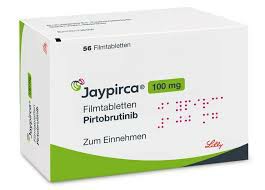
From February 2023 to September 2024, a total of 80 patients were recruited. The median patient age was 63 years; 26% were 70 years or older, and 75% were male. Additionally, 79% of patients had unmutated IGHV status, 31% had NOTCH1 mutations, 21% had SF3B1 mutations, 14% had KRAS/NRAS mutations, 10% had BIRC3 mutations, and 10% had TP53 mutations. Of note, 13% had the del(17p)/TP53 mutation.
In cycle 1, the patient took 200 mg once a dayPitobrutinib and injectable otuzumab (100 mg on day 1, 900 mg on day 2, 1000 mg on day 8, and 1000 mg on day 15). Before cycle 2, a CT scan for tumor lysis syndrome (TLS) was performed. In Cycle 2, patients received 200 mg of Pitobrutinib on Day 1, and 1000 mg of Pitobrutinib on Day 1. Otuzumab and weekly ascending doses of venetoclax; from cycles 3 to 6, as in cycle 2, give matched pitubrutinib and otuzumab pan>, plus 400 mg of venetoclax once daily; at the end of cycle 4, a blood-based next-generation sequencing (NGS) MRD test was performed. After cycle 7, a bone marrow biopsy was performed. In cycles 7 to 13, take 200 mg of pitobrutinib daily and 400 mg of venetoclax daily. After cycle 13, another bone marrow biopsy and blood-based NGS test were performed.
Of the 80 patients included, 66 completed 7 cycles and 41 completed 13 cycles. To date, 36 patients have discontinued all treatment and 5 patients have continued for an additional 12 cycles of treatment.
After cycle 1, 90% of high-risk TLS patients and 86% of intermediate-risk patients had a risk reduction at baseline. High-risk patients include any lymph node 10cm or larger, or an absolute lymphocyte count (ALC) of 25k/ul or above and a lymph node 5cm or larger. Intermediate risk patients have any lymph nodes between 5cm and 10cm, or an ALC of 25k/ul or higher. Low risk includes all lymph nodes less than 5cm and ALC less than 25k/ul.
Regarding safety,Grade 3/4 adverse reactions included neutropenia and thrombocytopenia, 58% of which required granulocyte colony-stimulating factor. Four patients developed neutropenic fever. Pitobrutinib dose reduction was required in 21% of patients. Twelve people took 100mg, 3 people took 50mg, and 2 people stopped treatment early. Thirty-one percent of patients experienced dose reductions of venetoclax, with 7 patients reducing to 300 mg, 10 patients reducing to 200 mg, 5 patients reducing to 100 mg, 1 patient reducing to 20 mg, and 2 patients discontinuing the drug. Dose reductions were due to neutropenia in most patients. In addition, 2 patients developed atrial fibrillation.
Reference materials:https://www.onclive.com/view/first-line-pirtobrutinib-plus-venetoclax-obinutuzumab-generates-high-umrd-rates-in-cll
[ 免责声明 ] 本页面内容来自公开渠道(如FDA官网、Drugs官网、原研药厂官网等),仅供持有医疗专业资质的人员用于医学药学研究参考,不构成任何治疗建议或药品推荐。所涉药品可能未在中国大陆获批上市,不适用于中国境内销售和使用。如需治疗,请咨询正规医疗机构。本站不提供药品销售或代购服务。


