
.jpeg)
Anagrelide’s mechanism of action
Anagrelide (Anagrelide) is a drug used to treat essential thrombocythemia (essential thrombocythemia, ET). Its mechanism of action mainly involves the inhibition of platelet production and release to achieve the purpose of lowering platelet counts.
The mechanism of action of anagrelide mainly includes the following aspects:
1.Inhibition of phosphonucleotide cyclase (phosphodiesterase): Anagrelide inhibits the activity of phosphonucleotide cyclase, an enzyme that catalyzes the cyclization of phosphate nucleotides, thereby promoting the production and release of platelets. By inhibiting the activity of this enzyme, anagrelide reduces the degradation of adenosine diphosphate (cAMP) and increases the concentration of cAMP, thereby inhibiting the process of platelet production.
2.Inhibition of megakaryocyte maturation and differentiation: anagrelide acts on megakaryocytes in the bone marrow, preventing their maturation and differentiation. Megakaryocytes are platelet-producing cells that mature in the bone marrow and release platelets. Anagrelide inhibits platelet production by affecting the growth and differentiation of megakaryocytes.
3.Reducing platelet aggregation: Anagrelide also reduces platelet activity and aggregation by reducing platelet aggregation and adhesion. This helps reduce platelet aggregation in the blood, further lowering platelet counts and inhibiting the formation of blood clots.
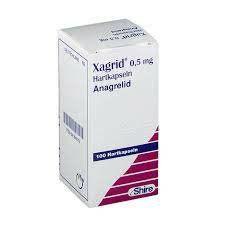
Anagrelide is not yet on the market in China, so patients cannot purchase it domestically and need to purchase the drug through overseas channels. Anagrelide only has the original drug. Outside the mainland, there is the Hong Kong version of the original drug and the foreign Turkish original drug. The price is around 1280 yuan.
[ 免责声明 ] 本页面内容来自公开渠道(如FDA官网、Drugs官网、原研药厂官网等),仅供持有医疗专业资质的人员用于医学药学研究参考,不构成任何治疗建议或药品推荐。所涉药品可能未在中国大陆获批上市,不适用于中国境内销售和使用。如需治疗,请咨询正规医疗机构。本站不提供药品销售或代购服务。


