
.jpeg)
Clinical studies of tocilizumab
Tocilizumab has been clinically studied in the treatment of rheumatoid arthritis, juvenile idiopathic arthritis, children over 1 year old with active systemic juvenile idiopathic arthritis, giant cell arteritis, cytokine release syndrome, and COVID-19 (new coronavirus pneumonia), and has achieved good therapeutic effects.
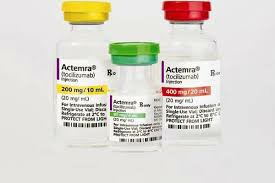
1. Rheumatoid arthritis:
In a major study involving1162 patients, infusional tocilizumab was studied in patients with severe rheumatoid arthritis who had not been previously treated with methotrexate. Tocilizumab, alone or in combination with methotrexate, was compared with placebo (a dummy treatment) plus methotrexate. After 6 months of treatment, 45% of patients taking tocilizumab plus methotrexate (130 of 290) and 39% of patients taking tocilizumab alone span> patients (113 of 292) achieved remission (showing no symptoms of disease), compared with 15% of patients (43 of 287) who took placebo plus methotrexate.
For the treatment of moderate to severe rheumatoid arthritis where other drugs have been unsuccessful, tocilizumab given by infusion has been studied in five major studies involving a total of more than 4,000 adults. In three of the studies, tocilizumab was compared with placebo as an add-on to more than 3,000 patients who had failed treatment with conventional rheumatoid arthritis drugs. The results showed that patients taking tocilizumab responded to the treatment four times better than those taking a placebo. One of the studies involving 1,196 patients also showed that a combination of tocilizumab and methotrexate slowed joint damage and improved physical function for up to two years compared with a placebo and methotrexate combination. In the fourth study, which included 498 patients with an inadequate response to TNF blockers, patients who received tocilizumab plus methotrexate were approximately nine times more likely to respond than those who received placebo plus methotrexate. A fifth study involving 673 patients showed that those who received tocilizumab alone were more likely to respond than those who received methotrexate alone. Nearly 4,000 patients in these five studies continue to participate in the study to observe the response to tocilizumab treatment for at least two years.
2. Juvenile idiopathic arthritis:
In systemic juvenile idiopathic arthritis, tocilizumab was compared with placebo by infusion in a major study involving112 children who had failed treatment with NSAIDs and corticosteroids. In the study, 85% (64 of 75) of patients who received tocilizumab responded to treatment and were fever-free after three months, compared with 24% (9 of 37) of patients who received a placebo. Another study involving 51 children younger than 1 year of age showed that tocilizumab administered by subcutaneous injection distributed in the body and affected disease similarly to tocilizumab previously administered by infusion.
3. Juvenile idiopathic polyarthritis:
In a major study involving 166 children over 2 years of age who were unable to take methotrexate or who were not responding well enough to methotrexate, an infusion of tocilizumab was compared with placebo in patients with juvenile idiopathic polyarthritis. Patients were allowed to continue receiving methotrexate during the study period. After four to six months of treatment, 26% of tocilizumab patients (21 of 82) developed symptoms during treatment, compared with 48% of placebo patients (39 of 81).
4. Giant cell arteritis:
In giant cell arteritis, subcutaneous tocilizumab was found to be more effective than placebo in a major study involving 251 adults. All patients also received corticosteroid therapy, which was tapered over 6 or 12 months and then discontinued. One year after starting treatment, 56% of patients treated with once-weekly tocilizumab were asymptomatic, compared with 14% of patients treated with placebo.
5. Cytokine release syndrome (CRS):
Tocilizumab was given by infusion based on a review of data from 66 patients who developed severe CRS after receiving CAR-T cell drugs to treat blood cancers.Considered an effective treatment for severeCRS. The primary measure of effectiveness is based on the number of patients who achieve remission of CRS within 14 days of the first dose of tocilizumab and who require no more than two doses of the drug and no treatment other than corticosteroids. Among the 51 patients who developed CRS after receiving CAR-T cell drug tissue cell therapy, 39 responded to tocilizumab treatment (76.5%), while 8 of the 15 patients (53.3%) who developed CRS after receiving Akilonsai injection responded.
TocilizumabThe original drug has been launched in China and has been included in the medical insurance. Due to its short time on the market, the second-line treatment of systemic juvenile idiopathic arthritis is still limited to traditional treatments for rheumatoid arthritisDMARDs To treat patients whose disease activity has decreased by less than 50% in 3 to 6 months, Tocilizumab injection can only be used as directed by the doctor. Its price is around RMB 8,600, which is relatively expensive. The price of the European version of tocilizumab original drug available overseas is around around RMB 14,000 (the price may fluctuate due to the exchange rate). The ingredients and efficacy of the two drugs are basically the same. Currently, there are no generic drugs produced and marketed overseas, and patients can choose by themselves.
[ 免责声明 ] 本页面内容来自公开渠道(如FDA官网、Drugs官网、原研药厂官网等),仅供持有医疗专业资质的人员用于医学药学研究参考,不构成任何治疗建议或药品推荐。所涉药品可能未在中国大陆获批上市,不适用于中国境内销售和使用。如需治疗,请咨询正规医疗机构。本站不提供药品销售或代购服务。


