
.jpeg)
What are the indications of Upatinib/Reif and what patients should pay attention to
Upadacitinib is a Janus kinase (JAK) inhibitor that has been approved for the treatment of a variety of immune system-related diseases. It acts inside human cells and blocks the signaling pathways that cause inflammation, thereby alleviating the symptoms of the disease and controlling the condition. Upadatinib is an oral medication, usually taken once daily, that has been shown to be effective in a variety of autoimmune diseases. The indications of upadatinib cover a variety of diseases related to the immune system, including:
1. Rheumatoid arthritis (RA): It is suitable for adults with moderate to severe rheumatoid arthritis, especially those who are ineffective or intolerant to one or more tumor necrosis factor (TNF) inhibitor treatments. Rheumatoid arthritis is a chronic inflammatory disease caused by the immune system that often presents with joint pain, swelling, stiffness, and loss of function. Upadatinib effectively reduces symptoms and improves joint function by inhibiting the JAK pathway.
2. Active psoriatic arthritis (PsA): It is suitable for adults with active psoriatic arthritis, especially those who are ineffective or intolerant to TNF inhibitor treatment. Psoriatic arthritis is a type of arthritis caused by an abnormality in the immune system and is accompanied by symptoms of psoriasis on the skin. Upadatinib improves joint pain and skin lesions by reducing inflammation.
3. Active ankylosing spondylitis (AS): It is suitable for adults with active ankylosing spondylitis, especially those who have poor results or cannot tolerate TNF inhibitors. Ankylosing spondylitis is a chronic inflammatory disease that mainly affects the spine and pelvic area. Upadatinib can effectively reduce inflammation and stiffness in the spine.
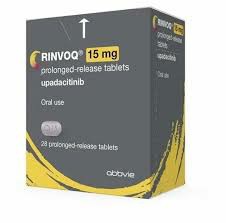
4. Active non-radiographic axial spondyloarthritis (nr-axSpA): It is suitable for adults who have objective signs of inflammation when taking TNF inhibitors, but the efficacy is insufficient or intolerable. Nonradiographic axial spondyloarthritis is a chronic disease with symptoms including back pain and stiffness, and upadatinib helps control inflammation by modulating the immune response.
5. Giant cell arteritis (GCA): Upadatinib is used to treat giant cell arteritis in adults, an immune inflammatory disease that affects large arteries and usually presents with symptoms such as headache and vision loss. This drug effectively reduces inflammation in the arteries and reduces the risk of serious complications.
6. Ulcerative colitis (UC): Suitable for adults with moderate to severe ulcerative colitis, especially those who are ineffective or intolerant to TNF inhibitor treatment. In ulcerative colitis, an inflammatory bowel disease that affects the colon, causing diarrhea, bleeding and other symptoms, upadatinib reduces inflammation by suppressing the immune response.
7.Crohn’s disease (CD): Suitable for adults with moderate to severe Crohn's disease who are ineffective or intolerant to TNF inhibitors. Crohn's disease is a chronic inflammatory disease of the digestive system. Symptoms include abdominal pain, weight loss, etc. Upadatinib can help reduce symptoms and promote disease remission.
8. Atopic dermatitis (ADA): Indicated for the treatment of adults and children aged 12 years and older with refractory, moderate to severe atopic dermatitisIn these patients, the disease cannot be adequately controlled by other systemic medications (including biological agents), or the use of these therapies is not recommended.
Keyword tags: Upadacitinib,Upadacitinib, rheumatoid arthritis, psoriatic arthritis, ankylosing spondylitis, Crohn's disease, immunosuppressant, JAK inhibitor, indications
Reference materials:https://www.rinvoq.com/
[ 免责声明 ] 本页面内容来自公开渠道(如FDA官网、Drugs官网、原研药厂官网等),仅供持有医疗专业资质的人员用于医学药学研究参考,不构成任何治疗建议或药品推荐。所涉药品可能未在中国大陆获批上市,不适用于中国境内销售和使用。如需治疗,请咨询正规医疗机构。本站不提供药品销售或代购服务。


