
.jpeg)
Description of the efficacy and clinical efficacy of revumenib-REVUFORJ
Revumenib (trade name REVUFORJ) is a new type of oral selective menin inhibitor, mainly used to treat patients with KMT2A (MLL) gene rearrangement or NPM1 Patients with mutated acute leukemias, including acute myeloid leukemia (AML) and acute lymphoblastic leukemia (ALL). Such mutations usually cause leukemia cells to be highly dependent on abnormal transcription pathways involving menin , thereby maintaining the self-renewal and proliferation of tumor cells. Revimenib blocks the combination of menin and MLL protein complexes, restoring the abnormal gene expression of leukemia cells to a more normal state and inhibiting the growth of tumor cells from the root. It is one of the most promising targeted treatment options in the world.
In terms of clinical efficacy, revimenib has demonstrated significant antileukemia activity in multiple studies, especially in patients with refractory or relapsed (R/R) AML . Studies have shown that among patients who received REVUFORJ treatment, the combined response rate of complete remission (CR) and complete remission but incomplete blood recovery (CRh) reached 30%–40%. Some patients can achieve molecular remission within weeks to months after treatment, which is helpful for subsequent hematopoietic stem cell transplantation (HSCT), thereby further improving long-term survival rates. It is worth noting that its efficacy is particularly significant in patients carrying KMT2A rearrangements, bringing new hope to this population who have had limited treatment options in the past.
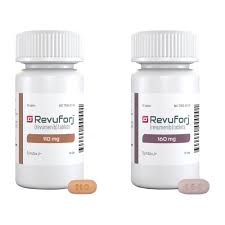
In terms of drug safety, Revimenib is generally well tolerated. Common adverse reactions include nausea, fatigue, loss of appetite, diarrhea, etc., most of which are mild to moderate. Of particular concern is the possibility of differentiation syndrome (DS), which is a risk that all drugs that promote the differentiation of leukemia cells need to be alert to. Clinically, the incidence of DS is controllable, and most cases can be effectively improved after early identification and glucocorticoid treatment. In addition, some patients may develop QT The interval is prolonged, so it is recommended to perform regular ECG monitoring during medication to ensure safety.
Overall, REVUFORJ (REVUFORJ), with its targeting menin mechanism, fills the gap between KMT2A rearrangement and NPM1 A critical gap in the treatment of mutant acute leukemia that not only provides significant response rates, but also creates a transplant window for patients and improves long-term survival chances. With the accumulation of more clinical data and the continuous advancement of combination programs with other drugs (such as hypomethylating drugs, BCL-2 inhibitors, etc.), Revimenib is expected to become an important cornerstone in the future personalized precision treatment of leukemia.
Reference materials:https://www.accessdata.fda.gov/drugsatfda_docs/label/2024/215891s000lbl.pdf
[ 免责声明 ] 本页面内容来自公开渠道(如FDA官网、Drugs官网、原研药厂官网等),仅供持有医疗专业资质的人员用于医学药学研究参考,不构成任何治疗建议或药品推荐。所涉药品可能未在中国大陆获批上市,不适用于中国境内销售和使用。如需治疗,请咨询正规医疗机构。本站不提供药品销售或代购服务。


