
.jpeg)
What are the precautions for taking fezolinetant?
When using Fezolinetant, you need to pay attention to issues related to hepatotoxicity. In three clinical trials, serum aminotransferase (alanine aminotransferase ALT and aspartate aminotransferase AST) levels were elevated more than three times the upper limit of normal in 2.3% of women treated with fezonatant. Although patients with elevated ALT or AST usually have no obvious symptoms, in some cases, patients may experience uncomfortable symptoms such as fatigue, nausea, itching, and jaundice. Importantly, total serum bilirubin did not show an increase.
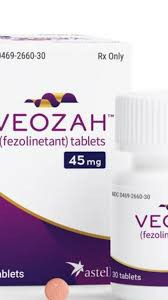
During post-marketing surveillance, it was found that some patients developed drug-induced liver injury within 40 days after starting fezonatant, manifested by increased ALT, AST, alkaline phosphatase (ALP) and total bilirubin. Patients' symptoms usually resolve gradually after discontinuation of felazonastat. Therefore, before initiating treatment, it is important to perform baseline liver laboratory tests to assess the patient's liver function and injury. The examination includes serum ALT, AST, ALP and bilirubin (total bilirubin and direct bilirubin).
If baseline examination showsALT or AST ≥ 2 times the upper limit of normal (ULN), or total bilirubin ≥ 2 times ULN, treatment with filazonatant should not be initiated. Monthly liver laboratory tests are recommended to monitor liver function during the first 3, 6 and 9 months of treatment.
Patients should pay close attention to symptoms of liver injury while taking fezonatant and immediately stop taking the drug and seek medical help, including liver laboratory tests, if they develop new fatigue, decreased appetite, nausea, vomiting, itching, jaundice, pale stools, dark urine, or abdominal pain.
Fezonastat must be discontinued if: transaminase elevations exceed 5 times the ULN, or if transaminase elevations exceed 3 times the ULN and total bilirubin exceeds 2 times the ULN. If transaminases are elevated more than 3 times the ULN, more frequent liver laboratory tests should be performed until symptoms resolve and other possible causes of elevated liver laboratory tests are excluded.
Reference materials:https://www.veozah.com/
[ 免责声明 ] 本页面内容来自公开渠道(如FDA官网、Drugs官网、原研药厂官网等),仅供持有医疗专业资质的人员用于医学药学研究参考,不构成任何治疗建议或药品推荐。所涉药品可能未在中国大陆获批上市,不适用于中国境内销售和使用。如需治疗,请咨询正规医疗机构。本站不提供药品销售或代购服务。


