.jpeg)
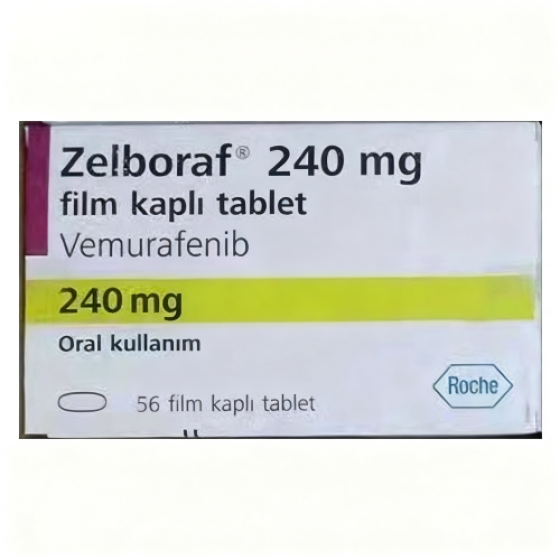
Vemurafenib: An Oral Targeted Therapy for BRAF V600E-Mutant Melanoma
Vemurafenib is an oral, highly selective BRAF V600E mutation inhibitor, classified as a first-generation BRAF-targeted drug. It works by precisely inhibiting the activity of the mutant BRAF kinase, blocking the downstream MAPK signaling pathway, thereby effectively halting the growth and proliferation of cancer cells. This medication has been approved for use in multiple countries worldwide for its respective indications.
Core Indication: Advanced Melanoma
The primary indication for vemurafenib is the treatment of unresectable or metastatic melanoma confirmed to harbor the BRAF V600E mutation. This mutation is found in approximately 50% of melanoma patients. Pivotal clinical trials have demonstrated that compared to traditional chemotherapy, vemurafenib significantly improves both progression-free survival and overall survival, with a markedly higher objective response rate. Consequently, it has become a first-line standard targeted therapy for these patients.
Extended Applications
Beyond melanoma, vemurafenib is also approved for the treatment of Erdheim-Chester disease (a rare non-Langerhans cell histiocytosis) that also carries the BRAF V600E mutation, with clinical studies showing significant clinical responses. Furthermore, based on its mechanism, there is exploratory off-label use of the drug in other BRAF V600E-mutant solid tumors (such as certain types of thyroid cancer and low-grade glioma), though combination strategies are often considered to address resistance.
Usage and Monitoring Guidelines
The standard recommended dose of vemurafenib is 960 mg, taken orally twice daily. It can be taken with or without food, but the tablet must be swallowed whole. Treatment should continue until disease progression or unacceptable toxicity occurs.
Patients require close monitoring for side effects. The most common adverse reactions include arthralgia, rash, fatigue, photosensitivity, and alopecia. Of particular note, approximately 20% of patients may develop cutaneous squamous cell carcinoma or keratoacanthoma, necessitating regular (e.g., monthly) dermatological examinations during treatment. Other potential serious risks include QT interval prolongation and hepatotoxicity, requiring monitoring as per medical guidance.
Combination Therapy Strategies
To enhance efficacy and manage specific toxicities, vemurafenib is frequently used in combination with a MEK inhibitor (such as cobimetinib). This combination has become one of the first-line standards, as it not only improves anti-tumor outcomes but also reduces the incidence of cutaneous squamous cell carcinoma associated with monotherapy.
[ 免责声明 ] 本页面内容来自公开渠道(如FDA官网、Drugs官网、原研药厂官网等),仅供持有医疗专业资质的人员用于医学药学研究参考,不构成任何治疗建议或药品推荐。所涉药品可能未在中国大陆获批上市,不适用于中国境内销售和使用。如需治疗,请咨询正规医疗机构。本站不提供药品销售或代购服务。