.jpeg)
Ixazomib & Pomalidomide in Multiple Myeloma: Mechanisms & Clinical Insights
In the field of multiple myeloma(MM)treatment,combining drugs that target different pathways is a key strategy for improving efficacy and delaying resistance.Ixazomib and Pomalidomide,functioning as a proteasome inhibitor(PI)and a next-generation immunomodulatory drug(IMiD)respectively,represent a highly promising"all-oral triplet regimen"(typically combined with dexamethasone)in international hematologic oncology research.This combination offers a convenient and novel therapeutic option,particularly for patients with relapsed/refractory multiple myeloma(RRMM).
Deep Synergy in Mechanisms of Action
The core advantage of this combination lies in the synergistic effect of dual anti-tumor pathways:
Pomalidomide:As a third-generation immunomodulator,it binds to the Cereblon protein,inducing the degradation of tumor-specific transcription factors while potently activating T-cells and NK cells to remodel and suppress the tumor microenvironment.
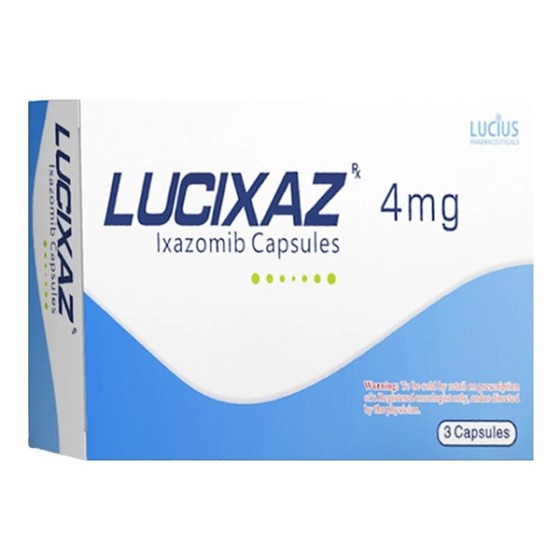
Ixazomib:As the world's first oral proteasome inhibitor,it reversibly inhibits the chymotrypsin-like activity of the 20S proteasome,blocking the degradation of abnormal proteins within cancer cells and thereby inducing tumor cell apoptosis.
By attacking from two distinct dimensions—"immune microenvironment regulation"and"intracellular protein homeostasis disruption"—the two drugs exhibit significant complementary and synergistic potential.
Global Clinical Research and Application Potential
In international multi-center clinical studies,the combination of Ixazomib,Pomalidomide,and Dexamethasone(the IPd regimen)has primarily targeted relapsed/refractory patients who have received multiple prior lines of therapy(including lenalidomide and bortezomib).Research data indicates that this all-oral combination not only eliminates the inconvenience of frequent hospital visits for subcutaneous or intravenous injections—greatly enhancing long-term medication adherence—but also demonstrates positive exploratory value in prolonging progression-free survival(PFS).For myeloma patients requiring long-term chronic disease management,the all-oral regimen offers significant advantages in improving quality of life.
Safety and Tolerability Management
While the combination is generally well-tolerated,managing adverse events during concurrent use requires close attention from clinicians:
Hematologic Toxicity:Myelosuppression is the most common challenge,particularly neutropenia and thrombocytopenia,necessitating regular blood count monitoring and timely growth factor support.
Peripheral Neuropathy:Although Ixazomib carries a lower risk of neurotoxicity compared to traditional injectable proteasome inhibitors,patients must still be monitored for numbness or tingling in the extremities when combined with Pomalidomide.
Gastrointestinal and Infection Risks:Nausea and diarrhea are relatively common.Additionally,due to the dual immunosuppressive effect,the risk of opportunistic infections such as herpes zoster increases,making prophylactic antiviral medication a standard clinical recommendation.
Global Approval Status and Guideline Positioning
Currently,major international regulatory bodies such as the US FDA and the European EMA have approved Ixazomib and Pomalidomide individually for the treatment of multiple myeloma.However,the specific dual/triple combination of"Ixazomib+Pomalidomide"has not yet received widespread on-label approval as a first-line standard regimen in most countries.In authoritative international guidelines(such as the NCCN guidelines),this combination is primarily positioned as an alternative or optimized choice for specific scenarios,mainly serving patients who cannot tolerate injectable drugs,prioritize quality of life,or are in heavily pre-treated relapse stages.
Clinical Strategy and Personalized Treatment
In modern personalized myeloma treatment strategies,the IPd regimen is positioned as an"optimized alternative to traditional regimens."For elderly patients,those with multiple comorbidities,difficult venous access,or a strong preference for home-based medication,this regimen provides a balance between efficacy and quality of life.Future research will further focus on utilizing Minimal Residual Disease(MRD)monitoring to precisely identify the patient populations that benefit most from this regimen.
Conclusion
The combined application of Ixazomib and Pomalidomide represents a vital exploration in the evolution of multiple myeloma treatment toward"all-oral,high-adherence,and mechanistically complementary"approaches.Although it has not yet become a globally unified standard paradigm,its clear synergistic mechanisms and convenient administration have already carved out an important personalized treatment pathway for specific relapsed/refractory patient populations in international clinical practice.
[ 免责声明 ] 本页面内容来自公开渠道(如FDA官网、Drugs官网、原研药厂官网等),仅供持有医疗专业资质的人员用于医学药学研究参考,不构成任何治疗建议或药品推荐。所涉药品可能未在中国大陆获批上市,不适用于中国境内销售和使用。如需治疗,请咨询正规医疗机构。本站不提供药品销售或代购服务。