
.jpeg)
How effective is baricitinib?
Baricitinib (Baricitinib) is a Janus kinase inhibitor (JAK inhibitor) that is widely used to treat rheumatism Autoimmune diseases such as arthritis (RA), rheumatoid arthritis (PsA) and psoriatic arthritis (PsA). The therapeutic effect of baricitinib in these indications will be discussed in detail below based on clinical trial data.
1.Rheumatoid arthritis (RA):
Baricitinib has shown promising efficacy in the treatment of moderately to severely active rheumatoid arthritis in adults. Here are some important clinical trial results:
RA-BEAMStudy: This Phase III clinical trial included 1,774 patients with active rheumatoid arthritis. Patients were randomly assigned to baricitinib, adalimumab, or placebo. The results showed that compared with placebo, the baricitinib treatment group reached the primary efficacy endpoint after 24 weeks and was significantly better than the placebo group in improving disease activity, arthritis symptoms, quality of life, and functional disability.
RA-BUILDStudy: This Phase III clinical trial included 684 patients with active rheumatoid arthritis, most of whom had not responded to treatment with methotrexate (Methotrexate). The results showed that compared with placebo, the baricitinib treatment group reached the primary efficacy endpoint after 12 weeks and was significantly better than the placebo group in improving arthritis symptoms and quality of life.
RA-BEACONStudy: This Phase III clinical trial enrolled 527 patients with active rheumatoid arthritis who had previously received and failed to respond to a TNFα inhibitor. The results showed that compared with placebo, the baricitinib treatment group was 12The primary efficacy endpoint was reached after 1 week and was significantly better than the placebo group in improving arthritis symptoms and quality of life.
Taken together, baricitinib has shown significant efficacy in the treatment of rheumatoid arthritis, which can reduce inflammatory reactions, improve arthritis symptoms, improve quality of life and functional disability, and is also effective in patients who do not respond to other treatment options.
2.Rheumatoid arthritis (PsA):
Baricitinib is also widely used to treat rheumatoid arthritis, a disease that often accompanies psoriatic skin lesions. Here are some important clinical trial results:
RA-BEAMStudy: A subset of patients in the previously mentionedRA-BEAM study had both rheumatoid arthritis and psoriasis. The results showed that the baricitinib treatment group was significantly better than the placebo group in improving arthritis symptoms, reducing joint pain and inflammation, and improving skin lesions.
OPAL BROADEN study: This Phase III trial included 527 patients with rheumatoid arthritis, which includes psoriasis-related arthritis. The results showed that compared with placebo, the baricitinib treatment group showed significant advantages in improving arthritis symptoms, reducing joint pain and inflammation, and improving skin lesions.
Taken together, baricitinib shows significant therapeutic effects in the treatment of rheumatoid arthritis (including psoriasis-related arthritis), can improve arthritis symptoms, reduce joint pain and inflammation, and also has a positive impact on skin lesions.
3.Psoriatic arthritis (PsA):
Psoriatic arthritis is an arthritic disease associated with psoriatic skin lesions. Here are some clinical trial results on baricitinib in the treatment of psoriatic arthritis:
RA-BEAMResearch andOPAL BROADENSubgroup analysis in study:
In the RA-BEAM study and the OPAL BROADEN study, subgroups of patients with psoriatic arthritis (PsA) were analyzed. The results showed that baricitinib showed significant therapeutic effects in these patients.
In the RA-BEAM study, a subgroup analysis of PsA patients showed that treatment with baricitinib showed significant improvement in arthritis symptoms and improvement in skin lesions compared with placebo at 12 weeks. At the same time, patients in the baricitinib group also showed better joint function and quality of life.
Similarly, a subgroup analysis of PsA patients in the OPAL BROADEN study also showed the therapeutic effect of baricitinib. The baricitinib treatment group showed significant improvements compared with the placebo group at 12 weeks, including reduced arthritis symptoms, improved joint function and fewer skin lesions.
The results of these subgroup analyzes indicate that baricitinib has a significant therapeutic effect in patients with psoriatic arthritis, not only improving arthritis symptoms and joint function, but also improving skin lesions.
Taken together, baricitinib has shown significant therapeutic effects in autoimmune diseases such as rheumatoid arthritis (RA), rheumatoid arthritis (PsA) and psoriatic arthritis (PsA). Clinical trial results show that baricitinib can relieve arthritis symptoms, reduce joint pain and inflammation, improve joint function and quality of life, and have a positive impact on skin lesions. However, individual patient outcomes may vary, so your physician's guidance should be followed when using baricitinib, with regular evaluation and monitoring to ensure optimal treatment results.
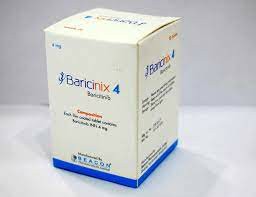
Baricitinib has been launched in China and is included in medical insurance. Patients can purchase it domestically. Due to different medical insurance reimbursement policies in different regions, the reimbursement ratio is also different. The price is about 1200~1600 yuan. For specific prices, please consult the local pharmacy or the medical insurance bureau. Baricitinib has both original and generic drugs abroad. The original drug is mainly Eli Lilly’s original drug, and its price is higher than in China. Generic drugs are mainly Bangladeshi generic drugs, and the price is around 450 yuan. The ingredients of original drugs and generic drugs are basically the same.
[ 免责声明 ] 本页面内容来自公开渠道(如FDA官网、Drugs官网、原研药厂官网等),仅供持有医疗专业资质的人员用于医学药学研究参考,不构成任何治疗建议或药品推荐。所涉药品可能未在中国大陆获批上市,不适用于中国境内销售和使用。如需治疗,请咨询正规医疗机构。本站不提供药品销售或代购服务。


