
.jpeg)
Instructions for Tolvaptan Tablets
1. Generic name: Tolvaptan tablets
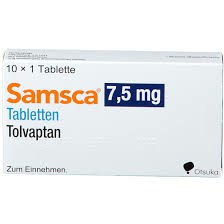
Product name: Samsca
All names: Tolvaptan, Samsca, Jynarque, Sumac
2. Indications:
Tolvaptan is indicated for the treatment of clinically significant hypervolemic and isovolemic hyponatremia (serum sodium <125 mEq/L or less obvious hyponatremia that is symptomatic and cannot be corrected by fluid restriction), including patients with heart failure and syndrome of inappropriate antidiuretic hormone (SIADH). Tolvaptan tabletsmay slow the decline in kidney function in adults at risk for rapidly progressive autosomal dominant polycystic kidney disease (ADPKD).
Limitations of Use: Patients who require urgent intervention to increase serum sodium to prevent or treat severe neurological symptoms should not be treated with tolvaptan tablets.
3. Usage and dosage:
1. Before use: To reduce the risk of severe or irreversible liver injury, perform ALT, AST, and bilirubin blood tests before starting tolvaptan tablets, at 2 and 4 weeks after starting, monthly for 18 months, and every 3 months thereafter. Monitor for complications that may indicate liver injury, and avoid fluid restriction during the first 24 hours of treatment.
2. Recommended dosage:
(1)Hyponatremia : The usual starting dose of tolvaptan tablets is 15 mg once daily without regard to meals. After at least 24 hours, increase dose to 30 mg once daily to a maximum of 60 mg once daily to achieve desired serum sodium levels. Do not take tolvaptan tablets for more than 30 days to minimize the risk of liver damage.
(2)Autosomal dominant polycystic kidney disease: The initial dose of tolvaptan tablets is 60mg taken orally daily, 45mg upon awakening, and 15mg 8 hours later. Titrate to 60mgplus 30mg every day. If tolerated, titrate to 90mgplus 30mg. There should be an interval of at least once a week between two titrations. Patients may be titrated down based on tolerance and encouraged to drink enough fluids to avoid thirst or dehydration.
3. Discontinuation: After discontinuing tolvaptan tablets, patients should be advised to resume fluid restriction and monitor changes in serum sodium and volume status.
4. Adverse reactions:
May affect more than1/10 patients. The most common side effects of tolvaptan tablets are thirst, nausea and rapid rise in sodium levels. Tolvaptan Tablets should not be used in patients who are anuria (inability to urinate), very low blood volume, hypovolemia and low blood sodium levels, hypernatremia (abnormally high levels of sodium in the blood), or patients who cannot feel thirst.
5. Storage:
Tolvaptan tablets are usually stored20°C to 25°C (68°F to 77°F), with tolerances15°C to 30°C (59°F to 86°F) out of the reach of children.
6. Taboo:
Tolvaptan Tablets Contraindicated in use Patients with autosomal dominant polycystic kidney disease (ADPKD) other than FDA-approved REMS, patients who are unable to feel or respond to thirst, patients with hypovolemic hyponatremia (uncorrected abnormal blood sodium concentration), patients taking strong CYP3A inhibitors, and patients with uncorrected urinary outflow tract obstruction (anuria). Tolvaptan tablets are contraindicated in patients who are allergic (e.g., allergic reaction, rash) to tolvaptan or any component of the product.
7. Mechanism of action:
Tolvaptan is a selective vasopressinV2 receptor antagonist, with an affinity for V2 receptors that is 1.8 times that of natural arginine vasopressin (AVP). Tolvaptan's affinity for V2 receptors is 29 times greater than V1a receptors. When taken orally, tolvaptan in doses of 15 to 60 mg antagonizes the effects of vasopressin and causes increased urinary water excretion, resulting in increased free water clearance (dehydration), decreased urinary osmolality, and increased serum sodium concentrations. Urinary sodium and potassium excretion and plasma potassium concentration did not change significantly. Compared with tolvaptan, tolvaptan metabolites have no or only weak antagonistic activity at human V2 receptors.
8. Notes:
1. Correction of serum sodium too quickly can lead to severe neurological sequelae: Osmotic demyelination syndrome is a risk associated with correction of hyponatremia too quickly, which may lead to dysarthria, mutism, dysphagia, drowsiness, affective changes, spastic quadriplegia, seizures, coma, or death. A slower rate of correction may be prudent in susceptible patients, including those with severe malnutrition, alcohol abuse, or advanced liver disease.
2. Dehydration and hypovolaemia: Tolvaptan therapy causes large amounts of urination, which is usually partially offset by fluid intake. Dehydration and hypovolemia may occur, particularly in patients with underlying volume depletion receiving diuretics or in patients with fluid restriction.
3. Liver damage: Tolvaptan can cause severe and potentially fatal liver damage. In placebo-controlled studies and open-label extension studies of long-term use of tolvaptan in patients with ADPKD, severe cases of tolvaptan-induced liver injury have been observed, usually occurring during the first 18 months of treatment. In postmarketing experience with tolvaptan in the treatment of ADPKD, there have been reports of acute injury leading to liver failure requiring liver transplantation.
4. Drug interactions: Tolvaptan is a substrate of CYP3A. Moderate to severe CYP3A inhibitors can cause a significant increase in tolvaptan concentration. Do not use tolvaptan together with strong CYP3A inhibitors.
5. Hyperkalemia or drugs that increase serum potassium: Tolvaptan treatment is associated with an acute decrease in extracellular fluid volume, which may lead to an increase in serum potassium. Serum potassium levels should be monitored after initiation of tolvaptan therapy in patients with serum potassium >5 mEq/L and in patients receiving drugs known to increase serum potassium levels.
6. Acute urinary retention with outflow tract obstruction: Patients with partial obstruction of the urinary outflow tract, such as patients with prostatic hypertrophy or voiding disorders, have an increased risk of acute urinary retention. Tolvaptan should not be used in patients with uncorrected urinary outflow obstruction.
Tolvaptan tablets have been marketed in China and have entered the scope of Class B medical insurance. The price paid by medical insurance is relatively cheap, but the reimbursement ratio is different in different regions, and the price after reimbursement will be different. Domestic pharmacies or hospitals will sell this drug, and the original drug of tolvaptan tablets is also on the market overseas. There are also generic tolvaptan tablets produced in other countries. The price of Indian pharmaceutical factory production specifications15mg*4 tablets per box is around RMB 800 (the price may fluctuate due to the exchange rate). The ingredients of foreign generic drugs are basically the same as those of domestic and foreign original drugs.
[ 免责声明 ] 本页面内容来自公开渠道(如FDA官网、Drugs官网、原研药厂官网等),仅供持有医疗专业资质的人员用于医学药学研究参考,不构成任何治疗建议或药品推荐。所涉药品可能未在中国大陆获批上市,不适用于中国境内销售和使用。如需治疗,请咨询正规医疗机构。本站不提供药品销售或代购服务。


