
.jpeg)
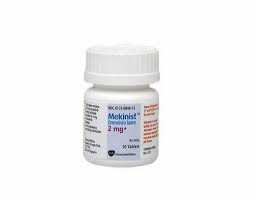
Instructions for Trametinib tablets
1. Name: Trametinib, Trametinib, Trametinib, Mekinist, Mekinist
2. Indications:
Trametinib (Trametinib) can be used in combination with dabrafenib for the treatment of unresectable or metastatic melanoma with BRAF V600E or V600K mutation-positive and patients with lymph node involvement after complete resection,BRAF Patients with V600E-mutated metastatic non-small cell lung cancer (NSCLC), and patients with BRAF V600E-mutant-positive locally advanced or metastatic anaplastic thyroid cancer (ATC). It is also indicated for the treatment of adult and pediatric patients 6 years of age and older with unresectable or metastatic BRAF V600E-mutated solid tumors, and pediatric patients 1 year of age and older with BRAF V600E-mutated low-grade glioma (LGG) who require systemic therapy.
Trametinib’s inherent resistance to BRAF inhibition makes it unsuitable for the treatment of patients with colorectal cancer.
3. Usage and dosage:
For adult patients, the recommended dose of trametinib tablets is 2 mg, taken orally once a day at least 1 hour before or 2 hours after a meal; the recommended dose for pediatric patients weighing 26-37kg is 1 mg orally once a day, 38-50k The recommended dose for pediatric patients is 1.5 mg orally once daily for children weighing 51 kg or more, and 2 mg for pediatric patients 51 kg or more.
The recommended duration of treatment for patients with trametinib is until disease progression or unacceptable toxicity, except in the adjuvant melanoma setting, the recommended duration of treatment is until disease recurrence or unacceptable toxicity1 year.
4. Adverse reactions:
The most common side effects of trametinib are rash, diarrhea, fatigue, peripheral edema, nausea, and acneiform dermatitis. Some patients develop a rash, redness, or acne-like rash, and the skin may become very dry. This rash can become severe, leading to skin infection and hospitalization. The most common side effects of trametinib when combined with dabrafenib are fever, fatigue, nausea, chills, headache, diarrhea, vomiting, joint pain, and rash.
5. Storage:
Trametinib is available in two strengths: 0.5 mg and 2 mg tablets. It is generally stored refrigerated at 2°C to 8°C (36°F to 46°F), protected from moisture and light, in the original packaging, and kept out of the reach of children.
6. Taboo:
If you are allergic to trametinib, any other medicine, or any ingredient in trametinib tablets, you should adjust or stop using the medicine in time.
7. Mechanism of action:
The mechanism of action of trametinib is to block the signaling of the RAS/RAF/MEK/ERK pathway by inhibiting the activity of MEK protein. It binds to the MEK protein and blocks its ability to phosphorylate ERK, thereby inhibiting the activity of this pathway. MEK protein is an upstream regulator of the extracellular signal-related kinase (ERK) pathway and promotes cell proliferation. The BRAF V600E mutation results in constitutive activation of the BRAF pathway including MEK1 and MEK2. Trametinib inhibits cell growth in various BRAF V600 mutation-positive tumors in vitro and in vivo.
8. Special groups:
Trametinib may reduce fertility in women. Women are not advised to become pregnant while taking tramatinib. They should use contraception to prevent pregnancy during treatment and for 4 months after the last dose. Women should not breastfeed.
9. Overdose:
The maximum dose of trametinib evaluated in clinical trials was 4 mg orally once daily, followed by 10 mg orally once daily for 2 consecutive days, then 3 mg orally once daily. There were two cases of RPEDs in seven patients treated with one of these two regimens, an incidence of 28%. Because trametinib is highly bound to plasma proteins, hemodialysis may not be effective in treating an overdose of trametinib.
10. Things to note:
1. New primary malignancies: In the pooled safety population, cutaneous squamous cell carcinoma and keratoacanthoma occurred in 2% of adult patients treated with the combination of trametinib and dabrafenib, basal cell carcinoma and new primary melanoma occurred in 3% and <1% of patients, respectively, and the incidence of new primary melanoma in pediatric patients was less than 1%.
2. Bleeding: In the pooled safety population, 17% of adult patients who used trametinib and dabrafenib in combination experienced bleeding events, 3% of patients experienced gastrointestinal bleeding, the incidence of intracranial bleeding was 0.6%, and 0.5% of patients experienced fatal bleeding. The fatal events were cerebral hemorrhage and brainstem hemorrhage. Bleeding events occurred in 25% of pediatric patients. The most common type of bleeding was epistaxis (16%). Serious bleeding events occurred in 3.6% of patients, including gastrointestinal bleeding (1.2%), cerebral hemorrhage (0.6%), uterine bleeding (0.6%), postoperative bleeding (0.6%), and epistaxis (0.6%).
3. Colitis and gastrointestinal perforation: Among adult patients taking trametinib and dabrafenib together, colitis occurs in <1% of patients, and gastrointestinal perforation occurs in <1% of patients. The incidence of colitis events in pediatric patients is less than 1%.
4. Venous thromboembolic events: Among adult patients taking trametinib and dabrafenib together, 2% of patients developed deep vein thrombosis (DVT) and pulmonary embolism (PE).
5. Cardiomyopathy: In adult patients receiving trametinib and dabrafenib in combination, defined as a ≥10% decrease in left ventricular ejection fraction (LVEF) from baseline to below the institutional lower limit of normal (LLN), occurring in 6% of patients.
6. Ocular toxicity: Among adult patients who used trametinib and dabrafenib in combination, the incidence of retinal vein occlusion (RVO) was 0.6%, and the incidence of retinal pigment epithelial detachment (RPED) was less than 1% of patients.
7. Interstitial lung disease (ILD)/Pneumonitis: In the monotherapy with trametinib, 2% of patients developed interstitial lung disease or pneumonia, and in patients treated with dabrafenib and ILD in combination, 1% of patients developed pneumonia. Trametinib should be discontinued in patients who develop new or progressive pulmonary symptoms and findings (including cough, dyspnea, hypoxia, pleural effusion, or infiltrates) and permanently in patients diagnosed with treatment-related ILD or pneumonitis.
8. Severe febrile reactions: 58% of patients who received trametinib and dabrafenib in combination developed fever. Severe febrile reactions and fever of any severity accompanied by hypotension, chills, dehydration or renal failure may occur. If the patient's temperature is ≥38°C, trametinib should be discontinued. If recurrence occurs, treatment can also be interrupted when fever symptoms first appear.
9. Hyperglycemia: Among patients who used trametinib and dabrafenib in combination, 15% of patients with a history of diabetes and receiving combination therapy required more intensive hypoglycemic treatment, and 2% of patients developed grade 3 and 4 hyperglycemia. The incidence of grade 3 and 4 hyperglycemic events in pediatric patients is less than 1%.
The original drug of trametinib has been launched in China and has entered the scope of Class B medical insurance, but it may only be purchased by patients who meet the indications of trametinib, such as BRAF V600 mutation-positive unresectable or metastatic melanoma. Its price is around 10,000 to 20,000 yuan. The reimbursement ratio is different in different regions, and the price is also different, making it expensive. The price of the Turkish version of the original drug Trametinib listed overseas is around RMB 7,900 (the price may fluctuate due to the exchange rate). The price of the generic version of Trametinib produced by the Lao pharmaceutical factory is around RMB 2,950 (the price may fluctuate due to the exchange rate). The ingredients and efficacy of foreign generic drugs are basically the same as those of the domestic and foreign original drugs.
[ 免责声明 ] 本页面内容来自公开渠道(如FDA官网、Drugs官网、原研药厂官网等),仅供持有医疗专业资质的人员用于医学药学研究参考,不构成任何治疗建议或药品推荐。所涉药品可能未在中国大陆获批上市,不适用于中国境内销售和使用。如需治疗,请咨询正规医疗机构。本站不提供药品销售或代购服务。


