
.jpeg)
Instructions for Baricitinib
Baricitinib is a drug used to treat arthritis and other autoimmune diseases.
1. Indications: Baricitinib is suitable for adults with moderately to severely active rheumatoid arthritis (RA) who are intolerant or unresponsive to other disease-modifying antirheumatic drugs (DMARDs). In addition, baricitinib can also be used to treat other autoimmune diseases, such as systemic lupus erythematosus.
2. Mechanism of action: Baricitinib is aJanuskinase (JAK) inhibitor. It blocks signaling in the cytokine receptor signaling pathway by inhibiting the activity of JAK1 and JAK2. These cytokines include tumor necrosis factor (TNF) and interleukin-6 (IL-6), which play important roles in the pathogenesis of arthritis and other autoimmune diseases.
3. Pharmacology: Baricitinib is rapidly absorbed after oral administration, and the time to reach peak concentration is approximately1-2 hours. It is metabolized in the body to form active metabolites, which are mainly metabolized by the liver and then excreted by the kidneys. The half-life of the drug in the body is approximately 12-18 hours.
4. Dosage and usage: The recommended dosage of baricitinib is 2mg (mg) orally once a day. In patients with impaired renal function, dosage adjustments may be required. Patients should take medication according to the doctor's instructions and have regular check-ups to monitor treatment effects and adverse reactions.
5. Side effects: Common side effects of baricitinib include infection, headache, hypertension, respiratory symptoms, nausea, vomiting, etc. A small number of patients may develop serious side effects such as severe infection, lymphoma, and pulmonary embolism. Patients should pay close attention to their own conditions during medication and seek medical attention immediately if they feel unwell.
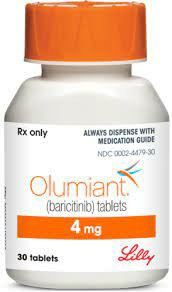
6. Warnings and Precautions: Patients using baricitinib should pay attention to the following:
1.Increased risk of infection: Because baricitinib may suppress the function of the immune system, patients are susceptible to infection during use, especially serious infections. Therefore, patients should avoid contact with people with infectious diseases and conduct regular monitoring of infection indicators.
2.Lymphoma risk: Patients taking baricitinib may have an increased risk of lymphoma. Lymphoma indicators should be monitored regularly during use, and if abnormalities are found, seek medical attention promptly.
3.Risk of thromboembolism: Patients taking baricitinib may have an increased risk of thromboembolism. Patients should pay attention to the symptoms of thromboembolism, such as chest pain, difficulty breathing, etc., and seek medical attention immediately if they have any concerns.
4.Hepatic impairment: Baricitinib may cause liver impairment. Patients should regularly check liver function during medication and report abnormal reactions in a timely manner.
5.Usage in Children and Adolescents: The safety and effectiveness of baricitinib in children and adolescents have not been established and its use in this population is not recommended.
7. Contraindications: Baricitinib is contraindicated for the following groups:
1.Patients who are allergic to baricitinib or drug ingredients;
2.Pregnant women, lactating women and women who want to have children (baricitinib may cause risks to the fetus);
3.Patients with severe liver function impairment.
8. Drug interactions: Baricitinib may interact with certain drugs, such as anticoagulants, immunosuppressants, etc. Before using baricitinib, patients should inform their doctors about other medications they are taking to avoid drug interactions.
9. Medication for special groups:
1.Elderly patients: for65 In patients over 10 years of age, baricitinib should be administered with caution and monitored regularly.
2.Patients with impaired renal function: Patients with impaired renal function need to adjust the dose of baricitinib, and the specific dose adjustment should be based on the patient's renal function.
3.Patients with impaired liver function: Patients with impaired liver function need to be cautious when using baricitinib, and liver function indicators should be monitored regularly during treatment.
4.Children and Adolescent Patients: The safety and effectiveness of baricitinib in children and adolescents have not been established and use in this age group is not recommended.
5.Pregnant and lactating women: Baricitinib may have potential risks to the fetus, so pregnant women, lactating women and women who want to have children should not use baricitinib. Women should use effective contraception before using baricitinib.
10. Launch and price situation: Baricitinib has been launched in China and is included in medical insurance. Patients can purchase it domestically. Due to different medical insurance reimbursement policies in various places, the reimbursement ratio is also different. The price is about 1200~1600 yuan. For specific prices, please consult the local pharmacy or the medical insurance bureau. Baricitinib has both original and generic drugs abroad. The original drug is mainly Eli Lilly’s original drug, and its price is higher than in China. Generic drugs are mainly Bangladeshi generic drugs, and the price is around 450 yuan. The ingredients of original drugs and generic drugs are basically the same.
Baricitinib is a drug used to treat arthritis and other autoimmune diseases. It interferes with cytokine signaling in diseases such as arthritis by inhibiting the activity of JAK1 and JAK2 kinases. Common side effects of baricitinib include infection, headache, and high blood pressure, but serious side effects such as serious infection, lymphoma, and thromboembolism may also occur. The use of baricitinib requires attention to warnings and precautions such as the risk of infection, lymphoma risk, thromboembolism risk, and liver function impairment. For certain groups of patients, such as elderly patients, patients with impaired renal function, and patients with impaired hepatic function, caution is required and the dose should be adjusted according to individual circumstances. Baricitinib should be avoided in children and adolescents, as well as in pregnant and breastfeeding women. Before using baricitinib, your doctor should be informed of any other medications you are taking to avoid drug interactions.
[ 免责声明 ] 本页面内容来自公开渠道(如FDA官网、Drugs官网、原研药厂官网等),仅供持有医疗专业资质的人员用于医学药学研究参考,不构成任何治疗建议或药品推荐。所涉药品可能未在中国大陆获批上市,不适用于中国境内销售和使用。如需治疗,请咨询正规医疗机构。本站不提供药品销售或代购服务。


