.jpeg)
Adagrasib (Krazati): A Complete Guide to Side-Effect Recognition and Grade-Based Management
1.Drug Positioning and Mechanism of Action
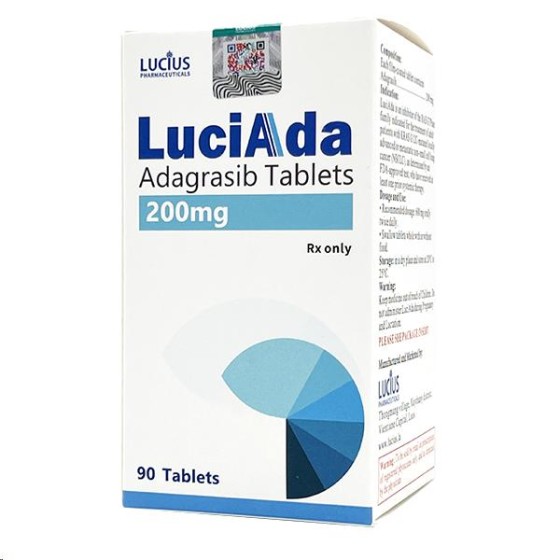
Adagrasib(development code MRTX849,brand name Krazati)is an oral,covalent,irreversible small-molecule inhibitor of KRAS G12C,originally developed by Mirati Therapeutics(now part of Bristol Myers Squibb).It forms an irreversible covalent bond with the mutant cysteine residue at position 12 of the KRAS protein,locking it in the GDP-bound inactive conformation and thereby blocking downstream RAS-MAPK and PI3K-AKT oncogenic signaling pathways.
Adagrasib received accelerated approval from the U.S.FDA in December 2022 for adults with KRAS G12C–mutant locally advanced or metastatic non-small cell lung cancer(NSCLC)who have received at least one prior systemic therapy.It was subsequently approved in combination with cetuximab for KRAS G12C–mutant metastatic colorectal cancer(CRC)following progression on fluoropyrimidine-,oxaliplatin-,and irinotecan-based chemotherapy.Compared with other agents in its class,adagrasib offers a longer plasma half-life(approximately 23 hours)and superior blood-brain barrier penetration,demonstrating meaningful intracranial response rates in patients with brain metastases.The recommended dose is 600 mg(three 200 mg tablets)taken orally twice daily,with or without food.
2.Adverse Effect Landscape:Gastrointestinal and Hepatic Toxicity Dominate
The adverse-effect profile of adagrasib is consistent with that of other KRAS G12C inhibitors,with gastrointestinal events and hepatic enzyme abnormalities being the most prominent.In pivotal clinical trials,diarrhea occurred in approximately 40%–50%of patients,nausea in 30%–40%,vomiting in 25%–35%,and decreased appetite in 20%–30%.Hepatic enzyme elevations(ALT and/or AST)were reported in approximately 20%–30%of patients,predominantly Grade 1–2,though a small proportion progressed to Grade 3 or higher.
Additional common adverse effects include fatigue(20%–30%),musculoskeletal pain(10%–15%),rash and dry skin(10%–15%),and anemia(10%–15%).The overall incidence of serious adverse events(Grade 3 or higher)is approximately 20%–30%,with hepatotoxicity and severe diarrhea as the leading manifestations.Importantly,adagrasib may prolong the QTc interval,necessitating periodic electrocardiographic monitoring during treatment.
3.Diarrhea Management:From Prevention to Intervention
Diarrhea is the adverse effect with the greatest impact on daily quality of life and typically emerges within the first two treatment cycles.To mitigate severity,patients should have loperamide readily available before initiating therapy and understand the appropriate dosing schedule.Dietary modifications should emphasize low-fiber,low-fat,low-residue foods while avoiding dairy products,caffeine,and spicy or irritating foods.Adequate hydration and electrolyte replacement are essential to prevent dehydration from frequent bowel movements.
Grade-based management:For Grade 1–2 diarrhea(up to 6 additional stools per day over baseline),loperamide and supportive care are appropriate while continuing adagrasib at the current dose with enhanced observation.For Grade 3 diarrhea(7 or more additional stools per day,or requiring hospitalization),adagrasib should be withheld,aggressive rehydration initiated,and infectious etiologies excluded.Once toxicity resolves to Grade 1 or baseline,therapy may resume at the same or one dose level lower.Grade 4 diarrhea(life-threatening hemodynamic compromise)generally warrants permanent discontinuation.
4.Hepatotoxicity Monitoring and Dose Adjustment
Liver enzyme elevation is another critical toxicity requiring close surveillance.Baseline hepatic function tests(ALT,AST,total bilirubin,alkaline phosphatase)should be obtained before treatment initiation.During the first month,liver function should be rechecked every two weeks,then monthly thereafter,or more frequently as clinically indicated.
If transaminases exceed 3 times the upper limit of normal(ULN)but remain below 5 times ULN(Grade 2 hepatotoxicity),monitoring frequency should increase to weekly,and confounding factors such as viral hepatitis,alcohol use,and concomitant hepatotoxic medications should be excluded.If transaminases exceed 5 times ULN or are accompanied by elevated bilirubin(Grade 3 or higher),adagrasib must be withheld immediately.Upon recovery to Grade 1 or baseline,therapy may resume at one dose level lower.Recurrence of Grade 3 hepatotoxicity or any Grade 4 event should prompt consideration of permanent discontinuation.Alcohol and other known hepatotoxic agents should be strictly avoided throughout treatment.
5.Fatigue,Hematologic Effects,and Other Toxicities
Fatigue is a functionally significant symptom during adagrasib therapy.Patients should maintain a regular sleep-wake cycle,engage in light daily activity such as walking or gentle stretching,and avoid prolonged bed rest.If fatigue substantially impairs quality of life,clinicians should evaluate for contributing factors including anemia,thyroid dysfunction,or depression,and provide appropriate supportive interventions.
Hematologic effects,including mild anemia or neutropenia,may occur but typically do not require specific intervention beyond periodic complete blood count monitoring.Musculoskeletal pain can be managed with nonsteroidal anti-inflammatory drugs or acetaminophen,bearing in mind the latter's potential hepatic effects.Rash and dry skin respond well to gentle emollients and topical corticosteroid preparations.
6.QTc Prolongation and Cardiac Safety Monitoring
Adagrasib has the potential to prolong the QTc interval,increasing the risk of cardiac arrhythmias.A baseline electrocardiogram(ECG)and serum potassium,magnesium,and calcium levels should be assessed before treatment initiation.Monthly ECG monitoring is recommended during therapy,with heightened vigilance when adagrasib is co-administered with other QTc-prolonging agents such as certain antiarrhythmics,fluoroquinolone antibiotics,or specific antifungal drugs.If the QTc interval exceeds 500 milliseconds or increases by more than 60 milliseconds from baseline,adagrasib should be withheld and a cardiology consultation obtained.
7.Drug Interactions and Comprehensive Management Considerations
Adagrasib is primarily metabolized by CYP3A4 and is also a substrate of P-glycoprotein(P-gp)and BCRP.Co-administration with strong CYP3A4 inhibitors(e.g.,itraconazole,clarithromycin)may elevate adagrasib plasma levels and increase toxicity risk,while strong CYP3A4 inducers(e.g.,rifampicin,phenytoin)may reduce efficacy.Patients should provide their treating physician with a complete medication list—including prescriptions,over-the-counter drugs,and herbal supplements—before starting therapy.
For comprehensive self-management,patients should maintain a daily log of bowel movement frequency and consistency,body weight,and any new or worsening symptoms,organized chronologically for efficient communication at follow-up visits.Imaging-based efficacy assessments are typically performed every 8 to 12 weeks.Maintaining balanced nutrition,moderate physical activity,and adequate rest throughout treatment helps preserve functional status for the duration of long-term targeted therapy.
[ 免责声明 ] 本页面内容来自公开渠道(如FDA官网、Drugs官网、原研药厂官网等),仅供持有医疗专业资质的人员用于医学药学研究参考,不构成任何治疗建议或药品推荐。所涉药品可能未在中国大陆获批上市,不适用于中国境内销售和使用。如需治疗,请咨询正规医疗机构。本站不提供药品销售或代购服务。