.jpeg)
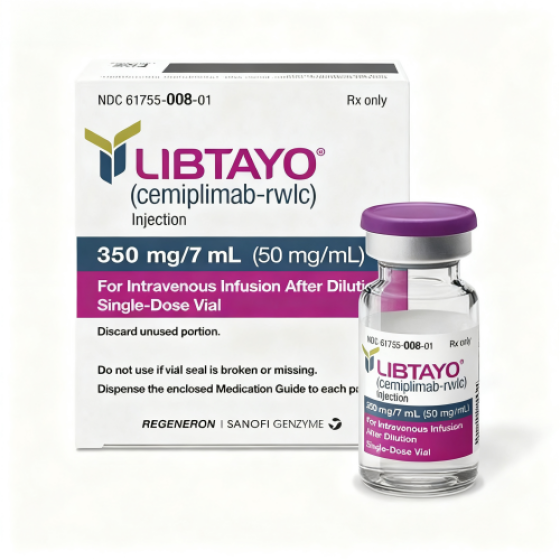
Cemiplimab: A PD-1 Checkpoint Inhibitor for Skin Cancers and Non-Small Cell Lung Cancer
Cemiplimab is a fully human monoclonal antibody classified as a PD-1 immune checkpoint inhibitor.Its fundamental mechanism of action involves blocking the interaction between the PD-1 receptor and its ligands,thereby releasing T cells from the immunosuppressive constraints imposed by the tumor microenvironment.This restoration of immune surveillance enables the patient's own immune system to once again recognize and attack malignant cells.Unlike conventional chemotherapy,which directly damages tumor cell DNA or disrupts cell division,cemiplimab does not kill cancer cells outright.Instead,it works by"releasing the immune brakes,"empowering the body's intrinsic antitumor immune response to exert therapeutic effects.
In the field of basal cell carcinoma(BCC),cemiplimab provides a critical treatment option for patients with locally advanced or metastatic disease.This indication specifically targets adult patients who have progressed on prior Hedgehog pathway inhibitor therapy or who are not candidates for Hedgehog pathway inhibitors for any reason.For this patient population,immune checkpoint inhibition represents a meaningful new therapeutic avenue.
Cemiplimab also holds a significant position in the management of cutaneous squamous cell carcinoma(CSCC).It is indicated for patients with locally advanced or metastatic CSCC who cannot be adequately managed with curative surgery or curative radiation therapy.In recent years,the clinical value of cemiplimab in CSCC immunotherapy has garnered sustained attention and recognition.Notably,the latest U.S.FDA labeling has expanded the drug's scope by adding an adjuvant indication for patients with high-risk CSCC following surgery and radiation therapy,further broadening its clinical utility.
Regarding non-small cell lung cancer(NSCLC),cemiplimab offers an immunotherapy option for a defined subset of patients.For those with locally advanced or metastatic NSCLC who have been confirmed to lack EGFR,ALK,or ROS1 genomic aberrations,cemiplimab may be administered as first-line monotherapy based on PD-L1 expression levels.Additionally,combination regimens pairing cemiplimab with platinum-based doublet chemotherapy are available to address varying clinical scenarios.
It is important to emphasize that cemiplimab is not a universal anticancer agent applicable to all malignancies.Its clinical use must be guided by a thorough assessment of tumor histology,disease stage,prior treatment history,and relevant biomarker testing results.Only within clearly defined indications,and following evaluation by a qualified oncology specialist,can the appropriateness of cemiplimab therapy be determined for an individual patient.In summary,the primary therapeutic domains of cemiplimab in current international practice encompass basal cell carcinoma,cutaneous squamous cell carcinoma,and select subtypes of non-small cell lung cancer.
[ 免责声明 ] 本页面内容来自公开渠道(如FDA官网、Drugs官网、原研药厂官网等),仅供持有医疗专业资质的人员用于医学药学研究参考,不构成任何治疗建议或药品推荐。所涉药品可能未在中国大陆获批上市,不适用于中国境内销售和使用。如需治疗,请咨询正规医疗机构。本站不提供药品销售或代购服务。