.jpeg)
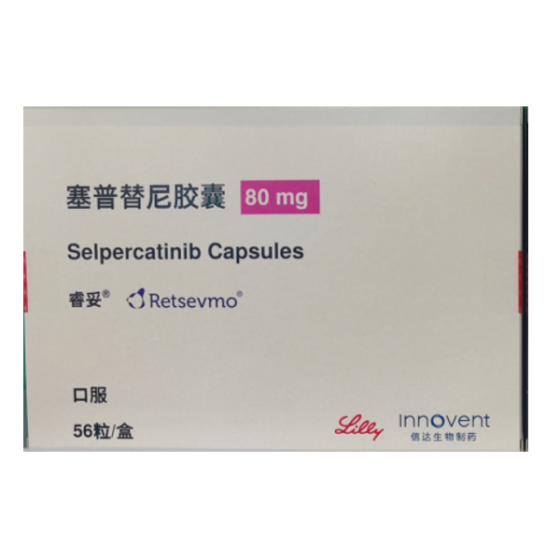
Selpercatinib Traditional Approval for RET Fusion Solid Tumors: Weight-Based Adults, BSA-Based Pediatrics, Monitor Liver, BP, QT
1.RET Fusion Versus Mutation and Eligibility
Selpercatinib is a highly selective RET tyrosine kinase inhibitor.RET fusion drives many non-NSCLC and non-thyroid tumors and supports pan-tumor use;RET point/germline mutations are mainly relevant to medullary thyroid carcinoma and certain defined indications.Traditional pan-tumor approval requires validated RET fusion testing,locally advanced or metastatic disease,age 2 or older,and progression on prior systemic therapy or no satisfactory alternative.
Prefer tumor tissue NGS or RNA fusion testing;use ctDNA when tissue is insufficient,but a negative blood test does not rule out fusion.For NSCLC confirm RET fusion before start;for radioactive-iodine-refractory RET fusion thyroid cancer or RET-mutant medullary thyroid cancer follow tumor-type-specific labeling rather than the pan-solid-tumor dataset.
2.Traditional Approval and Key Data
On July 14,2026,FDA converted Retevmo RET fusion pan-solid-tumor status from accelerated to traditional approval.LIBRETTO-001 included 75 patients outside NSCLC and thyroid cancer:ORR 47%(95%CI 35–59),median DOR 24.5 months(95%CI 11.2–49.1);responding histologies included colorectal,pancreatic adenocarcinoma,salivary,soft-tissue sarcoma,cholangiocarcinoma,skin,unknown primary,breast,bronchial carcinoid,ovarian,small bowel,and neuroendocrine carcinomas.Heterogeneity and small subgroups mean 47%should not be applied mechanically to one rare tumor.
NSCLC LIBRETTO-431 supports first-line use versus platinum chemotherapy with or without pembrolizumab for PFS and intracranial control;RET fusion thyroid and RET-mutant medullary datasets show separate high response rates.LIBRETTO-121 provides pediatric signals in congenital infant fibrosarcoma,spindle cell sarcoma,and RET fusion thyroid cancer,but only for specialist selection by age,histology,and molecular confirmation.
3.Dosing Administration
For patients 12 years and older:120mg orally twice daily if body weight<50kg,160mg orally twice daily if≥50kg,about 12 hours apart.For ages 2–11,calculate by body surface area under pediatric oncology guidance,given twice or three times daily per labeling;never copy adult fixed milligrams.If unable to swallow,prepare dispersible suspension from 40mg tablets per instructions and give via feeding tube if specified;do not crush other strengths.
May be taken with or without food;with proton-pump inhibitors take with food,and separate H2 blockers or local antacids by prescribed timing.Do not double a missed dose if the next dose is near;after vomiting give the next scheduled dose.Reduce for severe hepatic impairment and for strong CYP3A inhibitors per full prescribing information.
4.Safety and Long-Term Monitoring
Hepatotoxicity:baseline ALT,AST,total bilirubin;usually every 2 weeks for the first 3 months,then at least monthly and more often if abnormal.Hold and obtain hepatology review for marked transaminase rise with bilirubin rise,jaundice,right-upper-quadrant pain,or severe fatigue;resume at reduced dose only if risk-benefit supports it.
Blood pressure and QT:do not start with uncontrolled hypertension;optimize before therapy,recheck about 1 week after start and periodically.For QT risk,obtain baseline ECG,potassium/magnesium/calcium,and TSH;repeat ECG more often with diarrhea,strong/moderate CYP3A inhibitors,or QT-prolonging drugs.Hold and evaluate for severe hypertension,syncope,palpitations,or significant QTc prolongation.
Lung,bleeding,wound:evaluate persistent cough,dyspnea,or fever for interstitial lung disease/pneumonitis and hold with graded steroid use.Permanent discontinuation for severe or life-threatening bleeding,including intracranial.Before elective surgery,the surgical and oncology teams should set a hold period and restart only after adequate wound healing.
Thyroid and pediatric growth:monitor TSH and free T4,treat hypothyroidism,and reassess symptoms.In children with open growth plates,ask about hip/knee pain or limping,watch for slipped capital femoral epiphysis,record height/weight by age,and image/suspend if growth-plate abnormality appears.
Common reactions include diarrhea,edema,dry mouth,fatigue,constipation,rash,and nausea;laboratories may show ALT/AST,bilirubin,creatinine,albumin,calcium,sodium,lymphocyte,or platelet abnormalities.Perform pregnancy testing in people with reproductive potential,use label-specified contraception during and after therapy,and avoid breastfeeding.
5.Interactions and Visit Preparation
Strong CYP3A inhibitors raise selpercatinib exposure and strong inducers lower it;acid suppressors affect absorption,and QT-prolonging drugs add arrhythmic risk.Bring the original RET report with fusion versus mutation,tissue versus blood sample,prior therapy,brain imaging,liver tests,blood pressure,ECG,electrolytes,and thyroid tests;for children add height,weight,BSA,hip/knee symptoms,and all prescriptions.Budget dosing by weight/BSA and long-term follow-up tests without citing currency,insurance,or regional pricing.
[ 免责声明 ] 本页面内容来自公开渠道(如FDA官网、Drugs官网、原研药厂官网等),仅供持有医疗专业资质的人员用于医学药学研究参考,不构成任何治疗建议或药品推荐。所涉药品可能未在中国大陆获批上市,不适用于中国境内销售和使用。如需治疗,请咨询正规医疗机构。本站不提供药品销售或代购服务。