.jpeg)
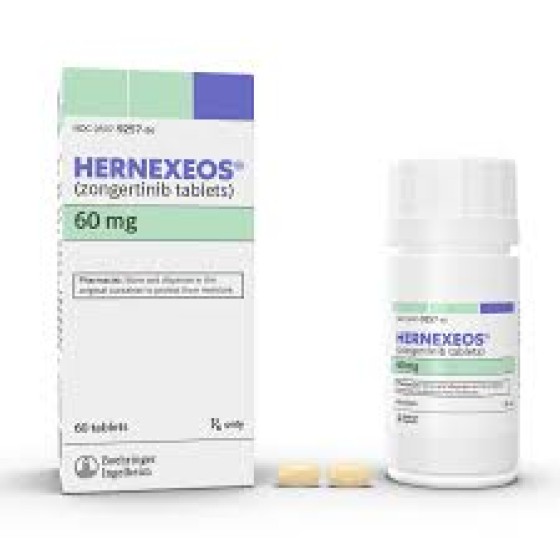
Zongertinib for HER2-Mutant NSCLC: First-Line ORR About 76%, Brain Metastases Controlled, Manage Diarrhea and Hepatotoxicity
1.Disease Selection and Testing
HER2/ERBB2 activating mutations account for about 2%–4%of NSCLC,more often in adenocarcinoma,never/light smokers,women,and some younger patients,with relatively high brain metastasis risk.Confirm the mutation with tumor tissue NGS or an approved assay focused on the HER2 tyrosine kinase domain;use plasma ctDNA when tissue is insufficient,but a negative liquid biopsy does not rule out mutation.Apply zongertinib only to confirmed activating TKD mutations in unresectable locally advanced or metastatic disease;do not substitute HER2 IHC overexpression,HER2 amplification,or undefined“HER2-positive”reports.
2.Pharmacology and Eligible Population
Zongertinib is an oral,irreversible,highly selective HER2 TKI that preferentially inhibits mutant HER2 signaling while largely sparing wild-type EGFR,so EGFR-class diarrhea and rash are usually less prominent than with broad pan-HER/EGFR inhibitors.It fits previously treated progression or selected first-line HER2 TKD-mutant NSCLC,including non-squamous adenocarcinoma and stable active brain metastases.Avoid default use without confirmed activating mutation,with only HER2 amplification/overexpression,uncontrolled autoimmune lung disease,severe hepatic impairment,or pregnancy.
3.Dosing Administration
Use the approved label dose orally once daily;swallow whole,with or without food,do not split or chew.If a dose is missed within 12 hours give it per schedule,if more than 12 hours omit and resume next scheduled dose;after vomiting do not repeat the same dose.Strong CYP3A inducers can lower zongertinib exposure and should generally be avoided;if unavoidable,adjust per label with a pharmacist.For BCRP substrates such as some statins or sulfasalazine,monitor adverse effects.Review acid-suppressor combinations against the current label rather than adding multiple agents empirically.
4.Efficacy Highlights
First-line:Beamion LUNG-1 cohort 2 enrolled 74 treatment-naive patients with HER2 TKD activating mutation and unresectable/metastatic NSCLC;standard once-daily zongertinib gave confirmed ORR 76%(95%CI 65–84),complete response 11%,partial response 65%,median DoR 15.2 months,and median PFS 14.4 months.Treatment-related grade≥3 events occurred in about 19%of patients.
Active brain metastases:cohort 4 included 30 patients;RANO-BM confirmed intracranial ORR 47%(95%CI 30–64),median intracranial DoR 6.9 months,and median intracranial PFS 8.2 months.Intracranial benefit appeared greater in patients without prior brain radiotherapy,but decisions still require extracranial control and possible local radiation.
Pretreated:the 120mg cohort showed ORR about 71%,disease control 93%–96%,median DoR about 14.1 months,and median PFS about 12.4 months;evaluable brain-metastasis subgroups had RANO-BM intracranial ORR about 41%–47%.Single-arm data support individualized use after prior systemic progression or when no satisfactory alternative exists.
5.Adverse Events and Monitoring
Common events occurring in≥20%include diarrhea,rash,hepatotoxicity,fatigue,nausea,musculoskeletal pain,and upper respiratory infection.Management:
Diarrhea:usually early;mild cases use diet adjustment and fluids,add loperamide or smectite when needed;with frequent watery stools,dehydration,hematochezia,or fever hold the drug and seek care.Grade 3 diarrhea is uncommon in first-line reports at about 3%.
Rash:maculopapular,dry,or pruritic;use emollients,sun protection,avoid scratching;mild topical steroids for limited lesions,hold and dermatology review for extensive ulceration/infection.
Hepatotoxicity:baseline and every 2 weeks for the first 12 weeks,then monthly or clinically driven ALT,AST,total bilirubin;interrupt and restart at reduced dose after recovery to≤grade 1 for transaminase rises without hyperbilirubinemia;consider permanent discontinuation for ALT/AST≥3×ULN with bilirubin≥2×ULN or grade 4 bilirubin.Avoid adding other hepatotoxic drugs without review.
Nausea,fatigue,myalgia:small frequent meals,rest,symptomatic care;evaluate dose reduction only if daily function is impaired.
ILD/pneumonitis:some cohorts reported no drug-related ILD,but treat new cough,dyspnea,fever,or hypoxemia as a warning;suspend,image,and use steroids by grade,with permanent discontinuation for confirmed severe ILD.
Cardiac:baseline and periodic LVEF;for heart failure symptoms or significant LVEF drop,manage jointly with cardiology.
Laboratories:track lymphopenia,hypokalemia,GGT,and other abnormalities per label;perform pregnancy testing in people with reproductive potential,use label-specified contraception during and after therapy,and avoid breastfeeding.
6.Care Coordination
Confirm HER2 mutation quality before first-line or later-line use;for brain metastases include baseline and follow-up cranial MRI,RANO-BM assessment,and prior radiotherapy history.Repeat RECIST imaging every 6–8 weeks as clinically appropriate,add MRI for new neurologic symptoms,and monitor liver tests,electrolytes,thyroid,and LVEF by risk.Patients should not self-stop or self-reduce;record diarrhea frequency,rash extent,transaminases,and respiratory symptoms,and report abnormalities promptly.
[ 免责声明 ] 本页面内容来自公开渠道(如FDA官网、Drugs官网、原研药厂官网等),仅供持有医疗专业资质的人员用于医学药学研究参考,不构成任何治疗建议或药品推荐。所涉药品可能未在中国大陆获批上市,不适用于中国境内销售和使用。如需治疗,请咨询正规医疗机构。本站不提供药品销售或代购服务。