.jpeg)
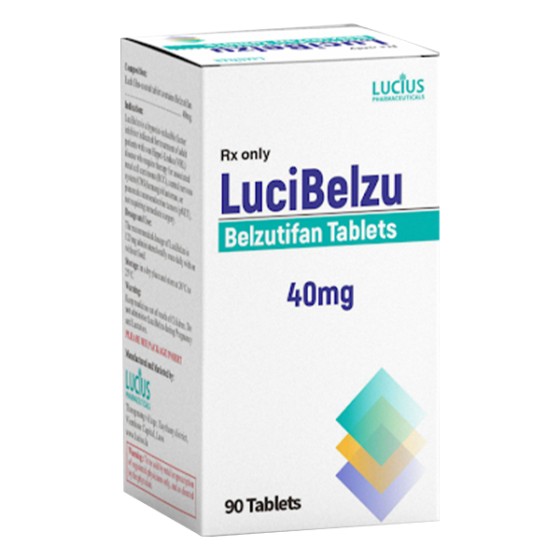
Belzutifan (Welireg): Comprehensive Guide to the First HIF-2α Inhibitor — Indications, Dosing, and Safety Monitoring
1.Drug Positioning and HIF-2αTargeting Mechanism
Belzutifan(brand name:Welireg)is the first orally administered,selective hypoxia-inducible factor-2α(HIF-2α)inhibitor to receive regulatory approval worldwide.Under normal physiological conditions,HIF-2αis a master transcriptional regulator of cellular adaptation to hypoxia,and its activity is tightly controlled by VHL protein-mediated ubiquitination and proteasomal degradation.Loss-of-function mutations in the VHL gene lead to pathological accumulation of HIF-2αand constitutive activation of downstream target genes—including VEGF,PDGF,and GLUT1—driving angiogenesis,cellular proliferation,and metabolic reprogramming that culminate in tumorigenesis.Belzutifan binds with high affinity to the PAS-B domain of HIF-2α,preventing its heterodimerization with ARNT(HIF-1β)and thereby abolishing HIF-2αtranscriptional activity.This upstream mechanism distinguishes belzutifan from conventional VEGF-TKIs and immune checkpoint inhibitors,representing a precision etiology-directed therapy for VHL pathway-driven diseases.
2.Approved Indications and Eligible Patient Populations
Belzutifan currently carries four core approved indications spanning rare genetic disorders and common solid tumors.
First,VHL disease-associated tumors:indicated for adult patients with Von Hippel-Lindau disease who require systemic therapy for VHL-associated renal cell carcinoma,central nervous system hemangioblastomas,or pancreatic neuroendocrine tumors,and whose disease does not require immediate surgical intervention.This indication enables many VHL patients to delay or avoid repeated surgical procedures.
Second,advanced renal cell carcinoma:indicated for adult patients with advanced clear cell RCC who have experienced disease progression following prior treatment with both a PD-1/PD-L1 inhibitor and a VEGF tyrosine kinase inhibitor,addressing an unmet need in the post-double-refractory setting.
Third,adjuvant treatment of RCC:indicated in combination with pembrolizumab for adjuvant therapy in adult patients with intermediate-to-high risk of recurrence following nephrectomy for clear cell RCC,with the goal of reducing post-surgical recurrence rates.
Fourth,pheochromocytoma and paraganglioma:indicated for patients aged 12 years and older with locally advanced,unresectable,or metastatic pheochromocytoma or paraganglioma,providing a novel targeted option for this rare neuroendocrine malignancy previously lacking effective systemic therapies.
3.Standard Dosing and Pediatric Weight-Based Regimen
Belzutifan is administered as a once-daily oral regimen,significantly simplifying long-term treatment management.
Adult patients(all indications):The recommended dose is 120 mg taken orally once daily.
Pediatric and adolescent patients(aged 12 years and above;pheochromocytoma/paraganglioma indication only):Weight-tiered dosing applies.Patients weighing≥40 kg receive 120 mg once daily;patients weighing<40 kg receive 80 mg once daily.This stratification is based on pharmacokinetic modeling to ensure systemic exposure comparable to adults while avoiding excessive toxicity in lower-weight patients.
Tablets must be swallowed whole and should not be split,crushed,or chewed.The once-daily dosing design supports long-term adherence,particularly in pediatric and adolescent populations.
4.Administration Timing and Dietary Considerations
Belzutifan pharmacokinetics are not significantly affected by food;patients may take the medication on an empty stomach or with meals.The essential principle is to administer the dose at a consistent time each day(for example,with breakfast)to maintain stable steady-state plasma concentrations and minimize peak-trough fluctuations that could affect efficacy or safety.Patients choosing to take belzutifan with food should maintain relatively consistent meal patterns to reduce inter-day variability in drug exposure.
Tablets should be swallowed with an adequate volume of water to ensure complete ingestion.Critically,belzutifan is predominantly metabolized by CYP3A4;grapefruit and grapefruit juice must be strictly avoided during treatment,as they potently inhibit intestinal CYP3A4 activity and can cause clinically significant elevations in drug exposure and toxicity risk.Other strong CYP3A4 inhibitors(such as itraconazole,clarithromycin,and ritonavir)should likewise be avoided or managed with dose adjustments under physician guidance.Strong CYP3A4 inducers(such as rifampin,phenytoin,and St.John's Wort)may substantially reduce belzutifan efficacy and should generally be avoided.
5.Adverse Effect Profile and Safety Monitoring Requirements
The most common adverse reactions associated with belzutifan include fatigue,decreased hemoglobin(anemia),hypoxia,and hypertension.These events are directly attributable to the drug's on-target suppression of HIF-2αdownstream effectors such as erythropoietin(EPO)and vascular regulatory pathways,rather than off-target toxicity.
Safety monitoring during treatment should focus on the following parameters:regular complete blood counts with particular attention to hemoglobin levels,with transfusion or erythropoiesis-stimulating agent support initiated as clinically indicated;periodic pulse oximetry to detect asymptomatic hypoxemia,especially in patients with underlying pulmonary disease or those residing at high altitude;regular blood pressure measurements with prompt initiation or escalation of antihypertensive therapy for new-onset or worsening hypertension;and periodic assessment of liver function tests.
When belzutifan is combined with pembrolizumab for adjuvant RCC treatment,clinicians must additionally monitor for immune-related adverse events(irAEs)characteristic of checkpoint inhibitor therapy,including pneumonitis,hepatitis,colitis,and endocrinopathies,ensuring early recognition and graded management.
6.Special Population Guidance
No starting dose adjustment is required for elderly patients;however,enhanced monitoring frequency is advisable given higher comorbidity burden and reduced organ reserve.No dose adjustment is necessary for mild to moderate hepatic impairment;data are insufficient for severe hepatic impairment,warranting careful benefit-risk assessment.For renal impairment,available data do not indicate a need for dose adjustment,but patients with end-stage renal disease should be closely monitored for compounded effects of drug-related anemia and hypoxia.Belzutifan is contraindicated during pregnancy and breastfeeding due to embryo-fetal toxicity;women of reproductive potential must use highly effective contraception during treatment and for at least one week after the final dose.Safety and efficacy have not been established in children under 12 years of age.
[ 免责声明 ] 本页面内容来自公开渠道(如FDA官网、Drugs官网、原研药厂官网等),仅供持有医疗专业资质的人员用于医学药学研究参考,不构成任何治疗建议或药品推荐。所涉药品可能未在中国大陆获批上市,不适用于中国境内销售和使用。如需治疗,请咨询正规医疗机构。本站不提供药品销售或代购服务。