.jpeg)
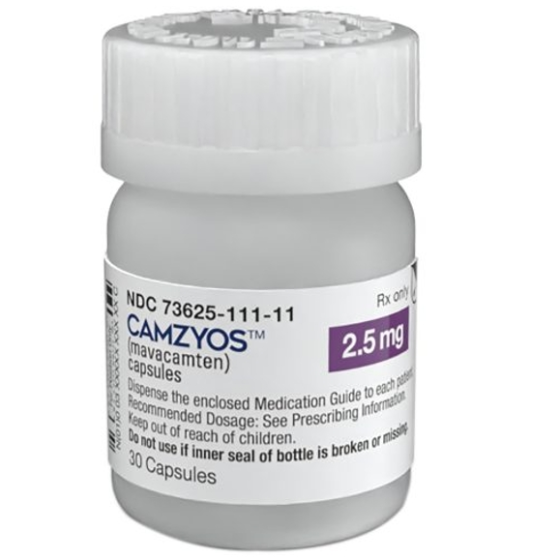
Mavacamten for Obstructive Hypertrophic Cardiomyopathy: Dosing Duration, Efficacy Comparison, and Long-Term Management
1.A Novel Therapy Targeting the Core Pathophysiology
One of the central pathological hallmarks of obstructive hypertrophic cardiomyopathy(oHCM)is hyperactivity of cardiac myosin ATPase,which leads to excessive myosin-actin cross-bridge formation,myocardial hypercontractility,and left ventricular outflow tract(LVOT)obstruction.Mavacamten,the first cardiac myosin-specific inhibitor,selectively reduces myosin ATPase activity and attenuates excessive cross-bridge cycling,thereby intervening directly at the molecular level rather than merely alleviating symptoms.This mechanism positions mavacamten uniquely in the oHCM treatment landscape.
2.Treatment Duration:Is Lifelong Therapy Required?
Mavacamten therapy does not universally mandate lifelong use.The duration of treatment depends on the patient's clinical response,degree of hemodynamic improvement,and drug tolerability.The general principle is to continue therapy until clear disease progression occurs—defined as a sustained rise in LVOT gradient or significant worsening of symptoms—or until intolerable adverse effects emerge.
In clinical trial settings,some patients who achieved stable hemodynamic improvement attempted drug withdrawal under observation;however,LVOT gradients typically returned to pre-treatment levels,indicating that mavacamten does not reverse the underlying structural hypertrophy.Current consensus therefore favors long-term maintenance therapy.That said,if a patient sustains a gradient below 30 mmHg with marked symptomatic improvement,cautious dose reduction or a supervised trial of discontinuation may be considered under specialist guidance.All such decisions must be guided by serial echocardiographic monitoring.
3.Clinical Efficacy:Key Data
Mavacamten delivers multidimensional clinical benefits in oHCM.Hemodynamically,it significantly reduces LVOT gradients by approximately 30 to 50 mmHg at both rest and provocation.In a pivotal Phase III trial,mean LVOT gradients in the treatment arm declined from a baseline of roughly 50 mmHg to below 30 mmHg,a change significantly superior to placebo.
Functionally,approximately 60%to 70%of patients improved by at least one NYHA class,and six-minute walk distance increased by an average of 30 to 40 meters.Mavacamten also significantly reduced the need for septal reduction procedures,including surgical myectomy and alcohol septal ablation.Importantly,mavacamten is positioned as a long-term disease-management agent,not a cure for myocardial hypertrophy.
4.Head-to-Head Comparisons with Conventional Therapies
Versus beta-blockers.Beta-blockers such as metoprolol and propranolol have long served as first-line therapy for oHCM,relieving symptoms primarily by slowing heart rate and reducing contractility.Mavacamten operates through an entirely different mechanism,directly targeting myosin-actin cross-bridge formation.In terms of gradient reduction and NYHA class improvement,mavacamten generally outperforms beta-blockers.The two classes are not mutually exclusive and can be combined:beta-blockers for rate control and mavacamten for reducing hypercontractility.Mavacamten's key advantage lies in addressing the underlying pathophysiology rather than providing symptomatic relief alone.
Versus non-dihydropyridine calcium channel blockers.Verapamil and diltiazem improve oHCM symptoms through negative inotropic effects.Compared with mavacamten,these agents produce more modest reductions in LVOT gradient and carry risks of hypotension and bradycardia.Mavacamten is generally superior in gradient control and symptom relief.Nevertheless,calcium channel blockers remain valuable in mild-to-moderate cases owing to their long track record and broad accessibility.Mavacamten is best reserved for moderate-to-severe oHCM patients who respond inadequately to beta-blockers and calcium channel blockers.
5.Advantages and Limitations
Mavacamten's principal strength is its direct targeting of the core oHCM pathophysiology,with efficacy that is objectively quantifiable via echocardiography.Limitations include the need for regular echocardiographic monitoring of left ventricular ejection fraction(LVEF),a relatively high monthly treatment cost that requires assessment of patient affordability,and the potential for drug interactions—dose adjustments are necessary when co-administered with strong CYP2C19 or CYP3A4 inhibitors.Clinically,mavacamten is most appropriate for moderate-to-severe oHCM patients with NYHA class II–III symptoms and LVOT gradients exceeding 50 mmHg who have insufficient response to conventional therapy.
6.Special-Population Considerations
Elderly patients(aged 65 and older)are more susceptible to mavacamten-related hypotension and bradycardia;a starting dose of 2.5 mg with slow titration is advisable.Patients with mild-to-moderate hepatic impairment(Child-Pugh A or B)should initiate therapy at a lower dose;the drug is not recommended in severe hepatic impairment.No dose adjustment is typically required for renal impairment.Patients concurrently receiving beta-blockers warrant enhanced heart-rate and blood-pressure monitoring.Safety data in pregnant and breastfeeding women remain limited,and the benefit-risk balance should be carefully evaluated.
7.Long-Term Management and Follow-Up
During mavacamten therapy,echocardiography is recommended every four weeks to assess LVEF and LVOT gradient.If LVEF falls below 50%,the drug should be paused immediately with close follow-up.Patients on long-term therapy should have a structured follow-up plan encompassing cardiac structure and function assessment,symptom tracking,and quality-of-life monitoring.For patients who achieve sustained stability(gradient below 30 mmHg with marked symptom improvement),gradual dose reduction under specialist supervision may be considered,with continued monitoring thereafter to guard against relapse.
[ 免责声明 ] 本页面内容来自公开渠道(如FDA官网、Drugs官网、原研药厂官网等),仅供持有医疗专业资质的人员用于医学药学研究参考,不构成任何治疗建议或药品推荐。所涉药品可能未在中国大陆获批上市,不适用于中国境内销售和使用。如需治疗,请咨询正规医疗机构。本站不提供药品销售或代购服务。